THE ADVENTURE COLLECTIVE® · Independent discovery and booking for outdoor travel

Ride a LARC from shore to sea along Eurimbula National Park, visit Queensland’s operational Bustard Head Lightstation, then tackle towering sand dunes for sandboarding and swimming. This full-day combines maritime history, wildlife sightings and hands-on coastal adventure.
Ride a LARC from shore to sea along Eurimbula National Park, visit Queensland’s operational Bustard Head Lightstation, then tackle towering sand dunes for sandboarding and swimming. This full-day combines maritime history, wildlife sightings and hands-on coastal adventure.
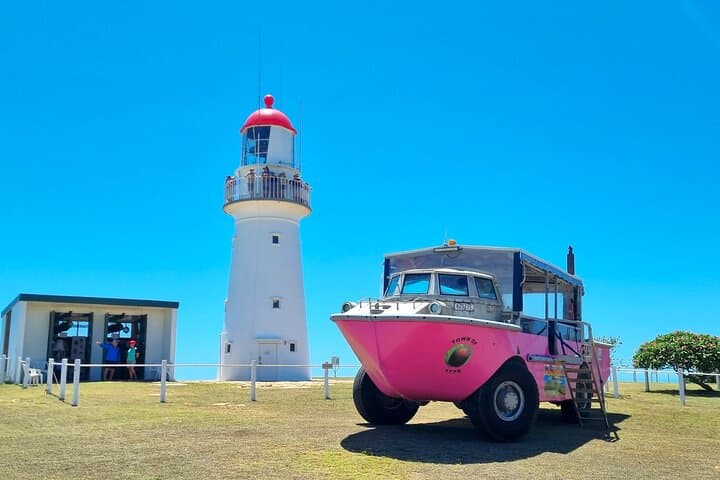
You step onto a hulking olive-green LARC at the water’s edge and feel the hull take the tide as the vehicle slides from foreshore to open sand. Salt and eucalyptus mix in the air while the shoreline of Eurimbula National Park unfolds—soft dunes, low coastal heath and the squat profile of Bustard Head Lightstation on the horizon.
Verified experiences and guided adventures in the surrounding area.
Operated by 1770 LARC! Tours · Agnes Water, Queensland
You step onto a hulking olive-green LARC at the water’s edge and feel the hull take the tide as the vehicle slides from foreshore to open sand. Salt and eucalyptus mix in the air while the shoreline of Eurimbula National Park unfolds—soft dunes, low coastal heath and the squat profile of Bustard Head Lightstation on the horizon.
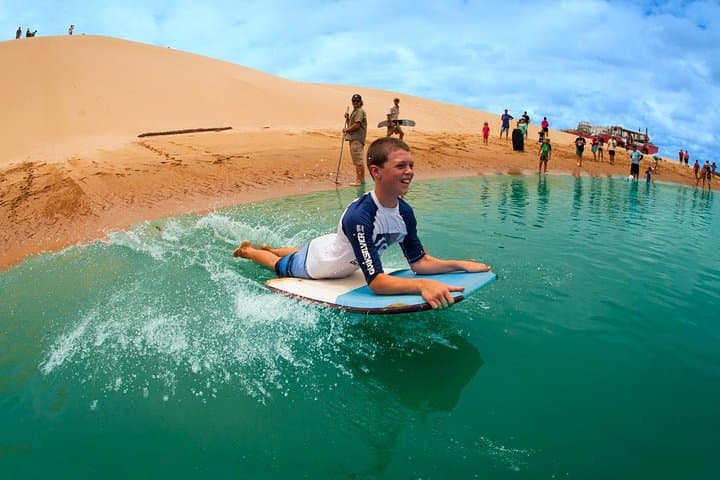
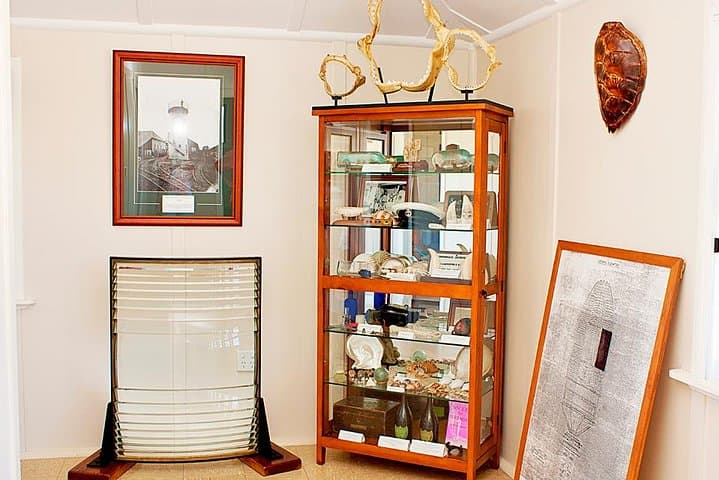
The day threads natural history with human story: the town’s name commemorates Cook’s 1770 landfall, while Bustard Head is Queensland’s only open, operating lighthouse with a keeper’s cottage museum and small cemetery where past lives and maritime lore settle into place. Geologically, the coast is recent sand blown from offshore banks, building 35m dunes that shift with wind and tide and provide canvas-like runs for sandboarding.
Local culture is direct and unpretentious — fishing towns, volunteer lighthouse keepers, and rangers who tend fragile dune systems. Wildlife punctuates the route: dolphins often race the bow, shorebirds patrol mudflats and sea turtles nest on quieter beaches at night.
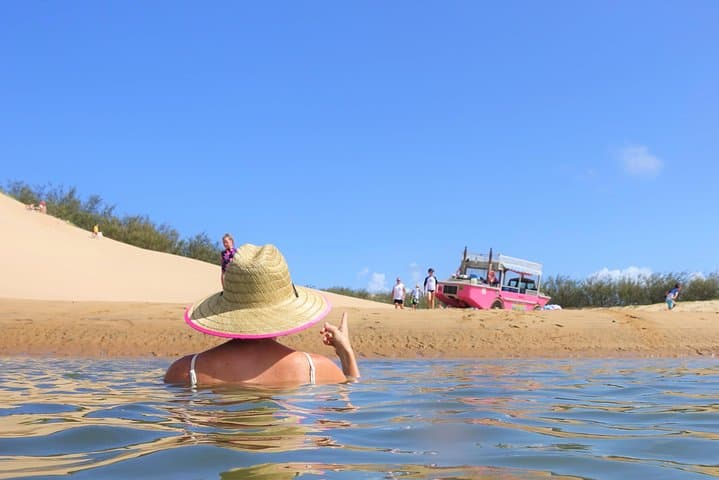
Practical guidance: the tour lasts about seven hours and includes morning tea, lunch and billy tea. Wear sturdy shoes for dune climbs, bring sun protection and a small waterproof bag for electronics. Children under eight may not enter the lightstation due to building standards. Bring a refillable water bottle and modest cash for small park association fees. Expect short guided walks, easy climbs onto the LARC and time for sandboarding and a swim — active but accessible. End of day light softens the coast; the vehicle’s low rumble and local stories make the return as much a part of the trip as the lighthouse itself.
moderate.
6–7 hours.
Suitable for most people with basic mobility; be prepared for short climbs on sand dunes and stepping on/off the amphibious vehicle.
No — due to Australian building standards, children under 8 years old are not permitted inside the lightstation; older children may enter under supervision.
A strong swimmer is not required for the tour, but basic swimming ability is recommended for beach swims and water access; life vests are used where appropriate.
No — a small Paradise Tour fee (up to $11 per person) payable on arrival covers the Bustard Head Lighthouse Association and QPWS contributions.
The tour involves boarding a LARC and short walks on uneven sand; it may be unsuitable for guests with limited mobility—contact the operator to discuss accommodations.
The town of 1770 marks Captain Cook’s 1770 landing; Bustard Head Lightstation remains a working lighthouse with a historic keeper’s cottage museum.
Small fees help support the lighthouse association and QPWS; stay on marked tracks and avoid disturbing nesting sites—especially turtle nests—to reduce impact.
1770 LARC! Tours operates guided outdoor trips and adventures with an emphasis on safety, stewardship, and memorable experiences.
You step onto a hulking olive-green LARC at the water’s edge and feel the hull take the tide as the vehicle slides from foreshore to open sand. Salt and eucalyptus mix in the air while the shoreline of Eurimbula National Park unfolds—soft dunes, low coastal heath and the squat profile of Bustard Head Lightstation on the horizon.
You step onto a hulking olive-green LARC at the water’s edge and feel the hull take the tide as the vehicle slides from foreshore to open sand. Salt and eucalyptus mix in the air while the shoreline of Eurimbula National Park unfolds—soft dunes, low coastal heath and the squat profile of Bustard Head Lightstation on the horizon.
The day threads natural history with human story: the town’s name commemorates Cook’s 1770 landfall, while Bustard Head is Queensland’s only open, operating lighthouse with a keeper’s cottage museum and small cemetery where past lives and maritime lore settle into place. Geologically, the coast is recent sand blown from offshore banks, building 35m dunes that shift with wind and tide and provide canvas-like runs for sandboarding.
Local culture is direct and unpretentious — fishing towns, volunteer lighthouse keepers, and rangers who tend fragile dune systems. Wildlife punctuates the route: dolphins often race the bow, shorebirds patrol mudflats and sea turtles nest on quieter beaches at night.
Practical guidance: the tour lasts about seven hours and includes morning tea, lunch and billy tea. Wear sturdy shoes for dune climbs, bring sun protection and a small waterproof bag for electronics. Children under eight may not enter the lightstation due to building standards. Bring a refillable water bottle and modest cash for small park association fees. Expect short guided walks, easy climbs onto the LARC and time for sandboarding and a swim — active but accessible. End of day light softens the coast; the vehicle’s low rumble and local stories make the return as much a part of the trip as the lighthouse itself.