THE ADVENTURE COLLECTIVE® · Independent discovery and booking for outdoor travel

Launch yourself off a 160-meter bridge over the Bhote Koshi River at The Last Resort, Nepal. This full‑day adventure pairs a dramatic free fall with riverside geology and local culture; prepare for travel time, weather‑dependant scheduling, and simple but strict safety checks.
Launch yourself off a 160-meter bridge over the Bhote Koshi River at The Last Resort, Nepal. This full‑day adventure pairs a dramatic free fall with riverside geology and local culture; prepare for travel time, weather‑dependant scheduling, and simple but strict safety checks.
Standing on the steel catwalk, wind hollows through the Bhote Koshi gorge and the river below dares you with its fast, white rush. From this vantage the drop reads like a vertical canyon; Kathmandu’s rooftops sit distant and patient while the bridge bends above a 160‑meter fall — the kind of descent that rearranges your heartbeat.
Verified experiences and guided adventures in the surrounding area.
Operated by De Himalaya · Kathmandu, Bagmati Province
Standing on the steel catwalk, wind hollows through the Bhote Koshi gorge and the river below dares you with its fast, white rush. From this vantage the drop reads like a vertical canyon; Kathmandu’s rooftops sit distant and patient while the bridge bends above a 160‑meter fall — the kind of descent that rearranges your heartbeat.
The site, operated as The Last Resort, sits on a stretch of river whose course has carved steep slate walls and loose talus over millennia. The bridge itself was engineered to strict alpine standards and assembled for tourists in the late 20th century as adventure travel to Nepal grew beyond trekking and climbing. Local culture here is a mix of Pahari river communities, Tibetan-influenced trade routes, and the steady stream of adventurers who pass through on their way to the Tibetan border.
Expect a day that’s as much travel as jump: approach roads climb and tighten into river valleys, and staff briefings cover harness checks and weight limits before you step to the edge. The jump is adrenaline-forward but technically simple — one controlled fall, cord rebound, then a lower to the riverbank or platform below.
Practical guidance: bring a printed or mobile ticket, government ID, and clothing that won’t flap free during the jump; wear snug, closed-toe shoes. Hydrate before you leave Kathmandu and allow time for local weather delays — operators cancel in unsafe conditions. If fear is the enemy, steady breathing and following the staff’s short checklist will keep the experience focused and safe. Above all, treat the gorge with respect: it’s rugged, loud, and unforgiving in equal measure.
moderate.
6–8 hours (including travel).
Basic mobility and comfort with heights; no special fitness required, but you should be able to stand and follow safety instructions.
The jump is approximately 160 meters; the free-fall lasts only a few seconds before the cord slows and you rebound, with the whole activity fitting into a single-day excursion including travel and briefing.
Operators typically require participants to be within specific weight limits and not have heart, spinal, or pregnancy-related conditions; bring relevant medical information and confirm age requirements on booking.
Jumps are canceled in unsafe weather; operators will postpone or cancel with safety as priority — plan for possible delays and check cancellation policy before booking.
Most operators run this as a full-day trip from Kathmandu with road transfer; expect several hours round-trip depending on traffic and road conditions.
The bridge and jump infrastructure were developed as Nepal expanded its adventure tourism beyond trekking; the site leverages the Bhote Koshi’s steep, narrow gorge formed by uplift and river incision near the Tibet border.
Respect local ecosystems by packing out waste and following operator rules; the gorge’s narrow habitat is sensitive to litter and noise from visitors.
De Himalaya operates guided outdoor trips and adventures with an emphasis on safety, stewardship, and memorable experiences.
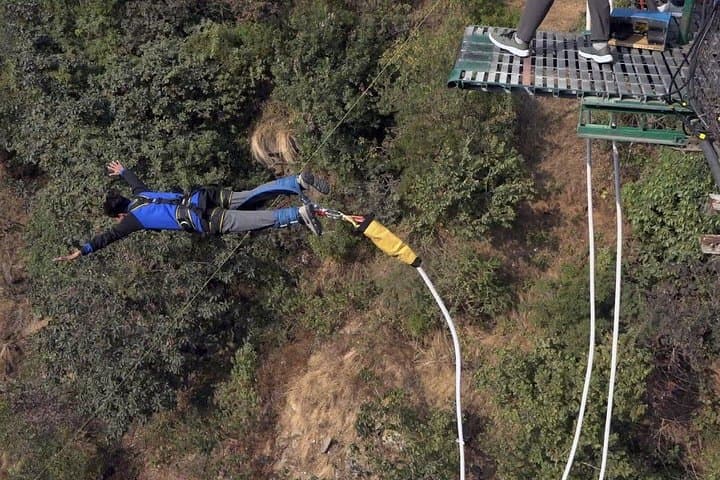
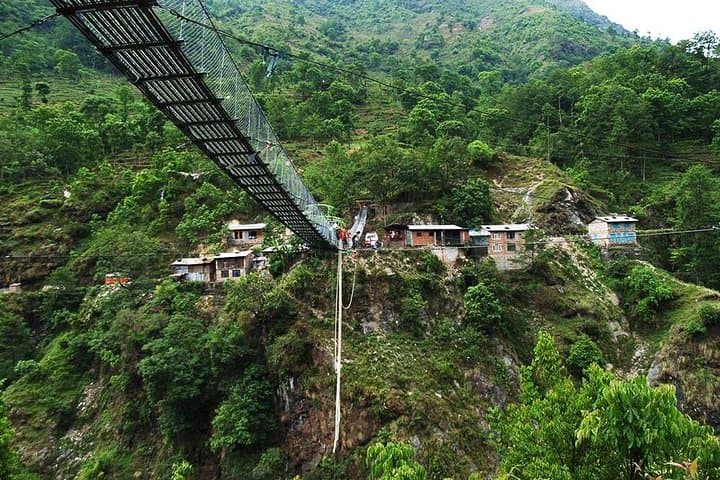
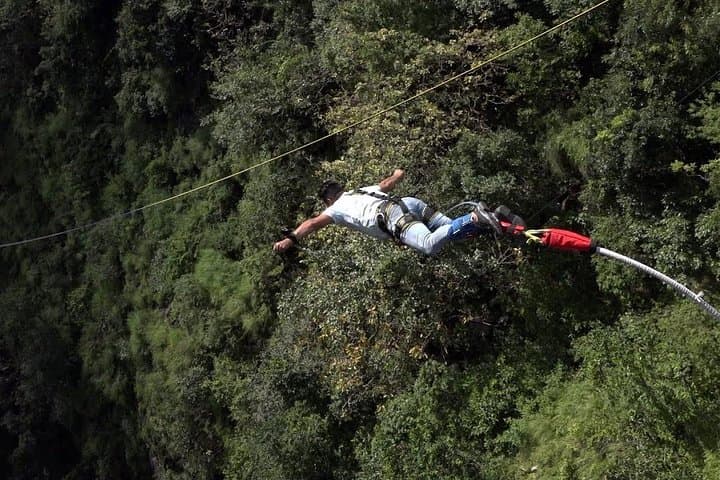
Standing on the steel catwalk, wind hollows through the Bhote Koshi gorge and the river below dares you with its fast, white rush. From this vantage the drop reads like a vertical canyon; Kathmandu’s rooftops sit distant and patient while the bridge bends above a 160‑meter fall — the kind of descent that rearranges your heartbeat.
Standing on the steel catwalk, wind hollows through the Bhote Koshi gorge and the river below dares you with its fast, white rush. From this vantage the drop reads like a vertical canyon; Kathmandu’s rooftops sit distant and patient while the bridge bends above a 160‑meter fall — the kind of descent that rearranges your heartbeat.
The site, operated as The Last Resort, sits on a stretch of river whose course has carved steep slate walls and loose talus over millennia. The bridge itself was engineered to strict alpine standards and assembled for tourists in the late 20th century as adventure travel to Nepal grew beyond trekking and climbing. Local culture here is a mix of Pahari river communities, Tibetan-influenced trade routes, and the steady stream of adventurers who pass through on their way to the Tibetan border.
Expect a day that’s as much travel as jump: approach roads climb and tighten into river valleys, and staff briefings cover harness checks and weight limits before you step to the edge. The jump is adrenaline-forward but technically simple — one controlled fall, cord rebound, then a lower to the riverbank or platform below.
Practical guidance: bring a printed or mobile ticket, government ID, and clothing that won’t flap free during the jump; wear snug, closed-toe shoes. Hydrate before you leave Kathmandu and allow time for local weather delays — operators cancel in unsafe conditions. If fear is the enemy, steady breathing and following the staff’s short checklist will keep the experience focused and safe. Above all, treat the gorge with respect: it’s rugged, loud, and unforgiving in equal measure.