THE ADVENTURE COLLECTIVE® · Independent discovery and booking for outdoor travel

From Baku’s modern skyline to Khinalug’s ancient stone lanes, this 16-day private tour threads geology, craft, and cuisine into one sustained exploration. Expect curated access to UNESCO sites, mud volcanoes, tea plantations, and remote mountain villages with comfortable transport and local expertise.
From Baku’s modern skyline to Khinalug’s ancient stone lanes, this 16-day private tour threads geology, craft, and cuisine into one sustained exploration. Expect curated access to UNESCO sites, mud volcanoes, tea plantations, and remote mountain villages with comfortable transport and local expertise.
You step out of the car onto a wind-swept promontory above the Caspian, and Baku’s Flame Towers pulse against an evening sky. The guide hands you a thermos of local black tea and, for the next 16 days, that first hot cup becomes a small ritual: a way to orient between coastal skylines, highland silence, and roadside villages where history speaks through stone and artisan hands.
Verified experiences and guided adventures in the surrounding area.
Operated by VLA_tourism · Baku, Baku
You step out of the car onto a wind-swept promontory above the Caspian, and Baku’s Flame Towers pulse against an evening sky. The guide hands you a thermos of local black tea and, for the next 16 days, that first hot cup becomes a small ritual: a way to orient between coastal skylines, highland silence, and roadside villages where history speaks through stone and artisan hands.
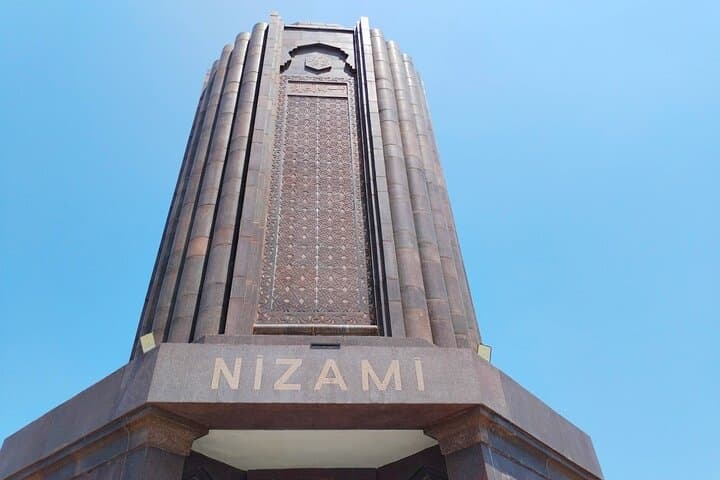
This journey reads like a cross-section of Azerbaijan’s layers. In Baku you move from the UNESCO-listed Old City—Palace of the Shirvanshahs and the Maiden Tower—to Zaha Hadid’s Heydar Aliyev Center, a contrast that frames modern ambition and preserved heritage. Eastward, Gobustan’s petroglyphs and the mud volcanoes fold human prehistory into dramatic geology. In the Caucasus, Khinalug sits at 2,300 meters, one of the oldest continuously inhabited mountain settlements; stone houses and narrow alleys show how architecture adapts to wind, snow, and isolation. South toward Lankaran, subtropical tea gardens and thermal springs introduce a humid, green counterpoint to the highlands.
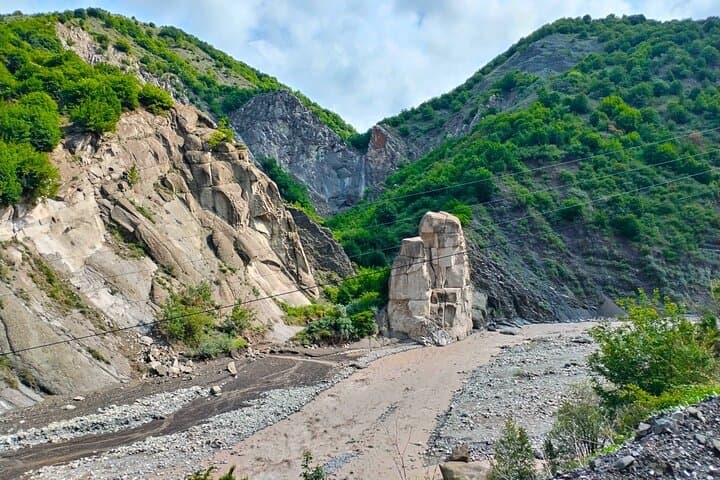
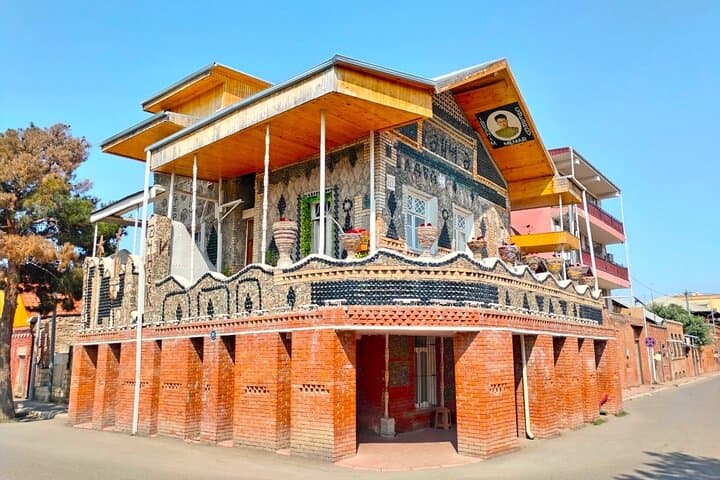
Geology and culture often arrive on the same page: Yanardag and Ateshgah reveal how natural gas shaped religion and ritual, while the Candy Cane Mountains expose sedimentary layers oxidized into stripes you can photograph in the late afternoon light. Villages such as Lahic and Sheki conserve crafts—copper forging, shebeke glass-in-wood windows, silk production—that tell trade-route stories going back centuries.
Practicalities are straightforward: the tour is private and pace-controlled, making it accessible to travelers with moderate fitness and curiosity. Expect well-timed transfers, 4-star hotel nights in major centers (with a village-house stay in Khinalug if you select the all-inclusive option), and expert English-speaking guides. High-altitude sections require basic acclimatization — plan slower mornings after Khinalug, hydrate deliberately, and let your body reset.
Packing notes: sturdy low- to mid-cut hiking shoes for village paths and uneven volcanic fields; a layered system for coastal warmth and alpine cold; a compact daypack for camera gear and water. Timing matters for photography—Gobustan and the Candy Cane formations are richest in late afternoon color; mountain mornings favor crisp portraits and wide vistas.
This itinerary is ideal for travelers who want landscapes, living craft, and quiet cultural depth rather than crowded sightseeing. With private logistics and curated access to museums, workshops, and natural sites, the trip turns a national survey into a carefully staged story—a guidebook rendered in lived experience, with room for surprise and time for close observation.
moderate.
16 days (approx. 230–360 minutes driving segments typical per day).
Good baseline mobility and stamina for moderate walking; able to handle stairs, cobbles, and short hill climbs.
Many nationalities require a visa; check Azerbaijan’s e-visa portal well before travel and allow time for processing.
Most walks are short to moderate—village alleys, petroglyph sites, and waterfall approaches—no technical hiking required.
Yes; the tour is private and can be booked solo, with single-room supplements if required under the selected package.
The all-inclusive tier covers 14 nights in 4-star hotels (and one village house in Khinalug), most meals, entrance fees, and specified experiences; verify inclusions at booking.
At 2,300 m nights can drop near freezing depending on season—pack warm layers and a thermal mid-layer for comfort.
No specific vaccinations are universally mandated, but routine immunizations and travel health advice (e.g., for food and water hygiene) are recommended.
Azerbaijan has been a cultural crossroads between Persia, the Ottoman world, and Russia; Baku’s Old City preserves medieval Shirvanshah influences while mountain villages retain older Caucasian customs.
Many mountain areas are fragile—stick to marked paths and avoid collecting plants. Support local craftspeople directly to help sustain traditional economies.
VLA_tourism operates guided outdoor trips and adventures with an emphasis on safety, stewardship, and memorable experiences.
You step out of the car onto a wind-swept promontory above the Caspian, and Baku’s Flame Towers pulse against an evening sky. The guide hands you a thermos of local black tea and, for the next 16 days, that first hot cup becomes a small ritual: a way to orient between coastal skylines, highland silence, and roadside villages where history speaks through stone and artisan hands.
You step out of the car onto a wind-swept promontory above the Caspian, and Baku’s Flame Towers pulse against an evening sky. The guide hands you a thermos of local black tea and, for the next 16 days, that first hot cup becomes a small ritual: a way to orient between coastal skylines, highland silence, and roadside villages where history speaks through stone and artisan hands.
This journey reads like a cross-section of Azerbaijan’s layers. In Baku you move from the UNESCO-listed Old City—Palace of the Shirvanshahs and the Maiden Tower—to Zaha Hadid’s Heydar Aliyev Center, a contrast that frames modern ambition and preserved heritage. Eastward, Gobustan’s petroglyphs and the mud volcanoes fold human prehistory into dramatic geology. In the Caucasus, Khinalug sits at 2,300 meters, one of the oldest continuously inhabited mountain settlements; stone houses and narrow alleys show how architecture adapts to wind, snow, and isolation. South toward Lankaran, subtropical tea gardens and thermal springs introduce a humid, green counterpoint to the highlands.
Geology and culture often arrive on the same page: Yanardag and Ateshgah reveal how natural gas shaped religion and ritual, while the Candy Cane Mountains expose sedimentary layers oxidized into stripes you can photograph in the late afternoon light. Villages such as Lahic and Sheki conserve crafts—copper forging, shebeke glass-in-wood windows, silk production—that tell trade-route stories going back centuries.
Practicalities are straightforward: the tour is private and pace-controlled, making it accessible to travelers with moderate fitness and curiosity. Expect well-timed transfers, 4-star hotel nights in major centers (with a village-house stay in Khinalug if you select the all-inclusive option), and expert English-speaking guides. High-altitude sections require basic acclimatization — plan slower mornings after Khinalug, hydrate deliberately, and let your body reset.
Packing notes: sturdy low- to mid-cut hiking shoes for village paths and uneven volcanic fields; a layered system for coastal warmth and alpine cold; a compact daypack for camera gear and water. Timing matters for photography—Gobustan and the Candy Cane formations are richest in late afternoon color; mountain mornings favor crisp portraits and wide vistas.
This itinerary is ideal for travelers who want landscapes, living craft, and quiet cultural depth rather than crowded sightseeing. With private logistics and curated access to museums, workshops, and natural sites, the trip turns a national survey into a carefully staged story—a guidebook rendered in lived experience, with room for surprise and time for close observation.