THE ADVENTURE COLLECTIVE® · Independent discovery and booking for outdoor travel

Fly to Lukla and walk into the Khumbu: this 15-day private Everest Base Camp trek combines Sherpa culture, teahouse nights, and high-altitude views of Everest. Built-in acclimatization and local guides make it a demanding but achievable Himalayan classic.
Fly to Lukla and walk into the Khumbu: this 15-day private Everest Base Camp trek combines Sherpa culture, teahouse nights, and high-altitude views of Everest. Built-in acclimatization and local guides make it a demanding but achievable Himalayan classic.
You step off the tiny Lukla runway into thin air and a chain of ridgelines pulls your eyes east: Everest’s pale flank dominates the skyline, glaciers and rock crests daring you forward.
Verified experiences and guided adventures in the surrounding area.
Operated by Expedition Himalayan.com Pvt. Ltd. · Kathmandu, Bagmati Province
You step off the tiny Lukla runway into thin air and a chain of ridgelines pulls your eyes east: Everest’s pale flank dominates the skyline, glaciers and rock crests daring you forward.
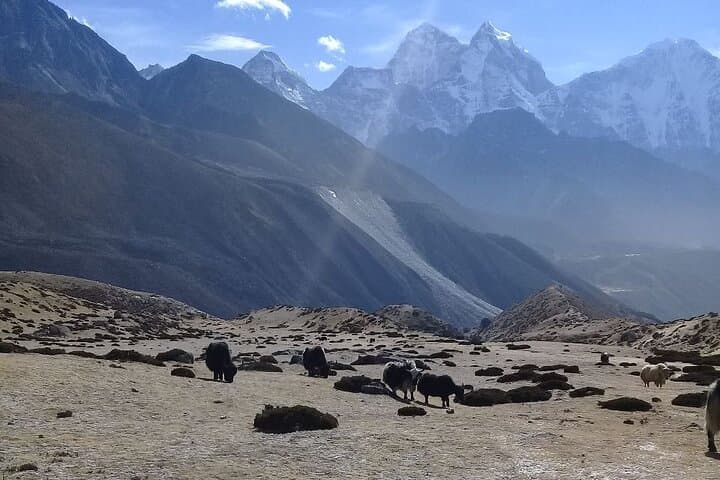
This 15-day private Everest Base Camp (EBC) trek threads through the heart of the Khumbu — hardwood valleys give way to rhododendron scrub, then to wind-scoured moraine and ice-polished rock. The route crosses Sagarmatha National Park, a UNESCO-protected area, passing Sherpa villages like Namche Bazaar (3420 m) and Tengboche (3870 m) where mani walls, prayer flags and hilltop monasteries mark local culture.
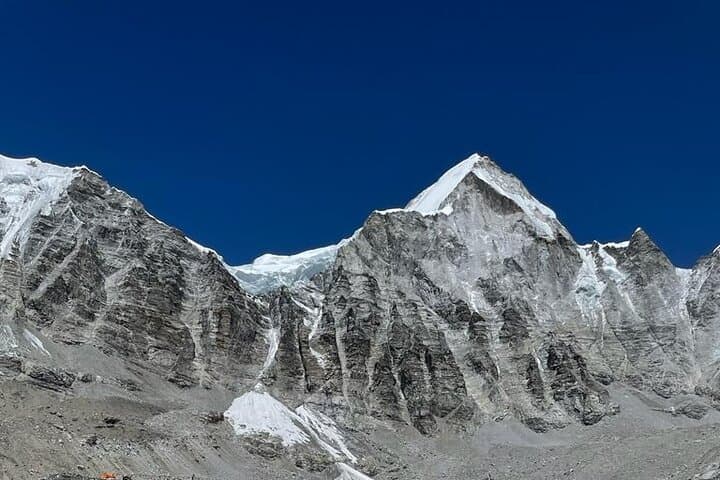
Geology here is raw: the Khumbu Glacier carves a trough of silt and boulders, and peaks like Nuptse and Lhotse show stacked metamorphic bands uplifted by the collision of the Indian and Eurasian plates. History and culture overlap — Sherpa mountaineering traditions, Buddhist practices, and trade routes that once connected Tibet to the Nepal lowlands inform daily life in the teahouses.
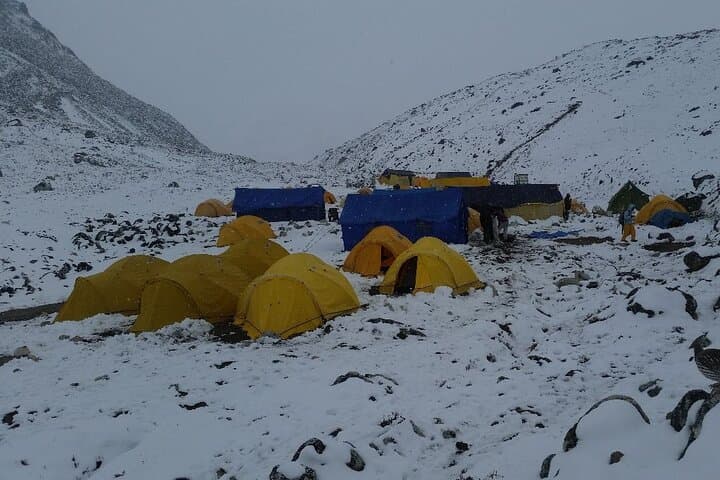
Practical planning is straightforward but strict: systematic acclimatization days in Namche and Dingboche are built into the itinerary; you’ll sleep in teahouses and expect basic hot meals. Weather windows favor spring and autumn for clearer skies; monsoon brings heavy snow and trail-softening melt. Pack a warm down jacket, high-traction boots, water purification, and plan for layers — daytime sun can be fierce while nights plummet. Guides and porters are standard; their local knowledge does more than ease your pack — it speeds decision-making when altitude matters.
Expect steady uphill days, thin air, and uncompromising scenery: Kala Patthar (≈5545 m) offers the most accessible panoramic viewpoint of Everest, while Gorak Shep and the EBC plateau provide the high-point of the journey. Respect altitude, hydrate, and move deliberately — the mountains will not be rushed.
challenging.
15 days.
Good aerobic fitness with prior multi-day hiking experience is recommended; ability to walk 5–7 hours on hilly terrain daily.
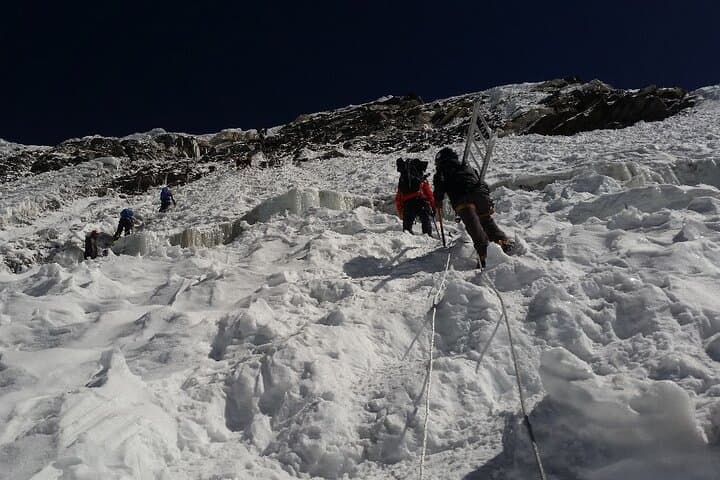
No technical climbing skills are required; this is a high-altitude trek, not a climb, but good fitness and careful acclimatization are essential.
Spring (March–May) and autumn (September–November) offer the most stable weather and clear mountain views; monsoon brings snow and reduced visibility.
Daily stages vary from 3–7 hours with steady elevation gain; some sections are steep and rocky, so pacing and rest days matter for acclimatization.
Basic twin rooms and communal dining rooms are standard; expect simple meals (dal bhat, soups) and limited hot water—bring a sleeping liner for hygiene and warmth.
The Khumbu route follows centuries-old trade and pilgrimage corridors; modern mountaineering history is tied to the 1953 Everest ascent and sustained Sherpa guiding traditions.
Sagarmatha National Park regulates permits and park fees; minimize waste, avoid single-use plastics, and pack out non-biodegradables to protect fragile alpine ecosystems.
Expedition Himalayan.com Pvt. Ltd. operates guided outdoor trips and adventures with an emphasis on safety, stewardship, and memorable experiences.
You step off the tiny Lukla runway into thin air and a chain of ridgelines pulls your eyes east: Everest’s pale flank dominates the skyline, glaciers and rock crests daring you forward.
You step off the tiny Lukla runway into thin air and a chain of ridgelines pulls your eyes east: Everest’s pale flank dominates the skyline, glaciers and rock crests daring you forward.
This 15-day private Everest Base Camp (EBC) trek threads through the heart of the Khumbu — hardwood valleys give way to rhododendron scrub, then to wind-scoured moraine and ice-polished rock. The route crosses Sagarmatha National Park, a UNESCO-protected area, passing Sherpa villages like Namche Bazaar (3420 m) and Tengboche (3870 m) where mani walls, prayer flags and hilltop monasteries mark local culture.
Geology here is raw: the Khumbu Glacier carves a trough of silt and boulders, and peaks like Nuptse and Lhotse show stacked metamorphic bands uplifted by the collision of the Indian and Eurasian plates. History and culture overlap — Sherpa mountaineering traditions, Buddhist practices, and trade routes that once connected Tibet to the Nepal lowlands inform daily life in the teahouses.
Practical planning is straightforward but strict: systematic acclimatization days in Namche and Dingboche are built into the itinerary; you’ll sleep in teahouses and expect basic hot meals. Weather windows favor spring and autumn for clearer skies; monsoon brings heavy snow and trail-softening melt. Pack a warm down jacket, high-traction boots, water purification, and plan for layers — daytime sun can be fierce while nights plummet. Guides and porters are standard; their local knowledge does more than ease your pack — it speeds decision-making when altitude matters.
Expect steady uphill days, thin air, and uncompromising scenery: Kala Patthar (≈5545 m) offers the most accessible panoramic viewpoint of Everest, while Gorak Shep and the EBC plateau provide the high-point of the journey. Respect altitude, hydrate, and move deliberately — the mountains will not be rushed.