THE ADVENTURE COLLECTIVE® · Independent discovery and booking for outdoor travel

From Casablanca’s Atlantic edge to the rolling dunes of Erg Chebbi, this private 15-day circuit stitches Morocco’s imperial cities, mountain passes and Sahara nights into one coherent route. Expect medina workshops, Roman ruins, cedar forests with macaques, and a luxury desert camp under the stars.
From Casablanca’s Atlantic edge to the rolling dunes of Erg Chebbi, this private 15-day circuit stitches Morocco’s imperial cities, mountain passes and Sahara nights into one coherent route. Expect medina workshops, Roman ruins, cedar forests with macaques, and a luxury desert camp under the stars.
You step off the plane in Casablanca and the Atlantic breeze pushes the dust from the road like a welcome card — salt on your lips, the spire of Hassan II Mosque cutting the sky. Over the next 15 days this private loop will carry you from Mediterranean ports and blue-painted alleys to cedar forests, Roman ruins, high Atlas passes and the orange-gold dunes of Erg Chebbi. The rhythm of the trip is deliberate: mornings in medinas, afternoons on the road, evenings in riads or a desert camp listening to Berber music.
Verified experiences and guided adventures in the surrounding area.
Operated by DesertTrips · Casablanca, Casablanca-Settat
You step off the plane in Casablanca and the Atlantic breeze pushes the dust from the road like a welcome card — salt on your lips, the spire of Hassan II Mosque cutting the sky. Over the next 15 days this private loop will carry you from Mediterranean ports and blue-painted alleys to cedar forests, Roman ruins, high Atlas passes and the orange-gold dunes of Erg Chebbi. The rhythm of the trip is deliberate: mornings in medinas, afternoons on the road, evenings in riads or a desert camp listening to Berber music.
Morocco’s story is layered: Phoenician and Roman traders, Andalusian refugees and Berber mountain tribes all left marks you encounter in Volubilis’ mosaics, Fes’ medieval leather baths and the fortified kasbahs of the south. The Atlas Mountains are folded limestone and volcanic rock; the Ziz Valley is a living relic of ancient trans-Saharan caravan routes where ksars guarded salt and gold. In the Rif and Middle Atlas you’ll notice cedar stands that host troops of Barbary macaques; near Merzouga, seasonal lakes attract flamingos and small waders before dunes reclaim the shore.
Culturally, the tour balances curated access with free hours to explore. Local guides in Fes and Marrakech open locked doors of craft workshops and teach the etiquette of the souk: eyes, polite refusals, and how to weigh spices by hand. In the south, expect generosity — mint tea is offered as conversation — and a different sense of time where the desert sets the pace.
Practically, this is a driven itinerary: long days on scenic highways (the Tizi n’Tichka pass peaks around 2,260 m) and multiple transfers mean stamina for travel is as important as hiking fitness. Pack for temperature swings — cool mornings in Ifrane and hot afternoons in Marrakech and the Sahara. Bring cash for small markets, light hiking shoes for Todra and Akchour trails, and a small headlamp for riads and desert tents.
Timing matters: spring (May) brings the Rose Festival in El Kalaa Mgouna and milder desert days; summer is intensely hot in inland valleys; autumn offers warm, stable weather for walking; winter can bring snow in the Middle Atlas and crisp nights in the desert. Respect local customs — dress conservatively in rural towns — and support local economies by buying from cooperatives (argan and pottery) and leaving minimal trace in the desert.
For travelers who want a wide-ranging first pass at Morocco, this private 15-day loop is an efficient, immersive way to see the country’s geological highs, historic lows and living traditions while sleeping in a mix of riads, hotels and a luxury desert camp.
moderate.
15 days.
Good travel stamina for multi-day driving and short hikes; not technically demanding but expect stairs, uneven medina alleys and some steep walking.
Moroccan dirham (MAD) is the local currency; ATMs are available in cities — carry small bills for markets and remote villages.
Many nationalities can enter Morocco visa-free for short stays—check your government’s foreign travel guidance to confirm.
Most days are easy to moderate; you’ll do short hikes (Akchour, Todra) and climb uneven medina streets, but the tour requires travel stamina for long drives.
The itinerary includes 14 nights in hotels or riads, one luxury desert camp night, and breakfasts; a small number of dinners are included as specified.
Yes — it’s a private tour that can accommodate families and children; camels and desert tents are family-friendly but check pickup logistics for infants.
Expect moderate walking with narrow, uneven alleys and occasional stairs—comfortable shoes and a small backpack are recommended.
The route ties Morocco’s imperial cities—Rabat, Meknes, Fes, Marrakech—to older networks: Roman Volubilis and caravan routes through Ziz Valley shaped trade and settlement patterns.
Water is scarce across inland Morocco; favor local cooperatives for purchases and minimize water use in desert camps; stick to marked trails to protect fragile dune and oasis systems.
DesertTrips operates guided outdoor trips and adventures with an emphasis on safety, stewardship, and memorable experiences.
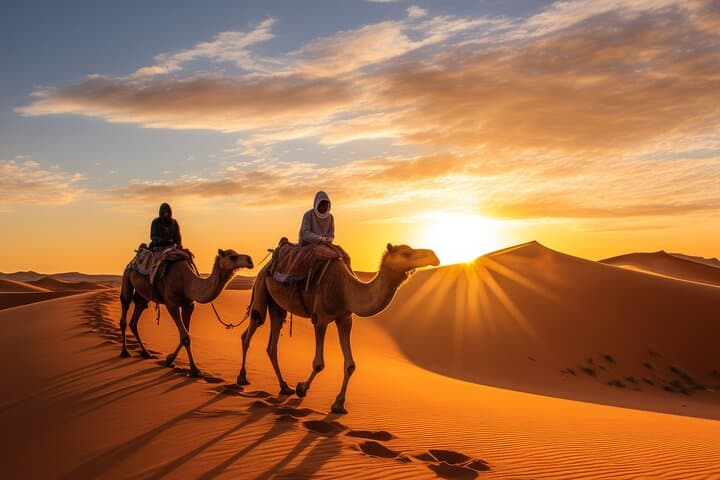
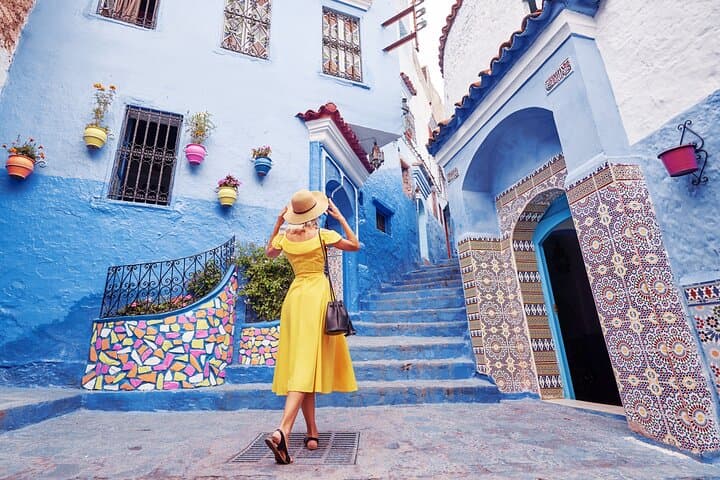
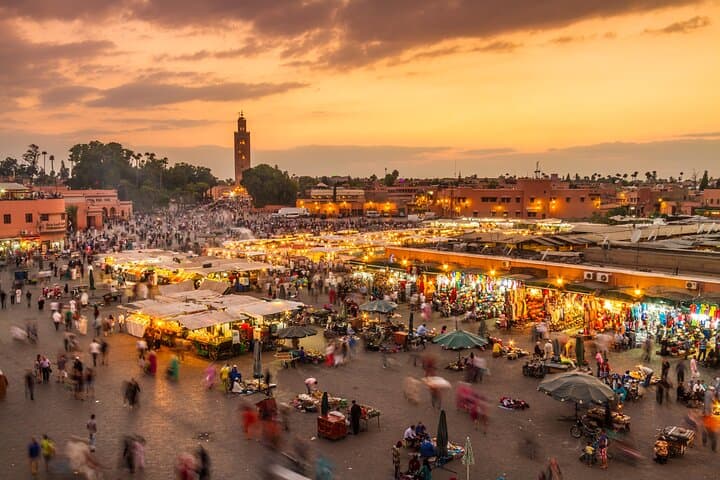
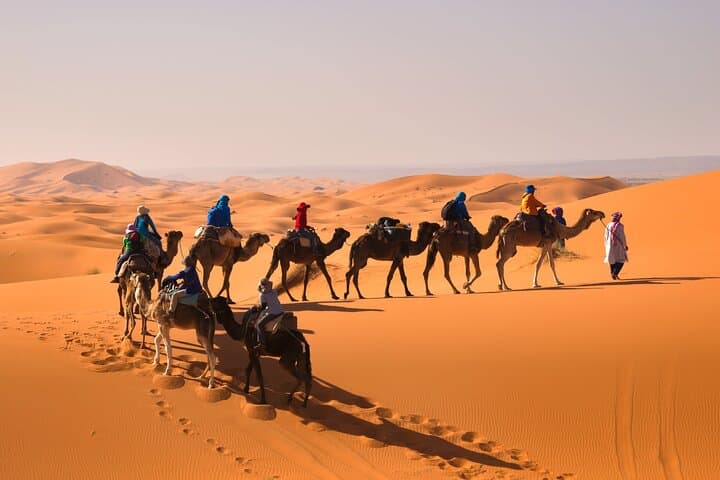
You step off the plane in Casablanca and the Atlantic breeze pushes the dust from the road like a welcome card — salt on your lips, the spire of Hassan II Mosque cutting the sky. Over the next 15 days this private loop will carry you from Mediterranean ports and blue-painted alleys to cedar forests, Roman ruins, high Atlas passes and the orange-gold dunes of Erg Chebbi. The rhythm of the trip is deliberate: mornings in medinas, afternoons on the road, evenings in riads or a desert camp listening to Berber music.
You step off the plane in Casablanca and the Atlantic breeze pushes the dust from the road like a welcome card — salt on your lips, the spire of Hassan II Mosque cutting the sky. Over the next 15 days this private loop will carry you from Mediterranean ports and blue-painted alleys to cedar forests, Roman ruins, high Atlas passes and the orange-gold dunes of Erg Chebbi. The rhythm of the trip is deliberate: mornings in medinas, afternoons on the road, evenings in riads or a desert camp listening to Berber music.
Morocco’s story is layered: Phoenician and Roman traders, Andalusian refugees and Berber mountain tribes all left marks you encounter in Volubilis’ mosaics, Fes’ medieval leather baths and the fortified kasbahs of the south. The Atlas Mountains are folded limestone and volcanic rock; the Ziz Valley is a living relic of ancient trans-Saharan caravan routes where ksars guarded salt and gold. In the Rif and Middle Atlas you’ll notice cedar stands that host troops of Barbary macaques; near Merzouga, seasonal lakes attract flamingos and small waders before dunes reclaim the shore.
Culturally, the tour balances curated access with free hours to explore. Local guides in Fes and Marrakech open locked doors of craft workshops and teach the etiquette of the souk: eyes, polite refusals, and how to weigh spices by hand. In the south, expect generosity — mint tea is offered as conversation — and a different sense of time where the desert sets the pace.
Practically, this is a driven itinerary: long days on scenic highways (the Tizi n’Tichka pass peaks around 2,260 m) and multiple transfers mean stamina for travel is as important as hiking fitness. Pack for temperature swings — cool mornings in Ifrane and hot afternoons in Marrakech and the Sahara. Bring cash for small markets, light hiking shoes for Todra and Akchour trails, and a small headlamp for riads and desert tents.
Timing matters: spring (May) brings the Rose Festival in El Kalaa Mgouna and milder desert days; summer is intensely hot in inland valleys; autumn offers warm, stable weather for walking; winter can bring snow in the Middle Atlas and crisp nights in the desert. Respect local customs — dress conservatively in rural towns — and support local economies by buying from cooperatives (argan and pottery) and leaving minimal trace in the desert.
For travelers who want a wide-ranging first pass at Morocco, this private 15-day loop is an efficient, immersive way to see the country’s geological highs, historic lows and living traditions while sleeping in a mix of riads, hotels and a luxury desert camp.