THE ADVENTURE COLLECTIVE® · Independent discovery and booking for outdoor travel

Traverse Mongolia’s Gobi over 15 days: dune climbs, fossil-rich cliffs, remote ger camps and the pine-fringed finish of Terelj. This expedition blends geology, archaeology and hands-on desert travel.
Traverse Mongolia’s Gobi over 15 days: dune climbs, fossil-rich cliffs, remote ger camps and the pine-fringed finish of Terelj. This expedition blends geology, archaeology and hands-on desert travel.
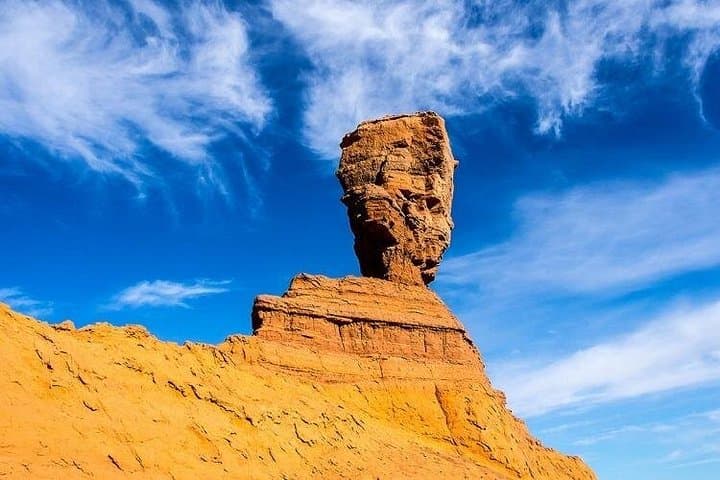
The sun slides low over red cliffs as a wind-carved canyon swallows the last light — you stand on a rim where dinosaur bones were first pulled from Mongolian sand and the desert seems to be holding its breath.
Verified experiences and guided adventures in the surrounding area.
Operated by Mongolian Vision Tours · Dalanzadgad, Omnogovi
The sun slides low over red cliffs as a wind-carved canyon swallows the last light — you stand on a rim where dinosaur bones were first pulled from Mongolian sand and the desert seems to be holding its breath.
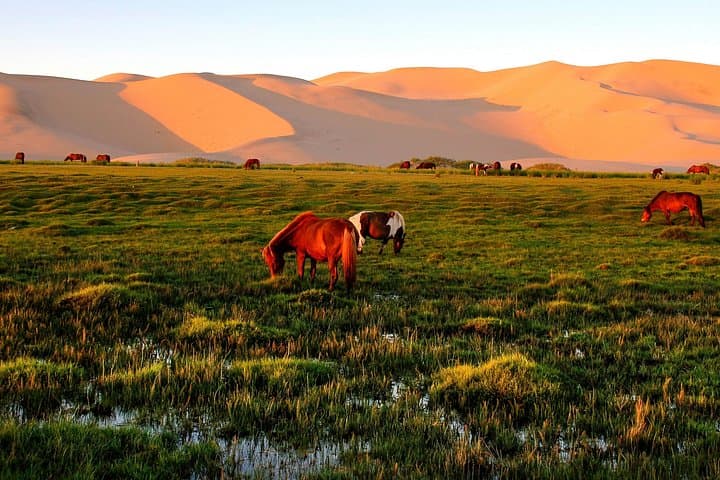
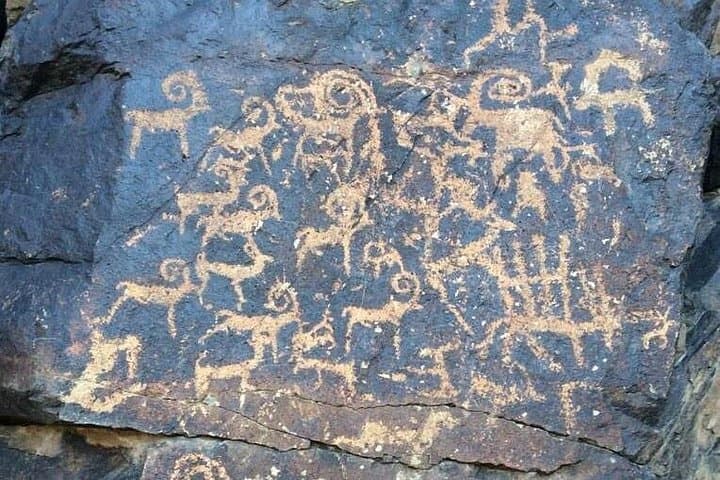
This 15-day route threads Ulaanbaatar to Terelj through the Gobi’s geological showstoppers: crystal-lined Tsagaan Agui, the 30m-high red walls of Khermen Tsav, the singing Khongor dunes (up to 200m high), and the shaded Yoliin Am in Gobi Gurvan Saikhan. Ikh Bogd’s granite ridges rise toward 4,000m; White Stupa (Tsagaan Suvraga) reads like a page from an ancient seabed. Human history is layered here — Paleolithic camps, Bronze Age rock art at Bichigt Khad, and Roy Chapman Andrews’s early 20th-century excavations that transformed paleontology.
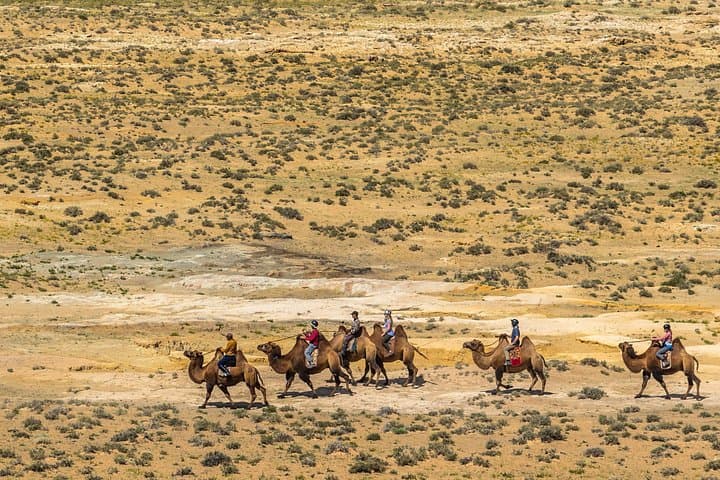
Expect long drives between dispersed sites, mixed-terrain hiking (sandy traverses, rocky outcrops, short canyon scrambles), ger-camp and tent nights, and opportunities for camel or horse rides. Temperatures swing dramatically from daytime heat on open dunes to cold nights in tents; shade and water are rare on long stretches.
Practical guidance: carry 3–4 L water per day on field days, break dune ascents into stages to conserve energy, wear high-traction boots for loose sand and granite, and pack a warm layer and headlamp for remote camp nights. Plan buffer time for dusty roads and local resupplies at Bayanlig or Bayankhongor. Leave no trace: fossil sites are scientifically sensitive and often protected.
moderate.
15 days.
Moderate endurance for repeated hikes, dune climbs and multi-hour drives; ability to handle uneven terrain and long days.
Basic to moderate fitness is sufficient — expect daily short hikes, dune climbs and some horse/camel rides; most sections are not technical but require endurance.
Coverage is intermittent; towns like Bayanlig and Dalanzadgad have service, but many camps and remote sites will be offline — bring offline maps and backups.
Nights alternate between tourist ger camps, nomadic family gers and tent camping; ger camps provide basic facilities, but expect rustic conditions in remote areas.
Many travelers of varied ages do this tour, but it involves long drives, dusty roads and uneven terrain — consult with your operator about specific health concerns.
The Gobi became famous after early 20th-century Central Asian expeditions (notably Roy Chapman Andrews) unearthed dinosaur fossils and eggs at sites like the Flaming Cliffs.
Many fossil sites and fragile shrublands (saxaul) are sensitive to disturbance; stick to paths, avoid collecting artifacts, and support local ger camps to reduce impact.
Mongolian Vision Tours operates guided outdoor trips and adventures with an emphasis on safety, stewardship, and memorable experiences.
The sun slides low over red cliffs as a wind-carved canyon swallows the last light — you stand on a rim where dinosaur bones were first pulled from Mongolian sand and the desert seems to be holding its breath.
The sun slides low over red cliffs as a wind-carved canyon swallows the last light — you stand on a rim where dinosaur bones were first pulled from Mongolian sand and the desert seems to be holding its breath.
This 15-day route threads Ulaanbaatar to Terelj through the Gobi’s geological showstoppers: crystal-lined Tsagaan Agui, the 30m-high red walls of Khermen Tsav, the singing Khongor dunes (up to 200m high), and the shaded Yoliin Am in Gobi Gurvan Saikhan. Ikh Bogd’s granite ridges rise toward 4,000m; White Stupa (Tsagaan Suvraga) reads like a page from an ancient seabed. Human history is layered here — Paleolithic camps, Bronze Age rock art at Bichigt Khad, and Roy Chapman Andrews’s early 20th-century excavations that transformed paleontology.
Expect long drives between dispersed sites, mixed-terrain hiking (sandy traverses, rocky outcrops, short canyon scrambles), ger-camp and tent nights, and opportunities for camel or horse rides. Temperatures swing dramatically from daytime heat on open dunes to cold nights in tents; shade and water are rare on long stretches.
Practical guidance: carry 3–4 L water per day on field days, break dune ascents into stages to conserve energy, wear high-traction boots for loose sand and granite, and pack a warm layer and headlamp for remote camp nights. Plan buffer time for dusty roads and local resupplies at Bayanlig or Bayankhongor. Leave no trace: fossil sites are scientifically sensitive and often protected.