THE ADVENTURE COLLECTIVE® · Independent discovery and booking for outdoor travel

Move from Angkor’s sunrise towers to Kampot’s pepper farms and Kep’s quiet shores on a paced 15‑day circuit that combines major archaeological sites with coastal relaxation. Expect long transfers, early temple mornings, and hands‑on local encounters.
Move from Angkor’s sunrise towers to Kampot’s pepper farms and Kep’s quiet shores on a paced 15‑day circuit that combines major archaeological sites with coastal relaxation. Expect long transfers, early temple mornings, and hands‑on local encounters.
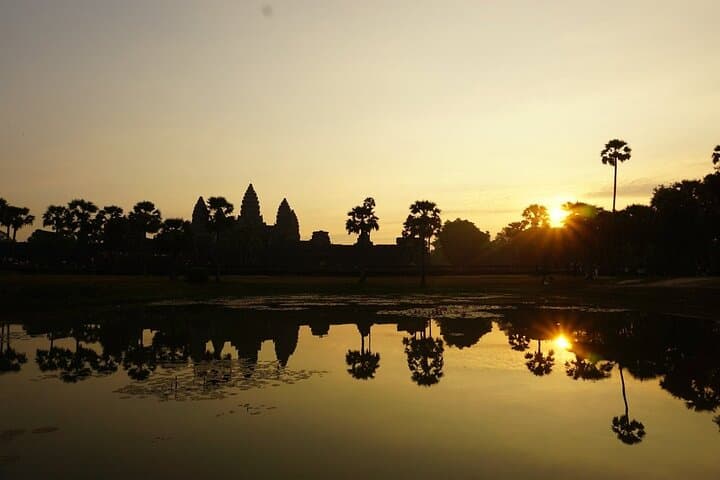
Dawn in Siem Reap arrives as a humid hush broken by temple bells and tuk‑tuk engines. Travelers in this 15‑day circuit move from the carved galleries of Angkor Wat into riverside towns, French colonial hill stations, and white‑sand southern beaches — a route that stitches together Cambodia’s archaeological grandeur and coastal calm.
Verified experiences and guided adventures in the surrounding area.
Operated by Travel to Inspire · Siem Reap, Siem Reap Province
Dawn in Siem Reap arrives as a humid hush broken by temple bells and tuk‑tuk engines. Travelers in this 15‑day circuit move from the carved galleries of Angkor Wat into riverside towns, French colonial hill stations, and white‑sand southern beaches — a route that stitches together Cambodia’s archaeological grandeur and coastal calm.
The itinerary follows Khmer history across stone and sea: Angkor’s 12th‑century temples reveal sandstone reliefs and hydraulic engineering; Phnom Kulen’s riverbed carvings and reclining Buddha mark a sacred highland; Phnom Penh’s royal architecture and museums tell modern, often painful chapters. Geologically, the central plains sit on alluvial deposits fed by the Tonle Sap and Mekong; the coast shifts to limestone outcrops and mangrove flats that support local fisheries.
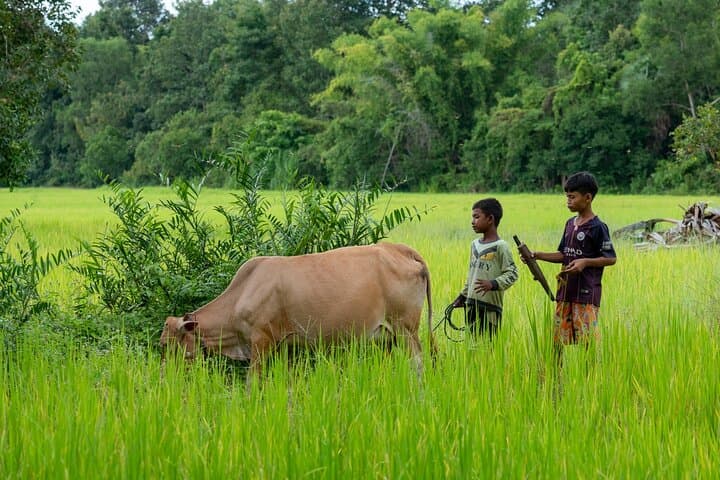
Culturally, the trip balances guided monuments with market walks, a silk‑weaving visit on Koh Dach, and pepper farms around Kampot where smallholders still hand‑process fruit. Nature asserts itself everywhere: the Tonle Sap’s floating villages adapt to rising and falling waters, while Bokor’s winds buffet the abandoned French buildings.
Practical guidance: expect long transfer days by private car, early starts for temple sunrises, and tropical heat — pack breathable layers, insect repellent, and comfortable walking shoes. Carry photocopies of travel documents and a small amount of local currency for markets and tips. Respect dress codes at religious sites (shoulders and knees covered) and plan downtime on Kep or Sihanoukville beaches to recover between cultural days. This loop is best for travelers wanting a paced mix of archaeology, rural life, and sea‑side relaxation.
moderate.
15 days.
Suitable for travelers with basic fitness—active days include walking on uneven temple grounds, short hikes at Bokor and Kulen, and boat transfers.
Most nationalities require a visa; many travelers obtain an e‑visa before arrival or a visa on arrival—check entry rules for your passport well in advance.
No—days are paced for general travelers, but there are early starts and uneven surfaces at temples; notify operators of mobility limits.
US dollars are widely accepted alongside the Cambodian riel; keep small USD bills for markets, tips, and small purchases.
This itinerary includes daily meals as stated and all entrance fees according to the tour inclusions, though some meals and personal expenses may be on your own.
The route traces centuries of Khmer civilization—from Angkor’s imperial capital to French colonial hill stations—highlighting shifts in religion, trade, and settlement patterns.
Tonle Sap and coastal mangroves are ecologically sensitive; choose operators that support community‑based tourism and avoid single‑use plastics to reduce impact.
Travel to Inspire operates guided outdoor trips and adventures with an emphasis on safety, stewardship, and memorable experiences.
Dawn in Siem Reap arrives as a humid hush broken by temple bells and tuk‑tuk engines. Travelers in this 15‑day circuit move from the carved galleries of Angkor Wat into riverside towns, French colonial hill stations, and white‑sand southern beaches — a route that stitches together Cambodia’s archaeological grandeur and coastal calm.
Dawn in Siem Reap arrives as a humid hush broken by temple bells and tuk‑tuk engines. Travelers in this 15‑day circuit move from the carved galleries of Angkor Wat into riverside towns, French colonial hill stations, and white‑sand southern beaches — a route that stitches together Cambodia’s archaeological grandeur and coastal calm.
The itinerary follows Khmer history across stone and sea: Angkor’s 12th‑century temples reveal sandstone reliefs and hydraulic engineering; Phnom Kulen’s riverbed carvings and reclining Buddha mark a sacred highland; Phnom Penh’s royal architecture and museums tell modern, often painful chapters. Geologically, the central plains sit on alluvial deposits fed by the Tonle Sap and Mekong; the coast shifts to limestone outcrops and mangrove flats that support local fisheries.
Culturally, the trip balances guided monuments with market walks, a silk‑weaving visit on Koh Dach, and pepper farms around Kampot where smallholders still hand‑process fruit. Nature asserts itself everywhere: the Tonle Sap’s floating villages adapt to rising and falling waters, while Bokor’s winds buffet the abandoned French buildings.
Practical guidance: expect long transfer days by private car, early starts for temple sunrises, and tropical heat — pack breathable layers, insect repellent, and comfortable walking shoes. Carry photocopies of travel documents and a small amount of local currency for markets and tips. Respect dress codes at religious sites (shoulders and knees covered) and plan downtime on Kep or Sihanoukville beaches to recover between cultural days. This loop is best for travelers wanting a paced mix of archaeology, rural life, and sea‑side relaxation.