THE ADVENTURE COLLECTIVE® · Independent discovery and booking for outdoor travel

A two-week, guided trek from Lukla to Everest Base Camp and Kala Patthar that combines high-altitude scenery, Sherpa culture, and careful acclimatization. Expect rugged trails, basic tea-house lodging, and weather-dependent flights to Lukla.
A two-week, guided trek from Lukla to Everest Base Camp and Kala Patthar that combines high-altitude scenery, Sherpa culture, and careful acclimatization. Expect rugged trails, basic tea-house lodging, and weather-dependent flights to Lukla.
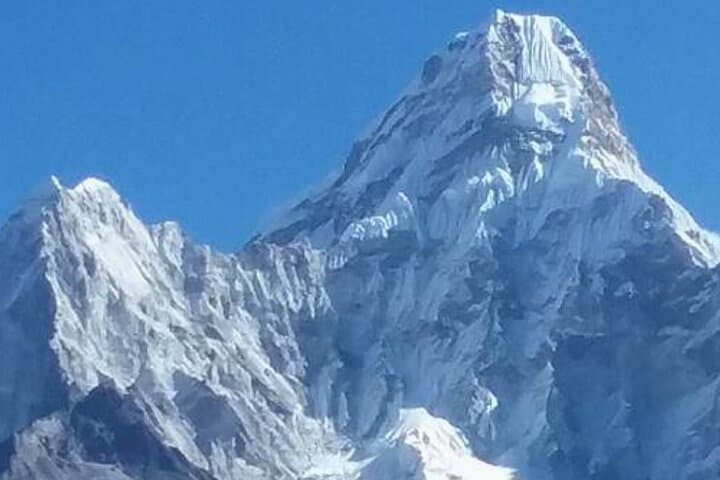
You step out of the tiny Lukla airport into thin, sun-silvered air and a chorus of boots and prayer flags. The trail unspools along the Dudh Koshi, the river daring you forward as rhododendron forests and stone villages pass like chapters. Each day’s rhythm—hike, tea house, early bed—beats toward a skyline dominated by Everest, Lhotse and Ama Dablam.
Verified experiences and guided adventures in the surrounding area.
Operated by Ambition Himalaya Treks & Expeditions · Lukla, Province No. 1
You step out of the tiny Lukla airport into thin, sun-silvered air and a chorus of boots and prayer flags. The trail unspools along the Dudh Koshi, the river daring you forward as rhododendron forests and stone villages pass like chapters. Each day’s rhythm—hike, tea house, early bed—beats toward a skyline dominated by Everest, Lhotse and Ama Dablam.
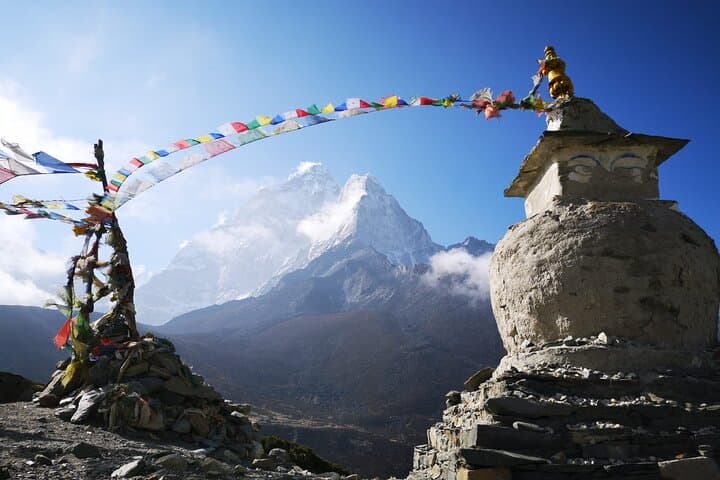
This route runs through Sagarmatha National Park, a UNESCO biosphere where glacial valleys reveal the geological story of the Himalaya: uplifted rock and grinding ice. The Sherpa communities you pass keep a living culture—monasteries, mani walls and seasonal festivals—rooted in Tibetan Buddhism and high-altitude pastoralism. The region also carries modern history; routes once used by early climbers now serve trekkers seeking perspective rather than summits.
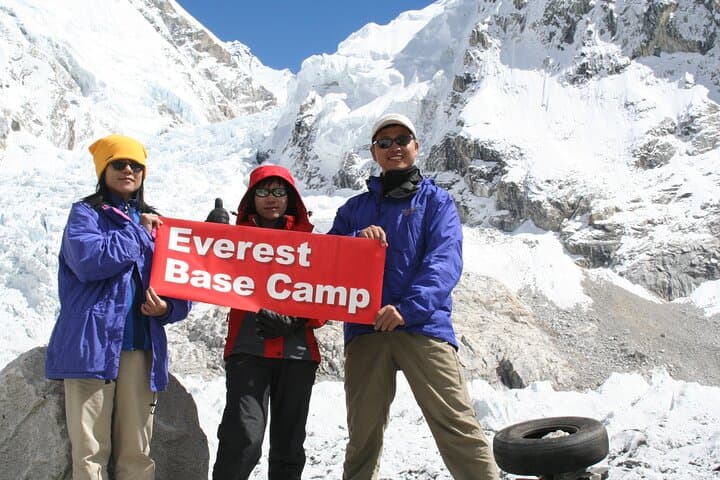
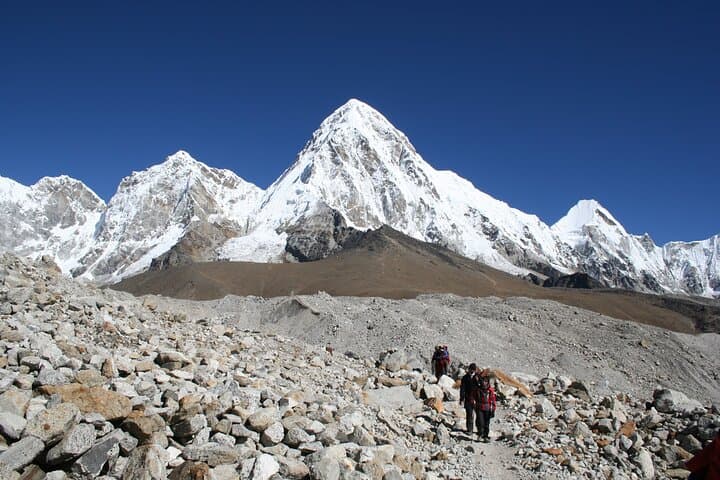
Expect varied terrain: steep stone steps, rocky moraines, icy sections near Gorakshep and exposed ridgelines on approach to Kala Patthar (5,545 m). Altitude is the true challenge—rest days in Namche and Dingboche are built into the itinerary to help acclimatize. Lodging is twin-share tea houses with basic hot meals; the lodges power down early and solar or local generators run lights.
Practical guidance: move slowly, hydrate constantly, and use layers—temperatures swing dramatically from dawn to midday. Carry cash for teahouse purchases and tips; flights to/from Lukla are weather-dependent, so keep buffer days. Respect local customs at monasteries and minimize waste—carry out plastics when possible. When you stand on Kala Patthar at sunrise, the peaks will feel to move; the mountains are patient, but your planning must be precise.
challenging.
12–14 days on trail (14 days total itinerary).
Requires solid aerobic fitness and ability to hike 5–8 hours/day with a 8–12 kg daypack; prior multi-day hikes recommended
No technical mountaineering experience is required, but previous multi-day hikes and cardiovascular fitness significantly improve your chances of finishing and enjoying the trek.
Flights are frequently delayed or canceled due to weather and low visibility; itineraries usually include buffer days and some operators offer Ramechhap as an alternate airport.
Tea houses offer twin-share rooms with simple bedding, shared bathrooms in many places, and hot meals—expect basic but warm hospitality.
You need Sagarmatha National Park entry and a Khumbu (TIMS) permit—most operators handle these, but carry copies and ID.
The trail follows trade and pilgrimage routes used for centuries by Sherpa communities and later by climbers; Sagarmatha National Park was established in 1976 and the region holds deep mountaineering history tied to early Everest expeditions.
Sagarmatha National Park is a protected area—trekkers are encouraged to minimize waste, avoid single-use plastics and support local lodges and porters to reduce environmental impact.
Ambition Himalaya Treks & Expeditions operates guided outdoor trips and adventures with an emphasis on safety, stewardship, and memorable experiences.
You step out of the tiny Lukla airport into thin, sun-silvered air and a chorus of boots and prayer flags. The trail unspools along the Dudh Koshi, the river daring you forward as rhododendron forests and stone villages pass like chapters. Each day’s rhythm—hike, tea house, early bed—beats toward a skyline dominated by Everest, Lhotse and Ama Dablam.
You step out of the tiny Lukla airport into thin, sun-silvered air and a chorus of boots and prayer flags. The trail unspools along the Dudh Koshi, the river daring you forward as rhododendron forests and stone villages pass like chapters. Each day’s rhythm—hike, tea house, early bed—beats toward a skyline dominated by Everest, Lhotse and Ama Dablam.
This route runs through Sagarmatha National Park, a UNESCO biosphere where glacial valleys reveal the geological story of the Himalaya: uplifted rock and grinding ice. The Sherpa communities you pass keep a living culture—monasteries, mani walls and seasonal festivals—rooted in Tibetan Buddhism and high-altitude pastoralism. The region also carries modern history; routes once used by early climbers now serve trekkers seeking perspective rather than summits.
Expect varied terrain: steep stone steps, rocky moraines, icy sections near Gorakshep and exposed ridgelines on approach to Kala Patthar (5,545 m). Altitude is the true challenge—rest days in Namche and Dingboche are built into the itinerary to help acclimatize. Lodging is twin-share tea houses with basic hot meals; the lodges power down early and solar or local generators run lights.
Practical guidance: move slowly, hydrate constantly, and use layers—temperatures swing dramatically from dawn to midday. Carry cash for teahouse purchases and tips; flights to/from Lukla are weather-dependent, so keep buffer days. Respect local customs at monasteries and minimize waste—carry out plastics when possible. When you stand on Kala Patthar at sunrise, the peaks will feel to move; the mountains are patient, but your planning must be precise.