THE ADVENTURE COLLECTIVE® · Independent discovery and booking for outdoor travel

Travel across three provinces on a 13‑day Silk Road loop from Kashgar to Qinghai Lake, combining bustling bazaars, ancient fortresses, rainbow mountains and high‑altitude lakes. This practical guide highlights what to expect on long drives, cultural stops and geological marvels.
Travel across three provinces on a 13‑day Silk Road loop from Kashgar to Qinghai Lake, combining bustling bazaars, ancient fortresses, rainbow mountains and high‑altitude lakes. This practical guide highlights what to expect on long drives, cultural stops and geological marvels.
A wind off the Pamirs pushes across Karakul’s glass-blue surface as yaks pick at the sparse grass; the road unfurls ahead, a ribbon through salt flats, desert dunes and rainbow rock. This 13‑day Silk Road circuit begins in Kashgar’s crowded bazaars and threads east through Taxkorgan and the Pamirs, then loops through Turpan’s ancient canals, Dunhuang’s painted grottoes, Zhangye’s Danxia ridgelines and the high, wind-bent shores of Qinghai Lake.
Verified experiences and guided adventures in the surrounding area.
Operated by China Silk Road Travel · Kashgar, Xinjiang
A wind off the Pamirs pushes across Karakul’s glass-blue surface as yaks pick at the sparse grass; the road unfurls ahead, a ribbon through salt flats, desert dunes and rainbow rock. This 13‑day Silk Road circuit begins in Kashgar’s crowded bazaars and threads east through Taxkorgan and the Pamirs, then loops through Turpan’s ancient canals, Dunhuang’s painted grottoes, Zhangye’s Danxia ridgelines and the high, wind-bent shores of Qinghai Lake.
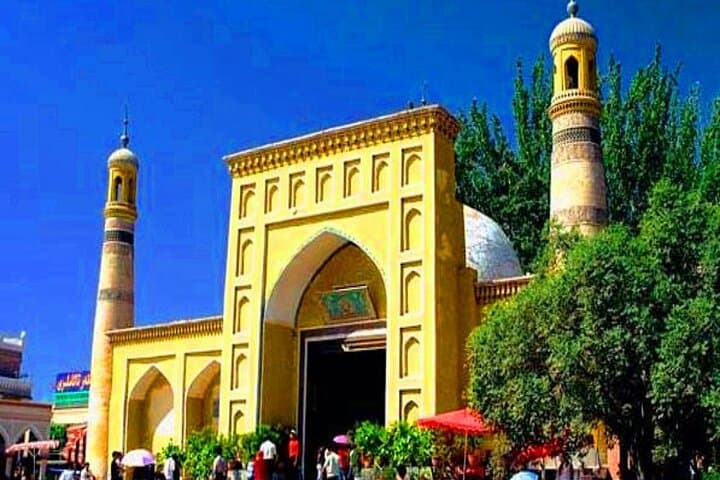
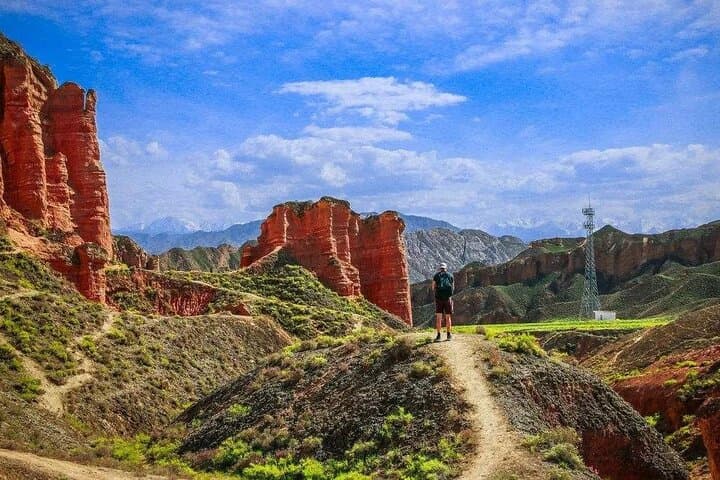
The journey stages contrast sharply: Kashgar’s Islamic architecture and Sunday animal market speak to centuries of trade and cultural exchange; Jiayuguan’s Ming fort marks the Great Wall’s farthest western defenses; the Danxia landforms are sedimentary layers folded and colored by minerals and erosion over millions of years. At Ta’er Monastery you’ll encounter Tibetan Buddhist art, while Chaka Salt Lake reflects sky and light like a deliberate mirror.
Expect long drives and several high‑altitude stops—Karakul and Qinghai Lake sit above 3,000 m—balanced by easy walks at sites and short hikes around lakes and dunes. Guides explain engineering feats like Turpan’s Karez wells and point out bird migrations and nomadic lifestyles that persist along the lakeshores.
Practical edge: travel with layered clothing, sun protection and a daypack for camera gear and water. Plan flights with buffer time after the final transfer to Xining. Bring copies of travel documents and local currency for markets and small tips. The route is culturally rich and logistically demanding—rewarding for travelers who want immersive history, dramatic geology and varied landscapes in one continuous overland experience.
moderate.
13 days.
Suitable for travelers in average physical condition; able to manage several hours of walking and multiple long vehicle transfers; some high‑altitude exposure expected.
The trip is rated moderate: most days involve sightseeing with easy walks; however there are long drives and several high‑altitude stops where basic fitness and mobility are helpful.
The itinerary lists some entrance fees and 2nd class train segments as included—confirm specific site admissions with your operator before travel.
Domestic travel between Xinjiang, Gansu and Qinghai does not require additional visas beyond your national entry visa to China; carry your passport and travel documents at all times.
Pack layers, a windproof shell, and sun protection; mornings can be freezing at high altitudes while afternoons warm significantly in low deserts.
The route traces major Silk Road arteries and frontier posts—from Kashgar’s Islamic trade legacy to Jiayuguan Fort, the Ming era strongpoint marking the western terminus of the Great Wall.
Many sites are sensitive to erosion and visitor pressure; follow trail markers, avoid trampling fragile soils in Danxia zones and respect local pastoral areas by not disturbing grazing herds.
China Silk Road Travel operates guided outdoor trips and adventures with an emphasis on safety, stewardship, and memorable experiences.
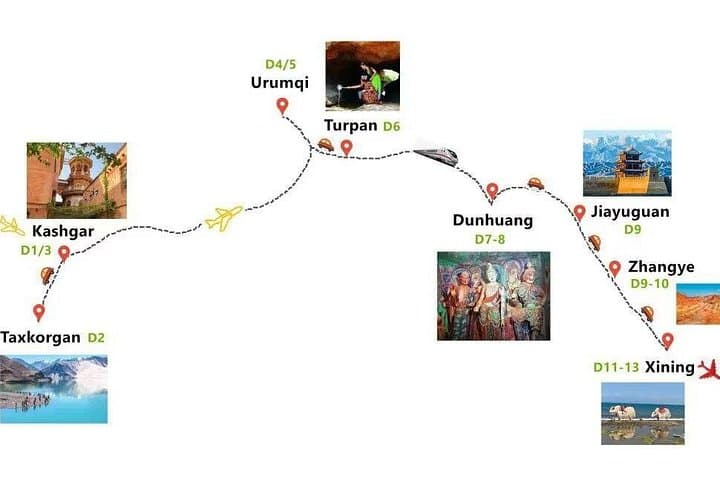
A wind off the Pamirs pushes across Karakul’s glass-blue surface as yaks pick at the sparse grass; the road unfurls ahead, a ribbon through salt flats, desert dunes and rainbow rock. This 13‑day Silk Road circuit begins in Kashgar’s crowded bazaars and threads east through Taxkorgan and the Pamirs, then loops through Turpan’s ancient canals, Dunhuang’s painted grottoes, Zhangye’s Danxia ridgelines and the high, wind-bent shores of Qinghai Lake.
A wind off the Pamirs pushes across Karakul’s glass-blue surface as yaks pick at the sparse grass; the road unfurls ahead, a ribbon through salt flats, desert dunes and rainbow rock. This 13‑day Silk Road circuit begins in Kashgar’s crowded bazaars and threads east through Taxkorgan and the Pamirs, then loops through Turpan’s ancient canals, Dunhuang’s painted grottoes, Zhangye’s Danxia ridgelines and the high, wind-bent shores of Qinghai Lake.
The journey stages contrast sharply: Kashgar’s Islamic architecture and Sunday animal market speak to centuries of trade and cultural exchange; Jiayuguan’s Ming fort marks the Great Wall’s farthest western defenses; the Danxia landforms are sedimentary layers folded and colored by minerals and erosion over millions of years. At Ta’er Monastery you’ll encounter Tibetan Buddhist art, while Chaka Salt Lake reflects sky and light like a deliberate mirror.
Expect long drives and several high‑altitude stops—Karakul and Qinghai Lake sit above 3,000 m—balanced by easy walks at sites and short hikes around lakes and dunes. Guides explain engineering feats like Turpan’s Karez wells and point out bird migrations and nomadic lifestyles that persist along the lakeshores.
Practical edge: travel with layered clothing, sun protection and a daypack for camera gear and water. Plan flights with buffer time after the final transfer to Xining. Bring copies of travel documents and local currency for markets and small tips. The route is culturally rich and logistically demanding—rewarding for travelers who want immersive history, dramatic geology and varied landscapes in one continuous overland experience.