THE ADVENTURE COLLECTIVE® · Independent discovery and booking for outdoor travel

Traverse Ecuador from high Andean volcanic rims to flooded Amazon forest on this 13-day expedition. Expect active volcano views, indigenous markets, thermal springs and immersive river travel into Cuyabeno's wildlife-rich channels.
Traverse Ecuador from high Andean volcanic rims to flooded Amazon forest on this 13-day expedition. Expect active volcano views, indigenous markets, thermal springs and immersive river travel into Cuyabeno's wildlife-rich channels.
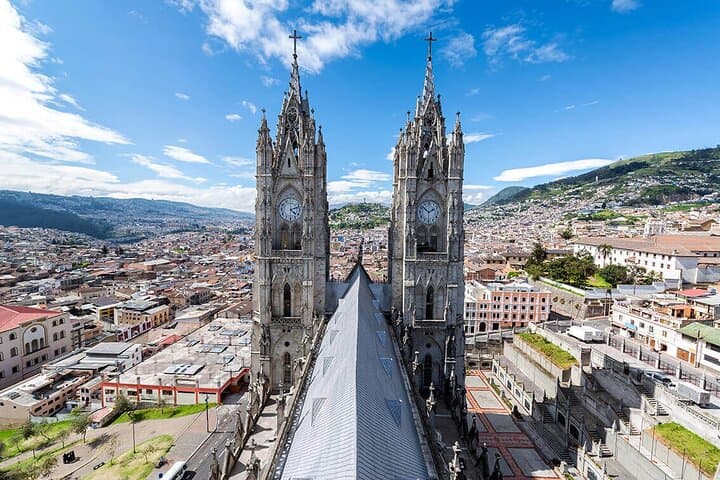
You step off the bus into Quito's rare, thin air and the city opens like a map of layered histories—colonial plazas, Andean ridgelines and distant volcanic cones. The first days move through highland contrasts: Cotopaxi’s near-perfect cone dominating grassland, Quilotoa’s jade crater lake framed by windswept ridgelines, and Otavalo’s bustling market where textiles and barter keep tradition alive.
Verified experiences and guided adventures in the surrounding area.
Operated by Ecuador Galapagos Travels · Quito, Pichincha
You step off the bus into Quito's rare, thin air and the city opens like a map of layered histories—colonial plazas, Andean ridgelines and distant volcanic cones. The first days move through highland contrasts: Cotopaxi’s near-perfect cone dominating grassland, Quilotoa’s jade crater lake framed by windswept ridgelines, and Otavalo’s bustling market where textiles and barter keep tradition alive.
Geology here is loud and recent—an arc of active volcanoes carved by subduction of the Nazca Plate. Cultural threads are just as visible: indigenous Kichwa communities maintain weaving techniques and market days that trace centuries of trade. In the Amazon basin, rivers push the landscape into flooded forests where macrolobium trees stand like pillars and the Cuyabeno Reserve shelters a tight web of life from caimans to canopy monkeys.
Practical guidance: pace yourself for altitude—Quito sits near 2,850 m and highland passes exceed 4,800 m; hydrate, limit alcohol, and sleep low when possible. Expect varied terrain: short crater rim hikes at Quilotoa (3 km loop with steep sections), lowland jungle trails that can be muddy and uneven, and multi-hour canoe transfers on winding rivers. Pack layers for rapid temperature swings, insect protection for the Amazon, and a reliable daypack for boat-to-lodge transitions.
Logistics note: the trip mixes hotels and jungle lodges, bilingual guides, and motorized canoe transfers—plan for limited connectivity in the rainforest and small-cash needs for markets.
challenging.
13 days.
Good cardiovascular fitness and prior multi-day hiking experience recommended; comfortable with full days of travel, short steep hikes and river travel.
Consult your doctor; routine vaccines are recommended, and yellow fever and malaria prophylaxis may be advised depending on current health guidance.
Many hikes are moderate but the elevation makes them feel harder; expect steep sections and plan for slower pace and rest breaks.
Swimming is generally discouraged due to currents, submerged hazards and wildlife—ask guides for approved safe spots.
Expect reliable service in cities and larger towns but limited or no connectivity inside Cuyabeno and remote jungle lodges.
The highlands host pre-Columbian and Inca routes; Otavalo remains an important indigenous trade center with centuries-old textile traditions.
Cuyabeno is a protected reserve; choose lodges that follow sustainable practices and avoid single-use plastics to help preserve riverine and forest habitats.
Ecuador Galapagos Travels operates guided outdoor trips and adventures with an emphasis on safety, stewardship, and memorable experiences.
You step off the bus into Quito's rare, thin air and the city opens like a map of layered histories—colonial plazas, Andean ridgelines and distant volcanic cones. The first days move through highland contrasts: Cotopaxi’s near-perfect cone dominating grassland, Quilotoa’s jade crater lake framed by windswept ridgelines, and Otavalo’s bustling market where textiles and barter keep tradition alive.
You step off the bus into Quito's rare, thin air and the city opens like a map of layered histories—colonial plazas, Andean ridgelines and distant volcanic cones. The first days move through highland contrasts: Cotopaxi’s near-perfect cone dominating grassland, Quilotoa’s jade crater lake framed by windswept ridgelines, and Otavalo’s bustling market where textiles and barter keep tradition alive.
Geology here is loud and recent—an arc of active volcanoes carved by subduction of the Nazca Plate. Cultural threads are just as visible: indigenous Kichwa communities maintain weaving techniques and market days that trace centuries of trade. In the Amazon basin, rivers push the landscape into flooded forests where macrolobium trees stand like pillars and the Cuyabeno Reserve shelters a tight web of life from caimans to canopy monkeys.
Practical guidance: pace yourself for altitude—Quito sits near 2,850 m and highland passes exceed 4,800 m; hydrate, limit alcohol, and sleep low when possible. Expect varied terrain: short crater rim hikes at Quilotoa (3 km loop with steep sections), lowland jungle trails that can be muddy and uneven, and multi-hour canoe transfers on winding rivers. Pack layers for rapid temperature swings, insect protection for the Amazon, and a reliable daypack for boat-to-lodge transitions.
Logistics note: the trip mixes hotels and jungle lodges, bilingual guides, and motorized canoe transfers—plan for limited connectivity in the rainforest and small-cash needs for markets.