THE ADVENTURE COLLECTIVE® · Independent discovery and booking for outdoor travel

Spend 12 days across Turkey’s most iconic landscapes—from the marble avenues of Ephesus and the steaming white terraces of Pamukkale to Cappadocia’s carved valleys and Istanbul’s imperial skyline—on a private, fully escorted route that balances archaeology, geology and local culture.
Spend 12 days across Turkey’s most iconic landscapes—from the marble avenues of Ephesus and the steaming white terraces of Pamukkale to Cappadocia’s carved valleys and Istanbul’s imperial skyline—on a private, fully escorted route that balances archaeology, geology and local culture.
The morning fog lifts off the Bosphorus and Istanbul’s minarets appear like punctuation marks against the pale sky. Travelers meet their private guide at a hotel door, passport in one hand and a small daypack in the other, ready to trade the city’s cobbled alleys for Roman marble streets, steaming travertine terraces and lunar valleys carved by centuries of wind and water.
Verified experiences and guided adventures in the surrounding area.
Operated by TRAVELIUM · Istanbul, Istanbul
The morning fog lifts off the Bosphorus and Istanbul’s minarets appear like punctuation marks against the pale sky. Travelers meet their private guide at a hotel door, passport in one hand and a small daypack in the other, ready to trade the city’s cobbled alleys for Roman marble streets, steaming travertine terraces and lunar valleys carved by centuries of wind and water.
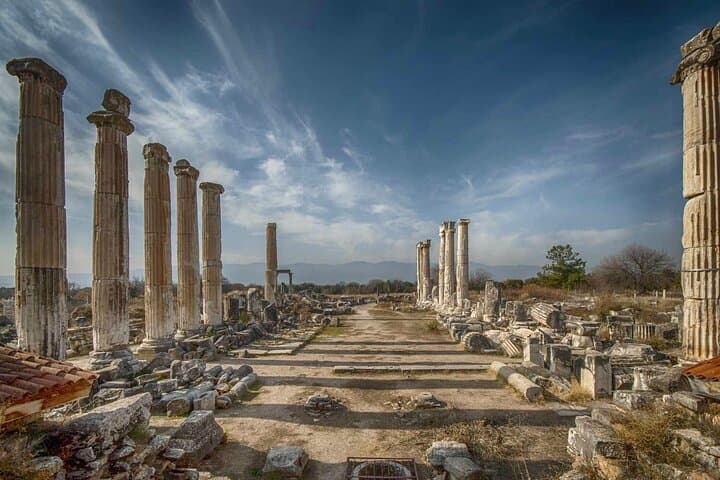
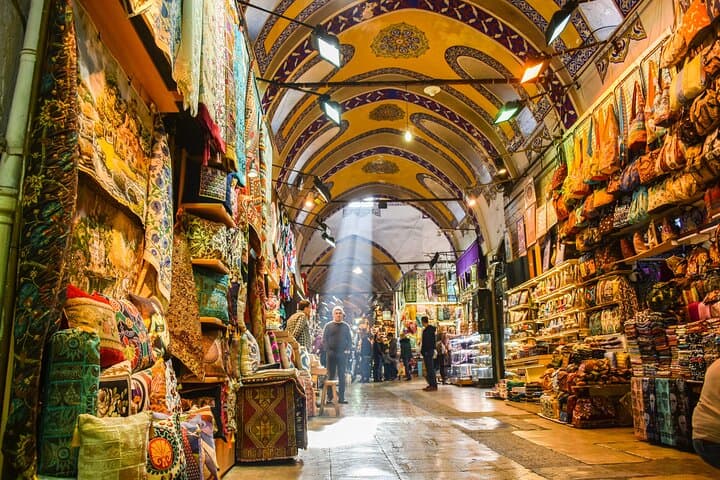
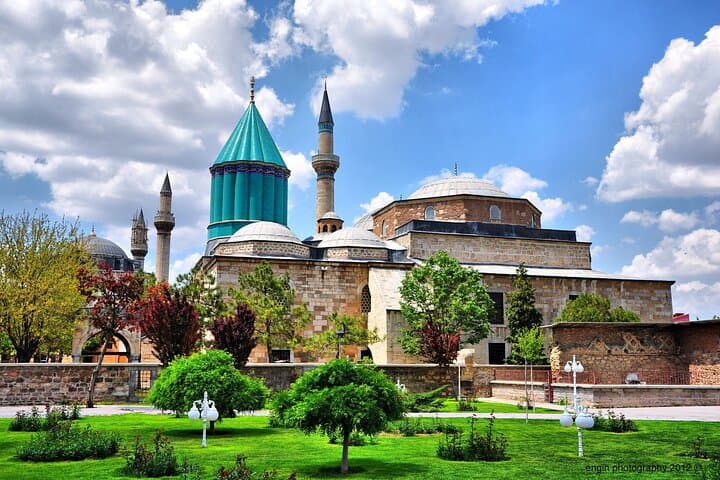
This 12-day private itinerary threads together Turkey’s highlights: classical Ephesus on the Aegean coast, the white terraces of Pamukkale and ancient Hierapolis, the theater towns and mosaics of Aphrodisias, the Greco-Roman amphitheater of Aspendos, then inland to Konya’s whirling dervishes and Cappadocia’s fairytale chimneys before finishing with the Byzantine and Ottoman grandeur of Istanbul.
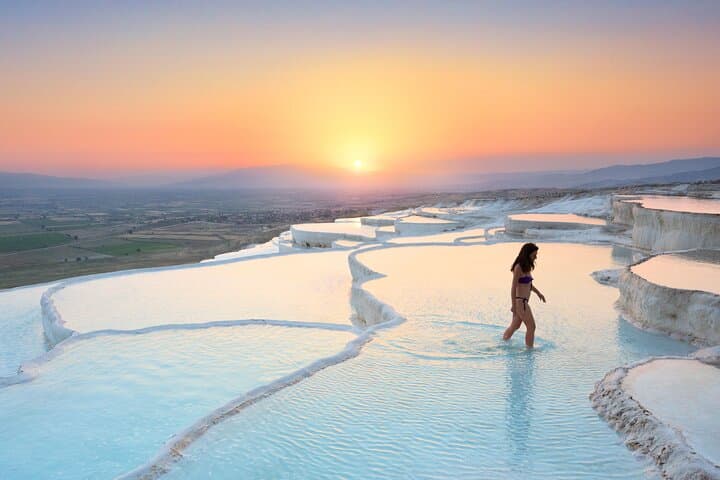
Geology shapes the trip as much as history. Pamukkale’s terraces are living travertine—calcium-rich springs depositing mineral crusts into stepped pools—while Cappadocia’s soft tufa, once volcanic ash, has been hollowed into homes and churches whose frescoes date from late antiquity. The Aegean coast bears the fingerprints of Roman urban planning: axial marble avenues, monumental libraries and theaters cut into natural slopes.
Culturally, the route traces Anatolia’s layering of civilizations: Hittite foundations, classical Greek cities, Roman provincial centers, Byzantine churches, Seljuk and Ottoman complexes. Guides point out everyday traces—mosque inscriptions, Ottoman courtyard layouts, potters in Avanos still using Hittite hand-throwing techniques—and explain why a single stone can serve as both an architectural block and a liturgical memory.
Practical notes for travelers: this is a moderately paced private tour with included internal transfers and domestic flights—expect several long drives (some legs 3–5 hours) and early starts for major sites. Ephesus’ main archaeological walk is roughly 1–2 km of uneven marble; Pamukkale’s terraces require shoeless walking over delicate surfaces, and Cappadocia’s valley walks average 3–6 km with short ascents.
Wear sturdy walking shoes with grippy soles and bring layered clothing for dramatic temperature swings—coastal warmth can give way to cool nights in Cappadocia. Hydration matters: carry 1–2 liters of water per day, use sun protection, and budget time for small lunches to try regional specialties (Aegean meze, Anatolian gözleme).
Timing is everything: visit Ephesus at first light to avoid crowds and heat; schedule the Bosphorus cruise in late afternoon for softer light. Respect local customs at religious sites (cover shoulders/legs, remove shoes when requested) and have euros or Turkish lira on hand for small admissions and tips. With careful packing and an appetite for layered histories, the route delivers both spectacle and a series of intimate cultural encounters.
moderate.
12 days.
Suitable for travelers who can handle multiple days of walking (1–6 km stretches), occasional stairs and several long transfers.
Yes—domestic flight tickets between specified legs are included as listed in the tour inclusions.
The operator lists wheelchair-accessible transportation and some surfaces, but many archaeological sites include uneven terrain and steps—check specific accessibility needs with the supplier in advance.
Carry some Turkish lira for small purchases; tipping is customary for guides and drivers—around 10% or a modest daily amount is typical.
Many nationalities require an e-visa for Turkey—check official Turkish government guidance and secure any required visa before travel.
Yes—special dietary needs can be requested at booking; local guides will arrange suitable meals where possible.
You’ll be asked to remove shoes on the travertine terraces—bring a secure bag for footwear, quick-dry socks and a towel if you plan to wade in thermal pools where allowed.
This route follows layers of Anatolian history—from Hittite and classical Greek urbanism to Roman provincial administration and Ottoman imperial court life—each site preserves civic and sacred practices in stone.
Sites like Pamukkale and Ephesus face wear from foot traffic; visitors should follow protected-path rules, avoid touching fragile masonry and support local conservation via respectful behavior and donations where available.
TRAVELIUM operates guided outdoor trips and adventures with an emphasis on safety, stewardship, and memorable experiences.
The morning fog lifts off the Bosphorus and Istanbul’s minarets appear like punctuation marks against the pale sky. Travelers meet their private guide at a hotel door, passport in one hand and a small daypack in the other, ready to trade the city’s cobbled alleys for Roman marble streets, steaming travertine terraces and lunar valleys carved by centuries of wind and water.
The morning fog lifts off the Bosphorus and Istanbul’s minarets appear like punctuation marks against the pale sky. Travelers meet their private guide at a hotel door, passport in one hand and a small daypack in the other, ready to trade the city’s cobbled alleys for Roman marble streets, steaming travertine terraces and lunar valleys carved by centuries of wind and water.
This 12-day private itinerary threads together Turkey’s highlights: classical Ephesus on the Aegean coast, the white terraces of Pamukkale and ancient Hierapolis, the theater towns and mosaics of Aphrodisias, the Greco-Roman amphitheater of Aspendos, then inland to Konya’s whirling dervishes and Cappadocia’s fairytale chimneys before finishing with the Byzantine and Ottoman grandeur of Istanbul.
Geology shapes the trip as much as history. Pamukkale’s terraces are living travertine—calcium-rich springs depositing mineral crusts into stepped pools—while Cappadocia’s soft tufa, once volcanic ash, has been hollowed into homes and churches whose frescoes date from late antiquity. The Aegean coast bears the fingerprints of Roman urban planning: axial marble avenues, monumental libraries and theaters cut into natural slopes.
Culturally, the route traces Anatolia’s layering of civilizations: Hittite foundations, classical Greek cities, Roman provincial centers, Byzantine churches, Seljuk and Ottoman complexes. Guides point out everyday traces—mosque inscriptions, Ottoman courtyard layouts, potters in Avanos still using Hittite hand-throwing techniques—and explain why a single stone can serve as both an architectural block and a liturgical memory.
Practical notes for travelers: this is a moderately paced private tour with included internal transfers and domestic flights—expect several long drives (some legs 3–5 hours) and early starts for major sites. Ephesus’ main archaeological walk is roughly 1–2 km of uneven marble; Pamukkale’s terraces require shoeless walking over delicate surfaces, and Cappadocia’s valley walks average 3–6 km with short ascents.
Wear sturdy walking shoes with grippy soles and bring layered clothing for dramatic temperature swings—coastal warmth can give way to cool nights in Cappadocia. Hydration matters: carry 1–2 liters of water per day, use sun protection, and budget time for small lunches to try regional specialties (Aegean meze, Anatolian gözleme).
Timing is everything: visit Ephesus at first light to avoid crowds and heat; schedule the Bosphorus cruise in late afternoon for softer light. Respect local customs at religious sites (cover shoulders/legs, remove shoes when requested) and have euros or Turkish lira on hand for small admissions and tips. With careful packing and an appetite for layered histories, the route delivers both spectacle and a series of intimate cultural encounters.