THE ADVENTURE COLLECTIVE® · Independent discovery and booking for outdoor travel

A 12-day private circuit from Casablanca through imperial cities, the High Atlas and Erg Chebbi. Expect long drives, local guides, a camel sunset and varied terrain from medina alleys to 200m gorges.
A 12-day private circuit from Casablanca through imperial cities, the High Atlas and Erg Chebbi. Expect long drives, local guides, a camel sunset and varied terrain from medina alleys to 200m gorges.
Arrive in Casablanca and the air smells of salt and diesel as your private vehicle carries you inland—the Atlantic recedes, the city gives way to ochre medinas, and the High Atlas rises like a wall on the horizon.
Verified experiences and guided adventures in the surrounding area.
Operated by Explore Morocco with maroc-randotrek · Casablanca, Casablanca-Settat
Arrive in Casablanca and the air smells of salt and diesel as your private vehicle carries you inland—the Atlantic recedes, the city gives way to ochre medinas, and the High Atlas rises like a wall on the horizon.
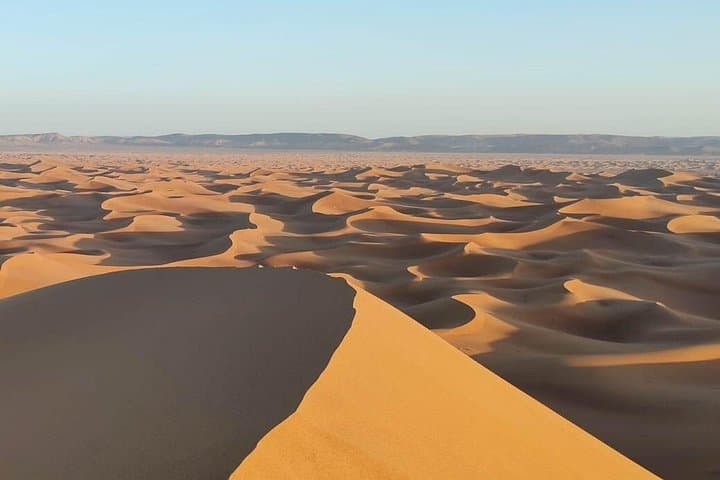
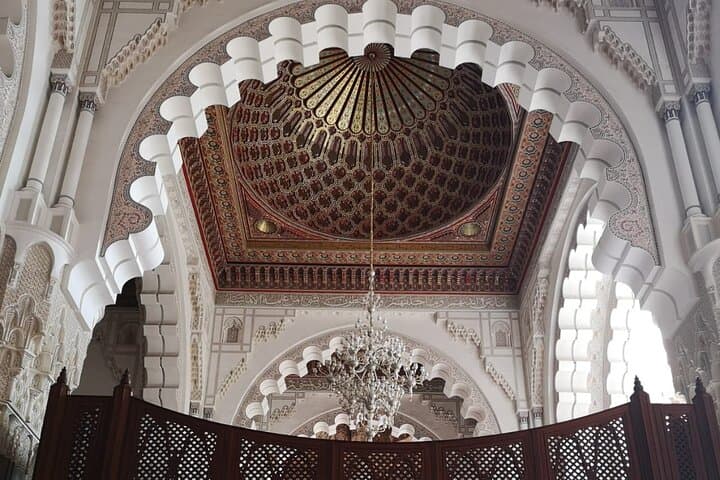
This 12-day loop links Morocco's imperial cities with mountain passes, deep gorges and the orange-pink dunes of Erg Chebbi. Along the way you thread Roman ruins at Volubilis, walk the blue alleys of Chefchaouen, peer over Hassan II Mosque's vast minaret and cross the Tichka Pass (2,260 m) into Marrakech. Geology shifts quickly: limestone gorges such as Todra sport 200m cliffs, Atlas foothills show folded strata and the Sahara's erg fields are mobile sand shaped by wind and rare seasonal runoff.
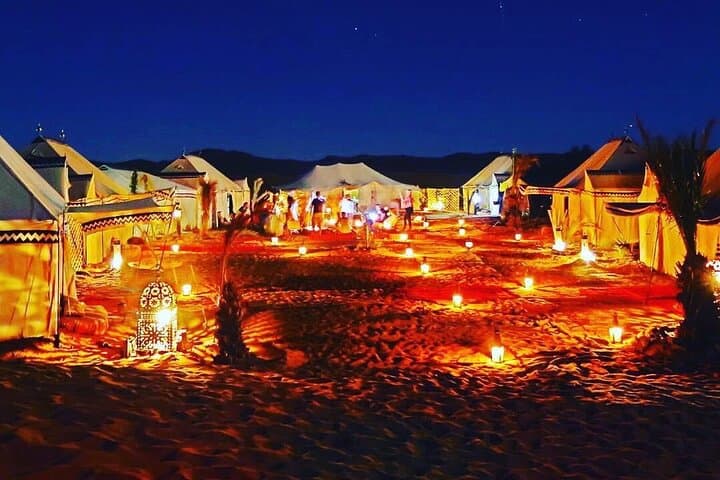
Culturally the route moves through Berber villages, kasbahs and souks where craftsmanship—pottery, leather tanners, carpet weaving—remains living trade. Small hospitality notes include overnight stays in a riad, a Berber family house and a luxury desert camp, plus a sunset camel ride up dunes that can reach 100–150 m.
Practical guide: expect multiple long drives (3–6 hours most days), short guided walks (1–3 hours) and an easy but sandy camel approach to the camp. Pack layered clothing for hot days and cool nights, sturdy shoes for cobbled medinas and gorges, sun protection, and at least 2–3 liters of water per day in desert stretches. Mobility should be at least moderate: stairs, uneven streets and dunes are part of the program, but no technical climbing is required.
moderate.
12 days.
Moderate fitness: able to manage several hours of walking on uneven ground and short dune climbs; comfortable with multi-hour transfers.
Yes; the camel ride to the desert camp is short and guided—riders should be able to mount and sit for about 1–2 hours but notify operators for mobility issues.
The itinerary includes a mix of 3-star hotels, riads in Marrakech, a family stay in Rose Valley and a luxury desert camp as specified in the daily plan.
Most breakfasts and selected dinners are included and private transportation throughout the itinerary is provided; check the booking page for exact meal counts.
This is a private tour and operators generally accommodate dietary requests and some mobility needs if informed at booking; provide passport and special requirements during reservation.
The circuit links Morocco's imperial legacy—from Roman Volubilis to the 17th-century kasbahs—and trade routes that once crossed the High Atlas into Saharan caravans.
Dune ecosystems are fragile and water is scarce; stick to marked tracks in deserts and gorges, minimize single-use plastics and respect local waste practices.
Explore Morocco with maroc-randotrek operates guided outdoor trips and adventures with an emphasis on safety, stewardship, and memorable experiences.
Arrive in Casablanca and the air smells of salt and diesel as your private vehicle carries you inland—the Atlantic recedes, the city gives way to ochre medinas, and the High Atlas rises like a wall on the horizon.
Arrive in Casablanca and the air smells of salt and diesel as your private vehicle carries you inland—the Atlantic recedes, the city gives way to ochre medinas, and the High Atlas rises like a wall on the horizon.
This 12-day loop links Morocco's imperial cities with mountain passes, deep gorges and the orange-pink dunes of Erg Chebbi. Along the way you thread Roman ruins at Volubilis, walk the blue alleys of Chefchaouen, peer over Hassan II Mosque's vast minaret and cross the Tichka Pass (2,260 m) into Marrakech. Geology shifts quickly: limestone gorges such as Todra sport 200m cliffs, Atlas foothills show folded strata and the Sahara's erg fields are mobile sand shaped by wind and rare seasonal runoff.
Culturally the route moves through Berber villages, kasbahs and souks where craftsmanship—pottery, leather tanners, carpet weaving—remains living trade. Small hospitality notes include overnight stays in a riad, a Berber family house and a luxury desert camp, plus a sunset camel ride up dunes that can reach 100–150 m.
Practical guide: expect multiple long drives (3–6 hours most days), short guided walks (1–3 hours) and an easy but sandy camel approach to the camp. Pack layered clothing for hot days and cool nights, sturdy shoes for cobbled medinas and gorges, sun protection, and at least 2–3 liters of water per day in desert stretches. Mobility should be at least moderate: stairs, uneven streets and dunes are part of the program, but no technical climbing is required.