THE ADVENTURE COLLECTIVE® · Independent discovery and booking for outdoor travel

Walk ancient caravan routes from Marrakech to Erg Chegaga across tamarisk plains and sweeping dunes. This 12-day guided trek blends Saharan culture, long desert days, and nights in bivouac camps beneath wide skies.
Walk ancient caravan routes from Marrakech to Erg Chegaga across tamarisk plains and sweeping dunes. This 12-day guided trek blends Saharan culture, long desert days, and nights in bivouac camps beneath wide skies.
On the road from Marrakech the tarmac thins and the atlas foothills give way to wind-swept plains; by late afternoon the caravan's outline appears against a changing horizon and the dunes begin to breathe. The sand moves like memory here—cool at night, bright and abrasive by midday—inviting a slower pace and careful footing.
Verified experiences and guided adventures in the surrounding area.
Operated by Sunny Morocco · M'Hamid, Drâa-Tafilalet
On the road from Marrakech the tarmac thins and the atlas foothills give way to wind-swept plains; by late afternoon the caravan's outline appears against a changing horizon and the dunes begin to breathe. The sand moves like memory here—cool at night, bright and abrasive by midday—inviting a slower pace and careful footing.
This route follows traditional trans-Saharan corridors near M'Hamid and the great Erg Chegaga, crossing hammada plateaus, tamarisk scrub, and wide dune seas. Geologically the region is Pleistocene desert: wind-crafted dunes, fossilized riverbeds and scattered oases that mark ancient water routes. Culturally you'll encounter Saharan nomadic traditions—camel handlers, campfire stories, and pottery from Tamegroute—rooted in Berber and Arab exchanges for centuries.
Expect days of measured walking between bivouacs, occasional camel-led transfers, and nights under canvas or stars. The light at dawn and dusk reveals the dunes' contours; the wind has a personality here, sometimes playful, sometimes insistent, reshaping tracks overnight. Guides handle navigation and logistics, but physical demands are real: sand walking, heat management, and basic campsite routines.
Practical tips: start hikes early to avoid peak heat, carry 3–4 liters of water per day, and use high-SPF sun protection. Footwear with good ankle support and gaiters reduces sand ingress. Layer for chilly desert nights and leave extra batteries for electronics—solar chargers are useful. Respect local customs in villages and pack out waste; the desert’s fragile surface recovers slowly. This is a challenging multi-day experience that rewards steady pacing, curiosity, and readiness to sleep under an immense, watchful sky.
challenging.
12 days.
Expect all-day walking on sand and intermittent camel transfers; good cardiovascular fitness and leg strength for sustained hiking are required
The program involves multiple days of walking on soft sand and small dunes; a moderate to high fitness level and prior hiking experience help, though guides handle route and pace.
Overnights are a mix of desert bivouacs and basic tents, with several hotel nights at the start and finish in Marrakech; meals are included as listed.
Most travelers require a standard tourist visa for Morocco depending on nationality; no special permits are typically needed for the desert trek beyond local guidance.
Yes; the tour runs as a private guided program but accepts solo bookings—confirm pickup logistics and any single-supplement rules with the operator.
This corridor traces routes used by trans-Saharan caravans and nomadic groups for centuries, connecting southern Morocco to Sahel trade networks and local oasis settlements.
The desert ecosystem is fragile—stick to established paths, avoid disturbing vegetation near oases, and pack out all non-biodegradable waste to limit long-term impact.
Sunny Morocco operates guided outdoor trips and adventures with an emphasis on safety, stewardship, and memorable experiences.
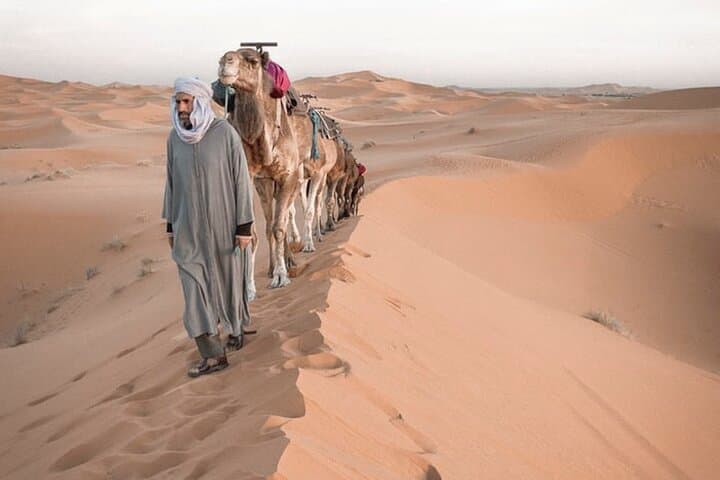
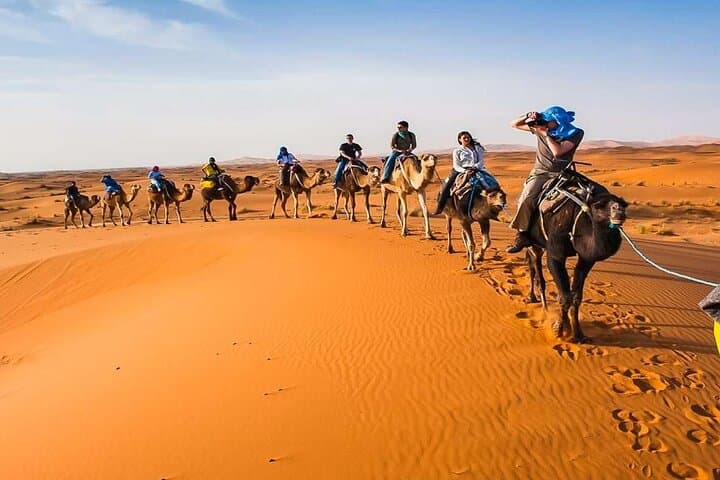
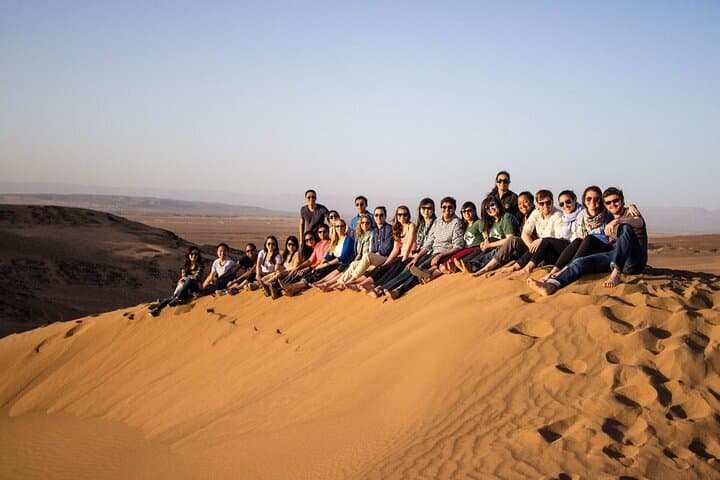
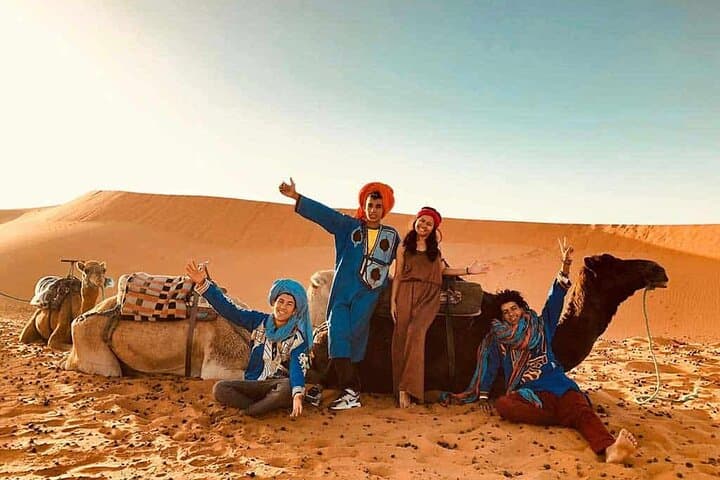
On the road from Marrakech the tarmac thins and the atlas foothills give way to wind-swept plains; by late afternoon the caravan's outline appears against a changing horizon and the dunes begin to breathe. The sand moves like memory here—cool at night, bright and abrasive by midday—inviting a slower pace and careful footing.
On the road from Marrakech the tarmac thins and the atlas foothills give way to wind-swept plains; by late afternoon the caravan's outline appears against a changing horizon and the dunes begin to breathe. The sand moves like memory here—cool at night, bright and abrasive by midday—inviting a slower pace and careful footing.
This route follows traditional trans-Saharan corridors near M'Hamid and the great Erg Chegaga, crossing hammada plateaus, tamarisk scrub, and wide dune seas. Geologically the region is Pleistocene desert: wind-crafted dunes, fossilized riverbeds and scattered oases that mark ancient water routes. Culturally you'll encounter Saharan nomadic traditions—camel handlers, campfire stories, and pottery from Tamegroute—rooted in Berber and Arab exchanges for centuries.
Expect days of measured walking between bivouacs, occasional camel-led transfers, and nights under canvas or stars. The light at dawn and dusk reveals the dunes' contours; the wind has a personality here, sometimes playful, sometimes insistent, reshaping tracks overnight. Guides handle navigation and logistics, but physical demands are real: sand walking, heat management, and basic campsite routines.
Practical tips: start hikes early to avoid peak heat, carry 3–4 liters of water per day, and use high-SPF sun protection. Footwear with good ankle support and gaiters reduces sand ingress. Layer for chilly desert nights and leave extra batteries for electronics—solar chargers are useful. Respect local customs in villages and pack out waste; the desert’s fragile surface recovers slowly. This is a challenging multi-day experience that rewards steady pacing, curiosity, and readiness to sleep under an immense, watchful sky.