THE ADVENTURE COLLECTIVE® · Independent discovery and booking for outdoor travel

Fly into Lukla and follow the classic tea-house track through Sagarmatha National Park to Everest Base Camp and Kala Patthar. This 12-day itinerary balances acclimatization, Sherpa culture, and close-up Himalayan panoramas with practical logistics for high-altitude trekking.
Fly into Lukla and follow the classic tea-house track through Sagarmatha National Park to Everest Base Camp and Kala Patthar. This 12-day itinerary balances acclimatization, Sherpa culture, and close-up Himalayan panoramas with practical logistics for high-altitude trekking.
The first light in the Khumbu scours the ridgelines a hard silver; prayer flags snap like small alarms while a single-engine plane drops you into Lukla, the launchpad for a 12-day climb through changing air and changing lives.
Verified experiences and guided adventures in the surrounding area.
Operated by Himalayan Social Journey · Lukla, Province No. 1
The first light in the Khumbu scours the ridgelines a hard silver; prayer flags snap like small alarms while a single-engine plane drops you into Lukla, the launchpad for a 12-day climb through changing air and changing lives.
This trek follows the classic tea-house route through Sagarmatha National Park, established as a national park in 1976 and a UNESCO World Heritage Site in 1979. The trail threads glacial valleys carved by the Khumbu Glacier and climbs past shrubby rhododendron, birch and conifer stands before the stark moraine country above 4,000 m. Sherpa culture is present at every turn—monasteries at Tengboche and lagooned mani walls that mark centuries of Himalayan religious practice and mountain stewardship.
You’ll move deliberately: two planned acclimatization stops (Namche Bazaar, Dingboche), a sunrise hike to Kala Patthar for the clearest view of Everest, and an outward-and-back day to Everest Base Camp itself on the Khumbu Glacier. Expect rocky trails, suspension-bridge crossings over the Dudh Koshi, long high-altitude days of 5–7 hours and basic tea-house lodgings with hot meals.
Practical guidance: secure Sagarmatha National Park and TIMS permits, fly Kathmandu–Lukla on a weather-dependent morning, and plan for altitude—carry a reliable sleeping bag, layers, and hydration system. Hydration, slow pace, and nightly rest are your best defenses against AMS. Weather changes fast: dawns can be still and brutally cold; afternoons bring sun and wind. For anyone aiming at the EBC horizon, this is a route that demands respect, steady legs, and willingness to be patient with the mountain’s tempo.
challenging.
12 days.
Good aerobic fitness with experience on multi-day hikes and the ability to hike 5–7 hours over rough terrain at altitude
Yes—trekkers require a Sagarmatha National Park entry permit and a TIMS card; organizers usually arrange these before or at the start of the trek.
Flights are short but weather-dependent; mornings are preferred, and cancellations are common—build a cushion day into your itinerary.
Tea houses offer basic private rooms, communal dining, and hot meals; expect simple facilities, limited hot water and shared toilets at higher elevations.
Ascend slowly, hydrate, avoid alcohol, monitor symptoms of AMS, and use planned acclimatization days—consider carrying acetazolamide only if prescribed by a physician.
The Khumbu has long been the homeland of Sherpa communities who traded and guided; Tenzing Norgay and local climbers were central to the region’s mid-20th-century mountaineering history.
Sagarmatha National Park manages permits and restricts waste; trekkers are expected to minimize litter, use refillable water systems and follow local guidelines to preserve fragile alpine ecosystems.
Himalayan Social Journey operates guided outdoor trips and adventures with an emphasis on safety, stewardship, and memorable experiences.


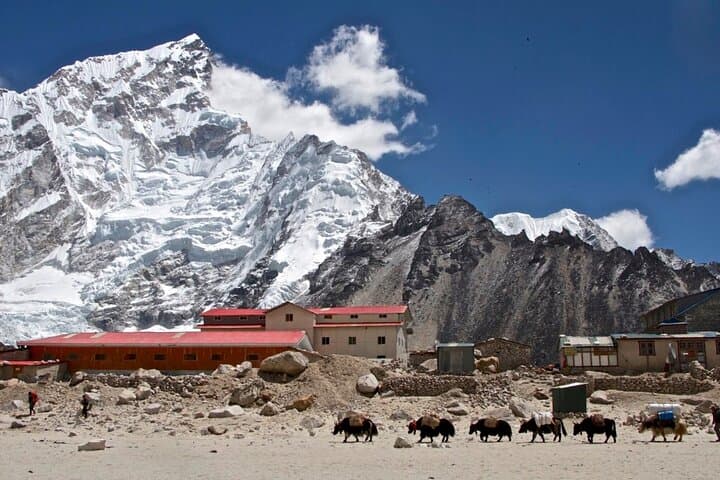
The first light in the Khumbu scours the ridgelines a hard silver; prayer flags snap like small alarms while a single-engine plane drops you into Lukla, the launchpad for a 12-day climb through changing air and changing lives.
The first light in the Khumbu scours the ridgelines a hard silver; prayer flags snap like small alarms while a single-engine plane drops you into Lukla, the launchpad for a 12-day climb through changing air and changing lives.
This trek follows the classic tea-house route through Sagarmatha National Park, established as a national park in 1976 and a UNESCO World Heritage Site in 1979. The trail threads glacial valleys carved by the Khumbu Glacier and climbs past shrubby rhododendron, birch and conifer stands before the stark moraine country above 4,000 m. Sherpa culture is present at every turn—monasteries at Tengboche and lagooned mani walls that mark centuries of Himalayan religious practice and mountain stewardship.
You’ll move deliberately: two planned acclimatization stops (Namche Bazaar, Dingboche), a sunrise hike to Kala Patthar for the clearest view of Everest, and an outward-and-back day to Everest Base Camp itself on the Khumbu Glacier. Expect rocky trails, suspension-bridge crossings over the Dudh Koshi, long high-altitude days of 5–7 hours and basic tea-house lodgings with hot meals.
Practical guidance: secure Sagarmatha National Park and TIMS permits, fly Kathmandu–Lukla on a weather-dependent morning, and plan for altitude—carry a reliable sleeping bag, layers, and hydration system. Hydration, slow pace, and nightly rest are your best defenses against AMS. Weather changes fast: dawns can be still and brutally cold; afternoons bring sun and wind. For anyone aiming at the EBC horizon, this is a route that demands respect, steady legs, and willingness to be patient with the mountain’s tempo.