THE ADVENTURE COLLECTIVE® · Independent discovery and booking for outdoor travel

Cycle across Uzbekistan’s Nuratau Mountains and the Kyzylkum fringes, then swap rugged tracks for the marble domes of Samarkand and Bukhara. This 11-day supported tour mixes desert riding, mountain passes and Silk Road history.
Cycle across Uzbekistan’s Nuratau Mountains and the Kyzylkum fringes, then swap rugged tracks for the marble domes of Samarkand and Bukhara. This 11-day supported tour mixes desert riding, mountain passes and Silk Road history.
A dry wind from the Kyzylkum lifts grit against your calves as you push the pedals out of Tuzkan Lake, the brackish water gleaming like a distant promise. Early mornings in the Nuratau feel alive: walnut forests hold the chill, ridgelines throw long shadows, and the Ortacheku Rocks glow orange at sunset. This is an expedition that alternates hard-packed desert flats, rocky mountain passes, and quiet guesthouse evenings in villages that still observe age-old routines.
Verified experiences and guided adventures in the surrounding area.
Operated by Central Asia Travel · Tashkent, Tashkent Region
A dry wind from the Kyzylkum lifts grit against your calves as you push the pedals out of Tuzkan Lake, the brackish water gleaming like a distant promise. Early mornings in the Nuratau feel alive: walnut forests hold the chill, ridgelines throw long shadows, and the Ortacheku Rocks glow orange at sunset. This is an expedition that alternates hard-packed desert flats, rocky mountain passes, and quiet guesthouse evenings in villages that still observe age-old routines.
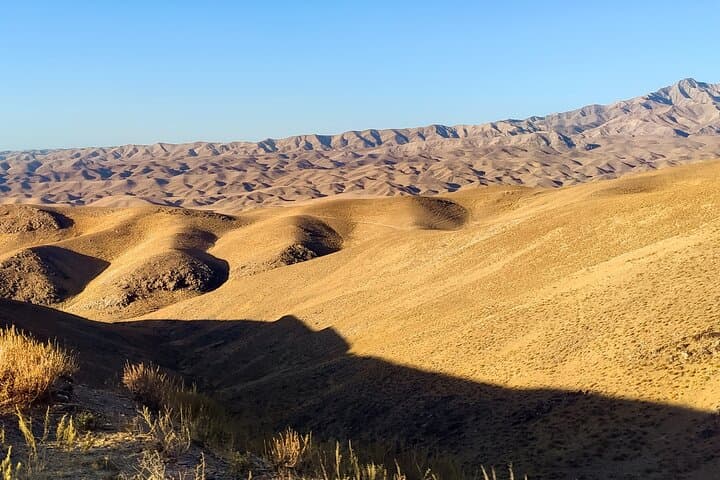
The route traces both geology and history: the Nuratau range is a low, weathered spur of the Gissar-Alai system bordering the Kyzylkum and Karakum deserts, its soils shaped by wind and seasonal streams. Riders move from salt marshes and dunes to freshwater highland lakes such as Fazilman, and finally into Silk Road cities — Samarkand and Bukhara — where Timurid madrasahs and caravanserais anchor Uzbekistan’s cultural past.
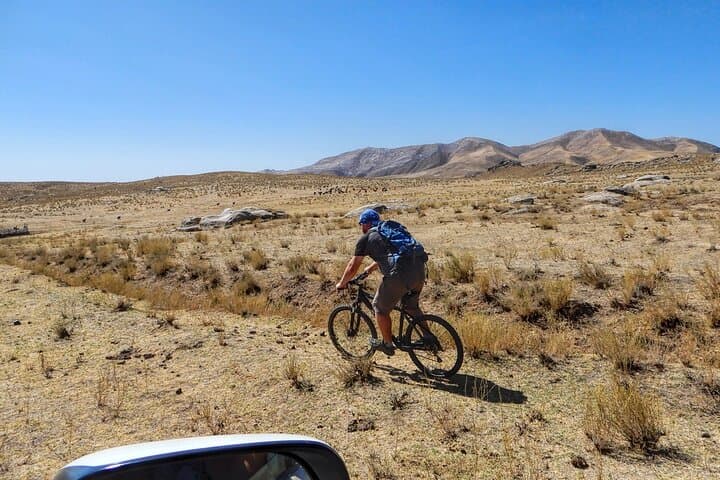
Expect mixed surfaces—dirt tracks, sand sections, and occasional asphalt—daily distances from roughly 35–78 km, and climbs that reach passes around 1,700 m. Wild geese and birds of prey are common; the Nuratau Nature Reserve protects rare local species and walnut groves.
Practical notes: plan for 11 active days with tent camping and several guesthouse nights, bring a reliable bike or rent a touring/gravel model locally, and carry tools for basic repairs. Hydrate frequently—desert sections are exposed—and schedule tougher climbs for morning cool. Travel light, layer for big temperature swings, and keep cash for small village purchases. With steady fitness, basic bike maintenance skills, and respect for fragile desert ecology, this route delivers vivid landscapes and authentic Silk Road culture.
challenging.
11 days.
Riders should have strong endurance (able to ride 50–80 km on mixed terrain) and comfort with sustained climbs and multi-day recovery.
Yes—organizers typically offer rental bikes (touring or gravel-ready); reserve sizing and suspension needs in advance to ensure a proper fit.
Expect mixed difficulty: sandy tracks and loose gravel require good bike handling, while some climbs are steep but short; prior mixed-terrain experience helps.
Visa requirements depend on nationality—many countries have e-visa or visa-free arrangements; check official Uzbek government guidance well before travel.
Yes—tents and group camping equipment are supplied on multi-night segments; riders should bring personal sleeping bags and small camp items as instructed.
The route follows corridors of the Silk Road and Timurid-era influence; Samarkand and Bukhara preserve madrasahs, mausoleums and caravanserais from the region’s trading past.
The Nuratau Reserve protects endemic flora and fauna; stick to established tracks, avoid disturbing nesting sites, and minimize water use in arid stretches.
Central Asia Travel operates guided outdoor trips and adventures with an emphasis on safety, stewardship, and memorable experiences.
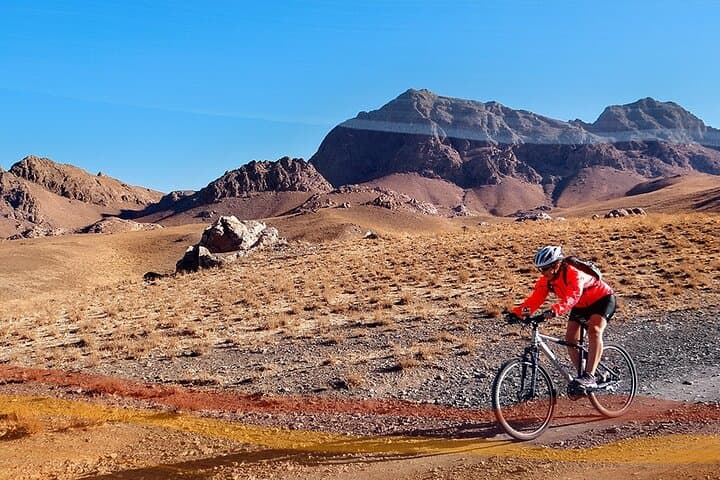
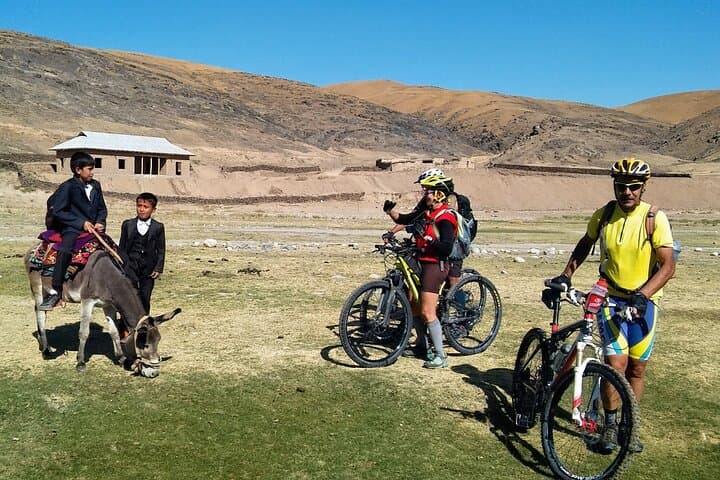
A dry wind from the Kyzylkum lifts grit against your calves as you push the pedals out of Tuzkan Lake, the brackish water gleaming like a distant promise. Early mornings in the Nuratau feel alive: walnut forests hold the chill, ridgelines throw long shadows, and the Ortacheku Rocks glow orange at sunset. This is an expedition that alternates hard-packed desert flats, rocky mountain passes, and quiet guesthouse evenings in villages that still observe age-old routines.
A dry wind from the Kyzylkum lifts grit against your calves as you push the pedals out of Tuzkan Lake, the brackish water gleaming like a distant promise. Early mornings in the Nuratau feel alive: walnut forests hold the chill, ridgelines throw long shadows, and the Ortacheku Rocks glow orange at sunset. This is an expedition that alternates hard-packed desert flats, rocky mountain passes, and quiet guesthouse evenings in villages that still observe age-old routines.
The route traces both geology and history: the Nuratau range is a low, weathered spur of the Gissar-Alai system bordering the Kyzylkum and Karakum deserts, its soils shaped by wind and seasonal streams. Riders move from salt marshes and dunes to freshwater highland lakes such as Fazilman, and finally into Silk Road cities — Samarkand and Bukhara — where Timurid madrasahs and caravanserais anchor Uzbekistan’s cultural past.
Expect mixed surfaces—dirt tracks, sand sections, and occasional asphalt—daily distances from roughly 35–78 km, and climbs that reach passes around 1,700 m. Wild geese and birds of prey are common; the Nuratau Nature Reserve protects rare local species and walnut groves.
Practical notes: plan for 11 active days with tent camping and several guesthouse nights, bring a reliable bike or rent a touring/gravel model locally, and carry tools for basic repairs. Hydrate frequently—desert sections are exposed—and schedule tougher climbs for morning cool. Travel light, layer for big temperature swings, and keep cash for small village purchases. With steady fitness, basic bike maintenance skills, and respect for fragile desert ecology, this route delivers vivid landscapes and authentic Silk Road culture.