THE ADVENTURE COLLECTIVE® · Independent discovery and booking for outdoor travel

Traverse Nepal from valley temples to jungle rivers in an 11-day loop that pairs Kathmandu’s UNESCO sites with Pokhara’s lakefront vistas, spiritual Lumbini and wildlife-rich Chitwan. Expect long scenic drives, cultural immersion, and guided jungle activities with permits included.
Traverse Nepal from valley temples to jungle rivers in an 11-day loop that pairs Kathmandu’s UNESCO sites with Pokhara’s lakefront vistas, spiritual Lumbini and wildlife-rich Chitwan. Expect long scenic drives, cultural immersion, and guided jungle activities with permits included.
You step out before dawn on Sarangkot’s ridge as cold mountain air sharpens the silhouette of Annapurna and Dhaulagiri. Prayer flags in Kathmandu flutter above centuries-old stupas; in Chitwan the Rapti River pushes a humid scent of grass and riverine forest toward the jeep track. Over eleven days you move between high valley temples, lakeside calm and lowland jungle, each landscape offering a different tempo.
Verified experiences and guided adventures in the surrounding area.
Operated by CAN Travels · Kathmandu, Bagmati Province
You step out before dawn on Sarangkot’s ridge as cold mountain air sharpens the silhouette of Annapurna and Dhaulagiri. Prayer flags in Kathmandu flutter above centuries-old stupas; in Chitwan the Rapti River pushes a humid scent of grass and riverine forest toward the jeep track. Over eleven days you move between high valley temples, lakeside calm and lowland jungle, each landscape offering a different tempo.
The Kathmandu Valley holds UNESCO complexes—Swayambhunath, Boudhanath and Durbar Squares—sites that reflect Newar craftsmanship and medieval urban layout carved into Himalayan foothills. Geologically, the route traces the southern flanks of the Greater Himalaya: rising peaks seen from Pokhara are young folded mountains of uplift and erosion, while the Terai plains at Chitwan are river-deposited alluvium that supports rich subtropical biodiversity. Culturally the trip threads Hindu and Buddhist practice with Tharu jungle traditions and Lumbini’s monastic zones marking the Buddha’s birthplace.
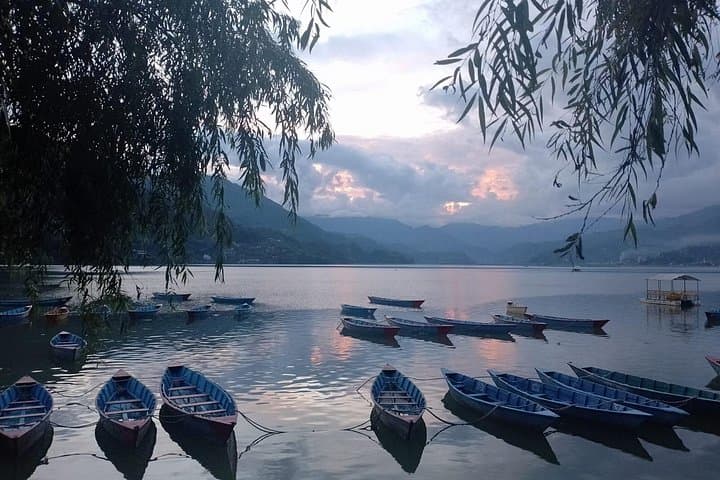
Practical guidance: expect long road transfers (Kathmandu–Pokhara ~200 km, 6–7 hours) and basic 2-star accommodations. Most walking is moderate—temple steps, short jungle trails and boat launches on Phewa Lake—while Chitwan activities include jeep safari, canoeing and guided walks; park permits and entrance fees are included. Pack layered clothing for temperature swings, reliable walking shoes, insect repellent and a daylight headlamp for early starts. Carry local currency for small vendors, allow flex time for traffic and weather, and follow guides’ instructions near wildlife. With straightforward logistics and varied terrain, this itinerary suits travelers who want cultural depth paired with accessible outdoor experiences.
easy.
11 days.
Suitable for travelers of average fitness; primarily vehicle transfers with short to moderate walks, some steps and jungle trails.
Yes, the tour’s inclusions list national park permits and all entrance fees at Chitwan as provided.
The tour notes it’s suitable for all fitness levels but is not recommended for pregnant travelers; check specific age policies with the operator.
Accommodation is in 2‑star label hotels with breakfast included for most nights; expect basic, clean rooms typical of budget tourist hotels in Nepal.
This loop stays in low to mid elevations (Kathmandu valley ~1,350 m; Pokhara ~820 m) and does not require formal high-altitude acclimatization.
Kathmandu Valley’s durbar squares reflect medieval Newar kingdoms and were central to Nepal’s religious and political history; Lumbini is recognized as the Buddha’s birthplace and is an active pilgrimage complex.
Chitwan operates on strict park rules and guided access—respect boundaries, avoid single-use plastics, and support community-run tourism to bolster local conservation efforts.
CAN Travels operates guided outdoor trips and adventures with an emphasis on safety, stewardship, and memorable experiences.

You step out before dawn on Sarangkot’s ridge as cold mountain air sharpens the silhouette of Annapurna and Dhaulagiri. Prayer flags in Kathmandu flutter above centuries-old stupas; in Chitwan the Rapti River pushes a humid scent of grass and riverine forest toward the jeep track. Over eleven days you move between high valley temples, lakeside calm and lowland jungle, each landscape offering a different tempo.
You step out before dawn on Sarangkot’s ridge as cold mountain air sharpens the silhouette of Annapurna and Dhaulagiri. Prayer flags in Kathmandu flutter above centuries-old stupas; in Chitwan the Rapti River pushes a humid scent of grass and riverine forest toward the jeep track. Over eleven days you move between high valley temples, lakeside calm and lowland jungle, each landscape offering a different tempo.
The Kathmandu Valley holds UNESCO complexes—Swayambhunath, Boudhanath and Durbar Squares—sites that reflect Newar craftsmanship and medieval urban layout carved into Himalayan foothills. Geologically, the route traces the southern flanks of the Greater Himalaya: rising peaks seen from Pokhara are young folded mountains of uplift and erosion, while the Terai plains at Chitwan are river-deposited alluvium that supports rich subtropical biodiversity. Culturally the trip threads Hindu and Buddhist practice with Tharu jungle traditions and Lumbini’s monastic zones marking the Buddha’s birthplace.
Practical guidance: expect long road transfers (Kathmandu–Pokhara ~200 km, 6–7 hours) and basic 2-star accommodations. Most walking is moderate—temple steps, short jungle trails and boat launches on Phewa Lake—while Chitwan activities include jeep safari, canoeing and guided walks; park permits and entrance fees are included. Pack layered clothing for temperature swings, reliable walking shoes, insect repellent and a daylight headlamp for early starts. Carry local currency for small vendors, allow flex time for traffic and weather, and follow guides’ instructions near wildlife. With straightforward logistics and varied terrain, this itinerary suits travelers who want cultural depth paired with accessible outdoor experiences.