THE ADVENTURE COLLECTIVE® · Independent discovery and booking for outdoor travel

An 11-day private horseback trek that links the Eight Lakes region with the Orkhon Valley, Khorgo volcano and Kharakhorum. Ride through steppe, dip into hot springs and stay with nomadic families for an immersive, physically engaging Mongolia experience.
An 11-day private horseback trek that links the Eight Lakes region with the Orkhon Valley, Khorgo volcano and Kharakhorum. Ride through steppe, dip into hot springs and stay with nomadic families for an immersive, physically engaging Mongolia experience.
Riders climb into the saddle before dawn and find the world opening into steppe: low grass rolling to ribboned rivers, horses’ hooves thumping a steady rhythm while a cold wind edges the sky. Over eleven days the route moves from Ulaanbaatar’s bustle into a remote sweep of dunes, volcanic crater rims, alpine monastery ridgelines and blue lakes where nomadic families keep their yurts.
Verified experiences and guided adventures in the surrounding area.
Operated by SARL · Tsetserleg, Arkhangai Province
Riders climb into the saddle before dawn and find the world opening into steppe: low grass rolling to ribboned rivers, horses’ hooves thumping a steady rhythm while a cold wind edges the sky. Over eleven days the route moves from Ulaanbaatar’s bustle into a remote sweep of dunes, volcanic crater rims, alpine monastery ridgelines and blue lakes where nomadic families keep their yurts.
The trip threads through landscapes shaped by basalt flows and river erosion—Khorgo’s volcanic cone and the Terkhiin Tsagaan Nuur basin sit beside the Orkhon Valley, a UNESCO cultural landscape that preserves Mongolia’s imperial and nomadic history. Along the way riders encounter centuries-old Buddhist sites like Tuvkhun Khiid and the ruins near Kharakhorum, testimony to a layered human geography where herding traditions remain daily practice.
Expect long but manageable days in the tack over mixed terrain: short dune crossings, open steppe, river fords and volcanic scree. Accommodations alternate between simple yurt camps, nights with nomadic families and basic hotels in regional towns. Meals are largely local — dairy, meat, fresh bread — and hot springs offer occasional rest for tired muscles.
Practical guidance: prepare for temperature swings (cold nights, strong daytime sun), bring layered windproof clothing, and confirm your riding level with the operator. The trip requires moderate fitness and comfort on a horse for several hours daily; guides and gear are provided, but prior riding experience speeds acclimation. Plan extra travel days at either end for Ulaanbaatar connections and expect long drives between remote sites.
moderate.
11 days.
Moderate cardiovascular and core strength recommended; able to ride 4–6 hours intermittently and walk unassisted over uneven ground.
Riders should be comfortable controlling a horse at a walk, trot and basic canter; guides pair horses to skill level but prior riding shortens the learning curve.
Yes—local horses, saddles and riding equipment are provided, with guides ensuring suitable mounts and basic helmets when available.
Expect a mix: local 3* hotels in Ulaanbaatar, guest nights with nomadic families in gers, and campsite/yurt nights with basic facilities and hot showers at select stops.
Late June through August offers the warmest weather and accessible roads; shoulder seasons have fewer crowds but more variable conditions.
The route crosses Orkhon Valley, a UNESCO cultural landscape and historic route of Mongol empires; Kharakhorum nearby was the 13th-century imperial capital.
Travel here impacts fragile grasslands—keep campsites compact, avoid unnecessary fires, and pack out waste; support local families rather than leaving goods that alter herding economies.
SARL operates guided outdoor trips and adventures with an emphasis on safety, stewardship, and memorable experiences.
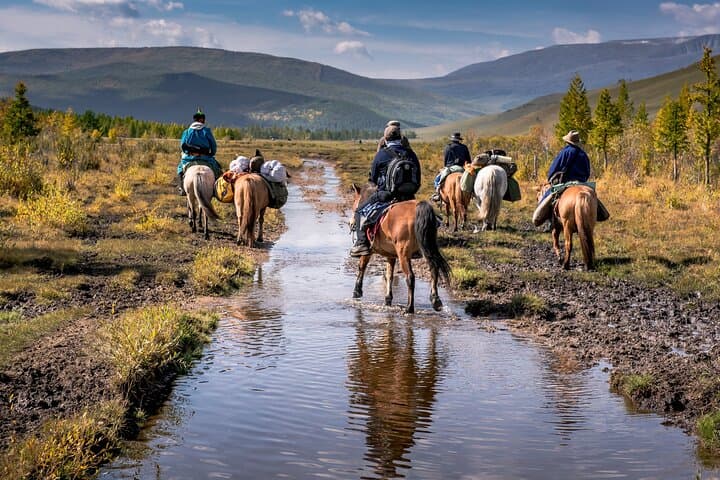
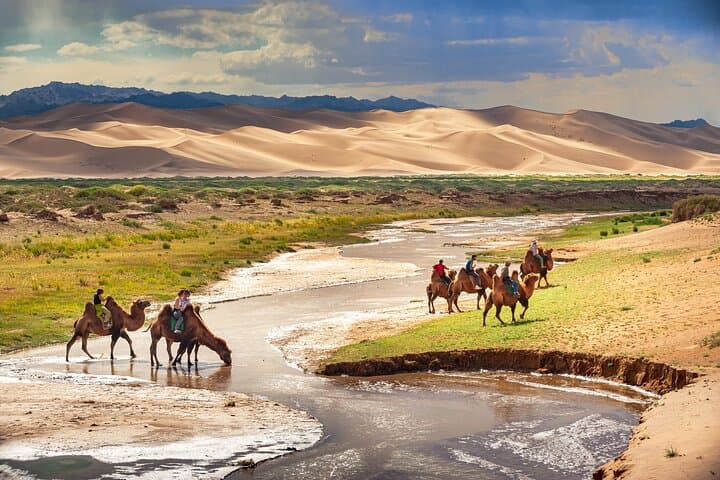
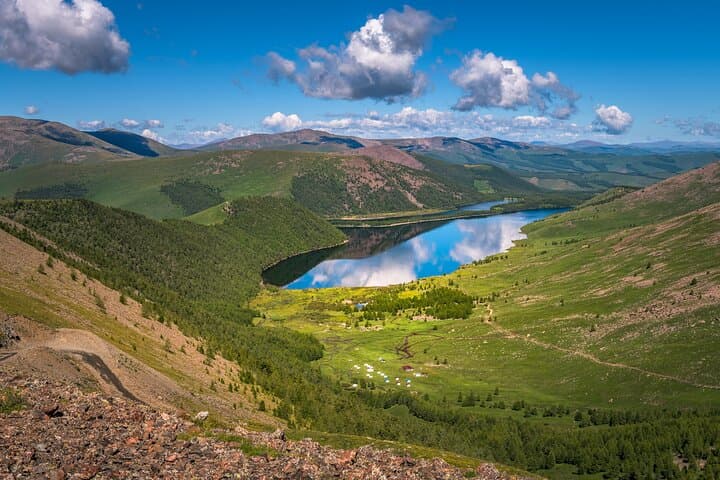
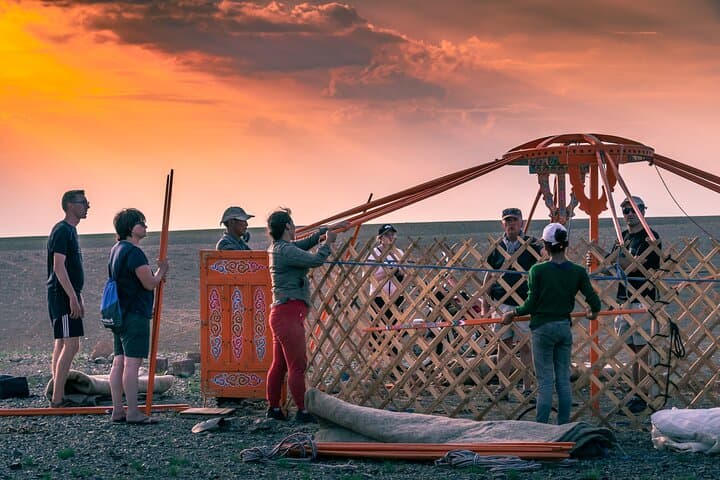
Riders climb into the saddle before dawn and find the world opening into steppe: low grass rolling to ribboned rivers, horses’ hooves thumping a steady rhythm while a cold wind edges the sky. Over eleven days the route moves from Ulaanbaatar’s bustle into a remote sweep of dunes, volcanic crater rims, alpine monastery ridgelines and blue lakes where nomadic families keep their yurts.
Riders climb into the saddle before dawn and find the world opening into steppe: low grass rolling to ribboned rivers, horses’ hooves thumping a steady rhythm while a cold wind edges the sky. Over eleven days the route moves from Ulaanbaatar’s bustle into a remote sweep of dunes, volcanic crater rims, alpine monastery ridgelines and blue lakes where nomadic families keep their yurts.
The trip threads through landscapes shaped by basalt flows and river erosion—Khorgo’s volcanic cone and the Terkhiin Tsagaan Nuur basin sit beside the Orkhon Valley, a UNESCO cultural landscape that preserves Mongolia’s imperial and nomadic history. Along the way riders encounter centuries-old Buddhist sites like Tuvkhun Khiid and the ruins near Kharakhorum, testimony to a layered human geography where herding traditions remain daily practice.
Expect long but manageable days in the tack over mixed terrain: short dune crossings, open steppe, river fords and volcanic scree. Accommodations alternate between simple yurt camps, nights with nomadic families and basic hotels in regional towns. Meals are largely local — dairy, meat, fresh bread — and hot springs offer occasional rest for tired muscles.
Practical guidance: prepare for temperature swings (cold nights, strong daytime sun), bring layered windproof clothing, and confirm your riding level with the operator. The trip requires moderate fitness and comfort on a horse for several hours daily; guides and gear are provided, but prior riding experience speeds acclimation. Plan extra travel days at either end for Ulaanbaatar connections and expect long drives between remote sites.