THE ADVENTURE COLLECTIVE® · Independent discovery and booking for outdoor travel

A compact 11-day trek that leads directly toward the base of Masherbrum (K1), traversing Hushe’s villages, alpine meadows and a short glacier approach. Ideal for trekkers seeking dramatic Karakoram views without technical climbing.
A compact 11-day trek that leads directly toward the base of Masherbrum (K1), traversing Hushe’s villages, alpine meadows and a short glacier approach. Ideal for trekkers seeking dramatic Karakoram views without technical climbing.
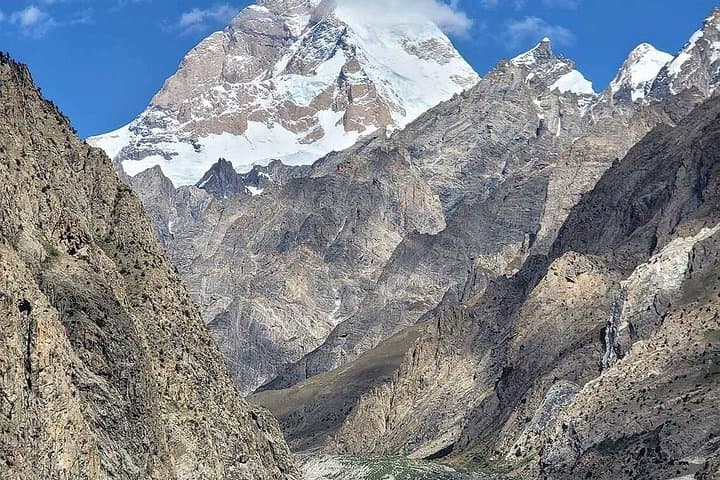
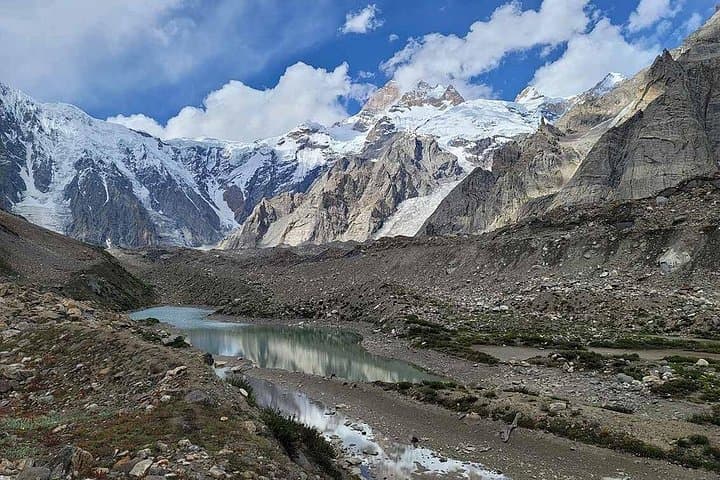
A cold dawn breaks over the Hushe valley and the silhouette of Masherbrum pulls itself into view — a steep, snow-tipped cone that frames the trail ahead. The path follows braided streams that cut through moraines and alpine meadows, and each step moves you closer to the peak’s shadow and a compact base camp beside a high lake.
Verified experiences and guided adventures in the surrounding area.
Operated by Beyond the Valley · Hushe, Gilgit-Baltistan
A cold dawn breaks over the Hushe valley and the silhouette of Masherbrum pulls itself into view — a steep, snow-tipped cone that frames the trail ahead. The path follows braided streams that cut through moraines and alpine meadows, and each step moves you closer to the peak’s shadow and a compact base camp beside a high lake.
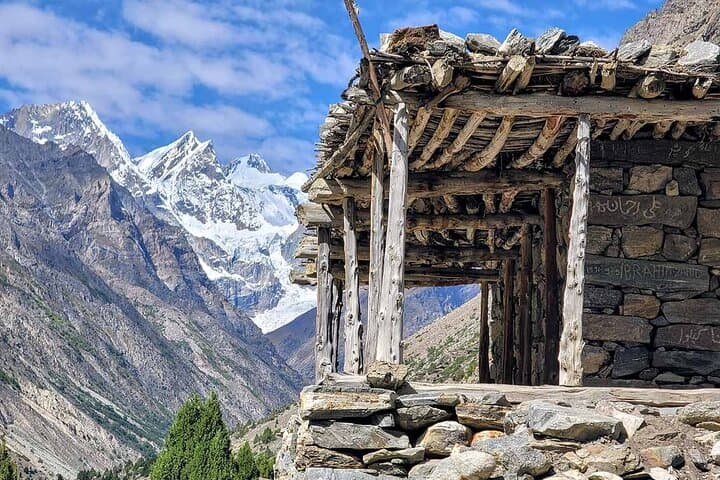
Geology here is blunt: uplifted granite and glacial ice carved long U-shaped valleys and sharp ridgelines. The Balti people have lived in these elevations for centuries; villages of stone houses and flat fields reflect a culture adapted to short summers and long winters. Masherbrum, cataloged as K1 by early surveyors, dominates the skyline and guides local itineraries.
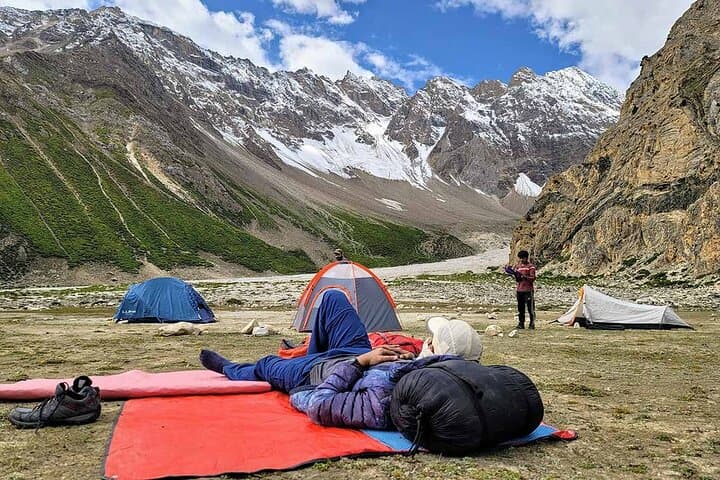
Expect a straightforward multi-day trek rather than a technical climb. Trails are a mix of rocky switchbacks, grassy benches, and a short, 30-minute glacier approach near base camp. Altitude tops around 4,200 m at base camp; acclimatization days and a measured pace are built into the itinerary. Nights alternate between village guesthouses and camping under clear, star-swept skies.
Practical notes: pack layered clothing for strong daytime sun and sharp nighttime cold, a reliable sleeping system for 3–4°C (or colder), and sturdy boots for uneven moraine. Hydrate and monitor for altitude symptoms; guides and porters manage camp logistics and most equipment. Flights into Skardu can be weather-dependent; a contingency road transfer along the Karakoram Highway is standard.
This is a high-value introduction to the Karakorams — accessible for fit beginners willing to respect altitude and mountain weather, and richly rewarding for anyone after dramatic peaks without technical climbing.
moderate.
10–11 days.
Suitable for trekkers with decent cardiovascular fitness and basic multi-day hiking experience; expect consecutive days of 4–8 hours of walking at altitude.
The route is classified as non-technical and accessible to beginners with reasonable fitness, but altitude and multi-day walking demand preparation and gradual pacing.
Summer (June–September) offers the most stable weather and open trails; late spring and early fall can work but expect colder nights and possible snow at higher elevations.
Yes — the trip includes local guides, porters and most relevant trekking equipment as noted in the itinerary inclusions.
Travel to Gilgit-Baltistan requires a valid passport and any applicable domestic flight documentation; local trekking permits and liaison with authorities are typically managed by the operator.
The Hushe valley is part of Ghanche district where Balti communities maintain Tibetan-influenced language and customs; Masherbrum was labeled K1 during early British-era surveys.
This is a sensitive glacial environment — minimize campfire wood use, pack out all waste, and follow local guide advice to reduce erosion and disturbance.
Beyond the Valley operates guided outdoor trips and adventures with an emphasis on safety, stewardship, and memorable experiences.
A cold dawn breaks over the Hushe valley and the silhouette of Masherbrum pulls itself into view — a steep, snow-tipped cone that frames the trail ahead. The path follows braided streams that cut through moraines and alpine meadows, and each step moves you closer to the peak’s shadow and a compact base camp beside a high lake.
A cold dawn breaks over the Hushe valley and the silhouette of Masherbrum pulls itself into view — a steep, snow-tipped cone that frames the trail ahead. The path follows braided streams that cut through moraines and alpine meadows, and each step moves you closer to the peak’s shadow and a compact base camp beside a high lake.
Geology here is blunt: uplifted granite and glacial ice carved long U-shaped valleys and sharp ridgelines. The Balti people have lived in these elevations for centuries; villages of stone houses and flat fields reflect a culture adapted to short summers and long winters. Masherbrum, cataloged as K1 by early surveyors, dominates the skyline and guides local itineraries.
Expect a straightforward multi-day trek rather than a technical climb. Trails are a mix of rocky switchbacks, grassy benches, and a short, 30-minute glacier approach near base camp. Altitude tops around 4,200 m at base camp; acclimatization days and a measured pace are built into the itinerary. Nights alternate between village guesthouses and camping under clear, star-swept skies.
Practical notes: pack layered clothing for strong daytime sun and sharp nighttime cold, a reliable sleeping system for 3–4°C (or colder), and sturdy boots for uneven moraine. Hydrate and monitor for altitude symptoms; guides and porters manage camp logistics and most equipment. Flights into Skardu can be weather-dependent; a contingency road transfer along the Karakoram Highway is standard.
This is a high-value introduction to the Karakorams — accessible for fit beginners willing to respect altitude and mountain weather, and richly rewarding for anyone after dramatic peaks without technical climbing.