THE ADVENTURE COLLECTIVE® · Independent discovery and booking for outdoor travel

Traverse Madagascar in eleven days: rainforests of indri, the otherworldly baobab avenue, and the razor-sharp Tsingy de Bemaraha. This guided circuit mixes wildlife walks, boat crossings, and limestone scrambling for a compact island odyssey.
Traverse Madagascar in eleven days: rainforests of indri, the otherworldly baobab avenue, and the razor-sharp Tsingy de Bemaraha. This guided circuit mixes wildlife walks, boat crossings, and limestone scrambling for a compact island odyssey.
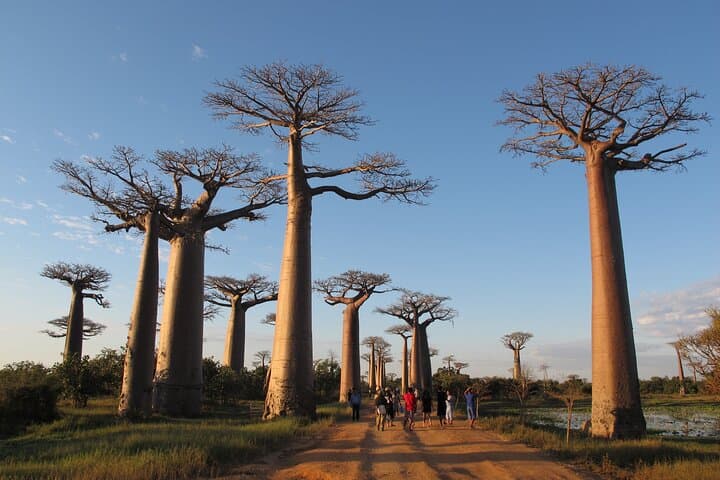
You step off the road and the air changes—hot, dry wind at the baobab avenue, humid moss-scented breath in Andasibe, and the mineral cold of limestone spires at the Tsingy. Over eleven days this itinerary threads Madagascar’s most elemental landscapes: eastern rainforests alive with indri calls, western mangroves and baobab silhouettes, and the jagged limestone labyrinths of Bemaraha that demand attention and steady feet.
Verified experiences and guided adventures in the surrounding area.
Operated by Fosa Travel · Antananarivo, Analamanga
You step off the road and the air changes—hot, dry wind at the baobab avenue, humid moss-scented breath in Andasibe, and the mineral cold of limestone spires at the Tsingy. Over eleven days this itinerary threads Madagascar’s most elemental landscapes: eastern rainforests alive with indri calls, western mangroves and baobab silhouettes, and the jagged limestone labyrinths of Bemaraha that demand attention and steady feet.
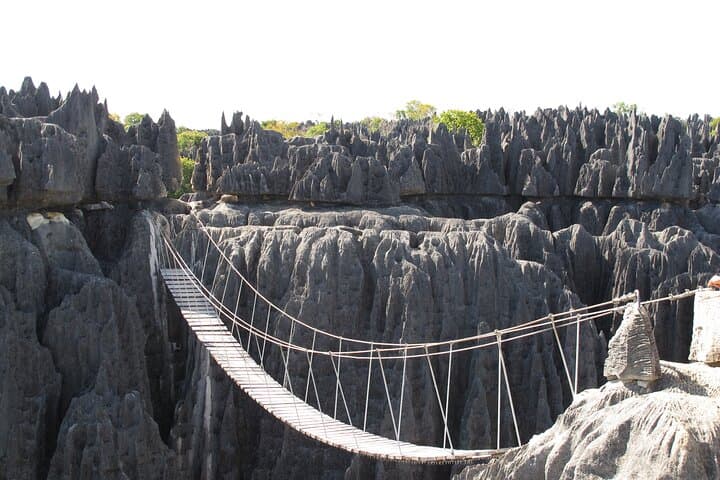
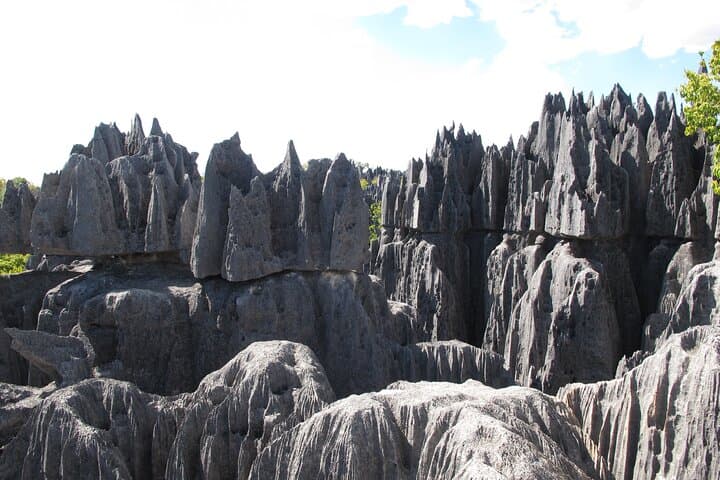
The route moves through places shaped by isolation and geology. Andasibe’s lowland rainforest sits on ancient soils that support eleven lemur species; Morondava’s coastal plains host the iconic Adansonia grandidieri; Bemaraha’s tsingy—karst towers carved by water over millennia—are a UNESCO World Heritage Site and a playground of narrow canyons, suspension bridges, and exposed roots.
Culturally, expect small village markets, zebu imagery, and Malagasy hospitality—meals are simple and local, and villages often act as living waypoints. Naturalists prize Kirindy for nocturnal species and the chance to spot the fosa, Madagascar’s largest native carnivore.
Practically: the trip combines vehicle transfers, short boat rides, day hikes and sections of scrambling on fixed ladders and cables in the Big Tsingy. Trails can be steep, uneven, and slippery after rain; guides and local porters are standard. Carry hydration, sun and rain protection, and cash for remote villages. Start early for wildlife viewing, keep to marked routes in Bemaraha, and be prepared for long road sections between highlights. This is a demanding but richly varied Madagascan circuit—wild, tactile, and unmistakably island in character.
challenging.
11 days.
Moderate to good fitness: expect multi-hour walking days, uneven terrain and some scrambling; be comfortable on ladders and narrow paths.
Park entry fees and a local guide are required; your operator usually arranges permits and guide services as part of the itinerary.
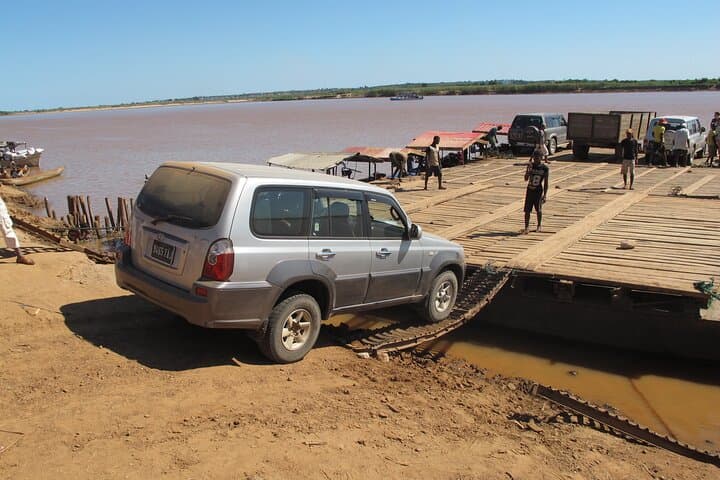
Roads between Morondava and Bekopaka include long gravel sections and river ferry crossings; expect bumpy drives and plan for travel time.
Not recommended for young children or travelers with significant mobility limitations due to uneven trails, ladders in the Tsingy and remote accommodations.
Common sightings include indri, sifaka, ring-tailed lemurs, various chameleons, and nocturnal species on night walks; fosa sightings are possible but rare.
Madagascar’s biodiversity evolved in long isolation; cultural life blends Austronesian and African influences, with local economies often centered on rice, zebu and artisanal craft.
Deforestation and habitat fragmentation threaten many species; visit with accredited guides, avoid single-use plastics, and respect park rules to minimize impact.
Fosa Travel operates guided outdoor trips and adventures with an emphasis on safety, stewardship, and memorable experiences.
You step off the road and the air changes—hot, dry wind at the baobab avenue, humid moss-scented breath in Andasibe, and the mineral cold of limestone spires at the Tsingy. Over eleven days this itinerary threads Madagascar’s most elemental landscapes: eastern rainforests alive with indri calls, western mangroves and baobab silhouettes, and the jagged limestone labyrinths of Bemaraha that demand attention and steady feet.
You step off the road and the air changes—hot, dry wind at the baobab avenue, humid moss-scented breath in Andasibe, and the mineral cold of limestone spires at the Tsingy. Over eleven days this itinerary threads Madagascar’s most elemental landscapes: eastern rainforests alive with indri calls, western mangroves and baobab silhouettes, and the jagged limestone labyrinths of Bemaraha that demand attention and steady feet.
The route moves through places shaped by isolation and geology. Andasibe’s lowland rainforest sits on ancient soils that support eleven lemur species; Morondava’s coastal plains host the iconic Adansonia grandidieri; Bemaraha’s tsingy—karst towers carved by water over millennia—are a UNESCO World Heritage Site and a playground of narrow canyons, suspension bridges, and exposed roots.
Culturally, expect small village markets, zebu imagery, and Malagasy hospitality—meals are simple and local, and villages often act as living waypoints. Naturalists prize Kirindy for nocturnal species and the chance to spot the fosa, Madagascar’s largest native carnivore.
Practically: the trip combines vehicle transfers, short boat rides, day hikes and sections of scrambling on fixed ladders and cables in the Big Tsingy. Trails can be steep, uneven, and slippery after rain; guides and local porters are standard. Carry hydration, sun and rain protection, and cash for remote villages. Start early for wildlife viewing, keep to marked routes in Bemaraha, and be prepared for long road sections between highlights. This is a demanding but richly varied Madagascan circuit—wild, tactile, and unmistakably island in character.