THE ADVENTURE COLLECTIVE® · Independent discovery and booking for outdoor travel

An 11-day guided route from Lukla to Everest Base Camp that balances cultural stops with mandatory acclimatization days. Expect guesthouse nights, high alpine weather and sweeping views of Everest and neighboring giants.
An 11-day guided route from Lukla to Everest Base Camp that balances cultural stops with mandatory acclimatization days. Expect guesthouse nights, high alpine weather and sweeping views of Everest and neighboring giants.
You step off the small Twin Otter at Lukla and the mountains rearrange the world: air thin, prayer flags snapping, a valley carved by the Dudh Kosi that dares you onward.
Verified experiences and guided adventures in the surrounding area.
Operated by CAN Travels · Lukla, Province No. 1
You step off the small Twin Otter at Lukla and the mountains rearrange the world: air thin, prayer flags snapping, a valley carved by the Dudh Kosi that dares you onward.
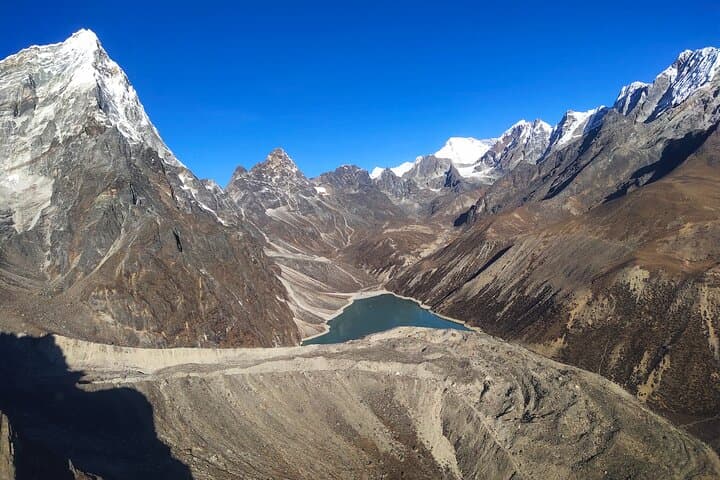
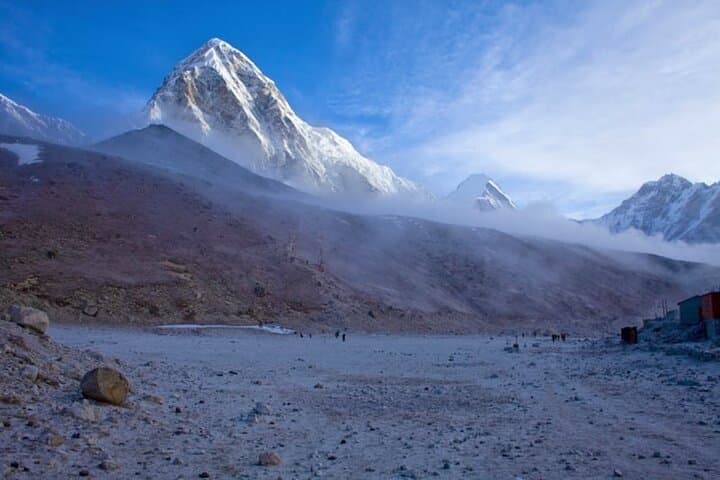
Over eleven days the trail moves from rhododendron and pine through Sherpa villages to a landscape of moraine and blue ice. The route passes Namche Bazaar for acclimatization, the spiritual high point of Tengboche monastery, and the wind-swept settlement of Gorak Shep before the exposed sweep of Everest Base Camp and the sunrise viewpoint on Kala Patthar.
This corridor sits inside Sagarmatha National Park, a UNESCO-protected landscape shaped by the uplift of the Himalaya and long glacial sculpting; towering neighbors include Lhotse, Nuptse, Ama Dablam and Pumori. Sherpa culture is present on every step—mani stones, gompas, and teahouses run by families whose livelihoods follow the trekking seasons.
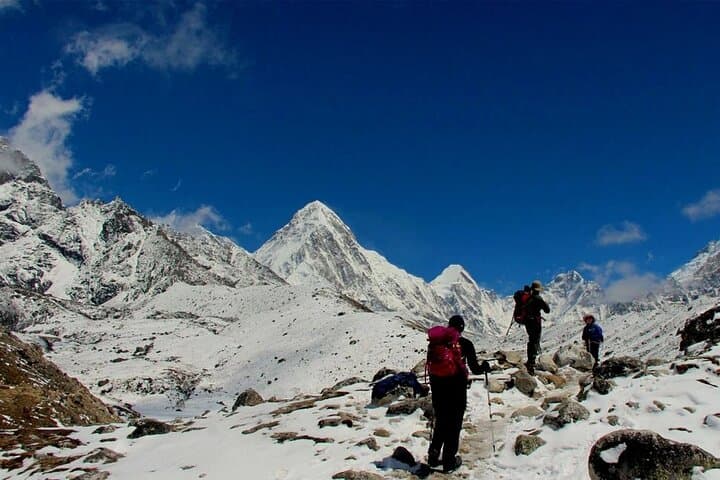
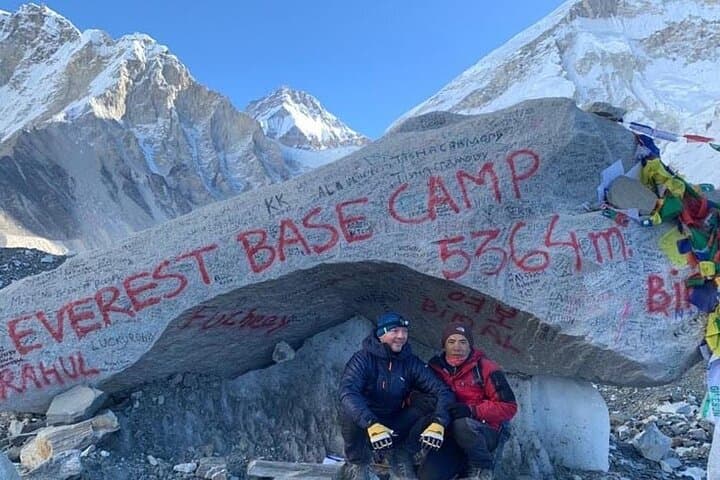
Practically: expect daily hikes of 4–7 hours, elevations from ~2,800m (Lukla) to 5,364m (EBC) with key acclimatization days in Namche and Dingboche. Permits (Sagarmatha NP entry, TIMS) and a registered guide are required; guesthouses provide simple meals and a bed. Weather turns fast—wind, afternoon clouds and freezing nights are the norm above 4,000m. Hydrate, pace the uphill sections, and treat acclimatization as mandatory rather than optional. Footwear with firm support, layered insulation and a headlamp are practical essentials. The route rewards preparation with raw high-altitude panoramas and close contact with Sherpa life.
challenging.
11 days.
Requires good cardiovascular fitness, previous multi-day trekking experience and the ability to hike 4–7 hours per day at altitude.
Yes—Sagarmatha National Park entry and a TIMS card are required; guides typically arrange these before the trek.
No technical climbing is required to reach EBC, but experience at altitude and strong fitness are essential.
Guesthouses (tea houses) provide basic rooms, shared or private, with communal toilets and simple Nepali meals; hot showers may be limited.
Spring (Mar–May) and autumn (Sep–Nov) offer the most stable weather and clearer mountain views; winter is very cold and the monsoon brings heavy clouds.
The Khumbu has long been inhabited by Sherpa communities; the region gained global attention after the 1953 first ascent of Everest by Edmund Hillary and Tenzing Norgay.
Sagarmatha National Park enforces permit fees and waste rules; trekkers should pack out non-biodegradable trash and minimize single-use plastics.
CAN Travels operates guided outdoor trips and adventures with an emphasis on safety, stewardship, and memorable experiences.
You step off the small Twin Otter at Lukla and the mountains rearrange the world: air thin, prayer flags snapping, a valley carved by the Dudh Kosi that dares you onward.
You step off the small Twin Otter at Lukla and the mountains rearrange the world: air thin, prayer flags snapping, a valley carved by the Dudh Kosi that dares you onward.
Over eleven days the trail moves from rhododendron and pine through Sherpa villages to a landscape of moraine and blue ice. The route passes Namche Bazaar for acclimatization, the spiritual high point of Tengboche monastery, and the wind-swept settlement of Gorak Shep before the exposed sweep of Everest Base Camp and the sunrise viewpoint on Kala Patthar.
This corridor sits inside Sagarmatha National Park, a UNESCO-protected landscape shaped by the uplift of the Himalaya and long glacial sculpting; towering neighbors include Lhotse, Nuptse, Ama Dablam and Pumori. Sherpa culture is present on every step—mani stones, gompas, and teahouses run by families whose livelihoods follow the trekking seasons.
Practically: expect daily hikes of 4–7 hours, elevations from ~2,800m (Lukla) to 5,364m (EBC) with key acclimatization days in Namche and Dingboche. Permits (Sagarmatha NP entry, TIMS) and a registered guide are required; guesthouses provide simple meals and a bed. Weather turns fast—wind, afternoon clouds and freezing nights are the norm above 4,000m. Hydrate, pace the uphill sections, and treat acclimatization as mandatory rather than optional. Footwear with firm support, layered insulation and a headlamp are practical essentials. The route rewards preparation with raw high-altitude panoramas and close contact with Sherpa life.