THE ADVENTURE COLLECTIVE® · Independent discovery and booking for outdoor travel

An 11-day ascent into the Annapurna Sanctuary that moves from riverside villages to a bowl-like base camp beneath 8,000‑meter peaks. Expect teahouse nights, steep stone steps, and panoramic sunrise views at Poon Hill.
An 11-day ascent into the Annapurna Sanctuary that moves from riverside villages to a bowl-like base camp beneath 8,000‑meter peaks. Expect teahouse nights, steep stone steps, and panoramic sunrise views at Poon Hill.
Dawn breaks over terraced fields and a low bank of cloud as trekkers leave the riverside town of Nayapul and climb into rhododendron forest. By the time you crest the ridgeline above Ghorepani, the air is thinner and the peaks—Annapurna I, Dhaulagiri and Fishtail—have edged into full view, white and abrupt against the sky.
Verified experiences and guided adventures in the surrounding area.
Dawn breaks over terraced fields and a low bank of cloud as trekkers leave the riverside town of Nayapul and climb into rhododendron forest. By the time you crest the ridgeline above Ghorepani, the air is thinner and the peaks—Annapurna I, Dhaulagiri and Fishtail—have edged into full view, white and abrupt against the sky.
The route threads through Gurung and Magar villages, centuries-old cultures that farm the hillsides and host travelers in simple teahouses. Geologically the trail follows glacial valleys carved from uplifted Himalayan marble and granite; the final approach opens into a bowl-like amphitheater where Annapurna Base Camp (≈4,130 m) sits, ringed by jagged ridgelines. The trek’s rhythm alternates long uphill days, shorter ridge walks, and river crossings—each step revealing more altitude and clearer air.
Practically, the itinerary runs about 10–11 days on trail with daily stages of 4–7 hours and cumulative elevation gain on the order of 2,500–3,000 m from trailhead to base camp. Accommodations are teahouses with basic meals; pack a warm sleeping bag and layers for cold nights. Permits (ACAP and TIMS) are required and are typically arranged in Pokhara or on arrival. Expect mixed terrain—stone steps, muddy tracks after rain, and dusty mule tracks—and allow an extra acclimatization day if uncertain about altitude.
Hydrate, pace uphill sections deliberately, and plan for clear morning views and afternoon cloud buildups. The trek rewards persistent hikers with close-up mountainscapes, communal village stops, and the rare hush of high alpine light when the massif seems to hold its breath.
challenging.
11 days.
Good aerobic fitness with experience on multi-day hikes; comfortable carrying a 10–15 kg pack and walking 4–7 hours/day.
A guide isn’t mandatory on the lower Annapurna trails but hiring one improves logistics, supports local operators and helps with navigation and altitude decisions.
You need an Annapurna Conservation Area Permit (ACAP) and a TIMS card; these are obtained in Pokhara or at entry points.
The route reaches ~4,130 m at base camp; symptoms of altitude sickness are possible—ascend slowly, hydrate, and consider an acclimatization day.
Spring (Mar–May) and fall (Sep–Nov) offer the most stable weather and clear mountain views; monsoon summer is wet and winter brings deep cold and occasional snow.
The Annapurna Sanctuary has long been home to Gurung and Magar farming communities; the Annapurna Conservation Area was created in the 1980s to manage tourism and protect local livelihoods.
Travelers should follow ACAP rules, minimize single-use plastics, and pack out non-biodegradable waste; supporting teahouses that follow waste-management practices helps sustain the area.
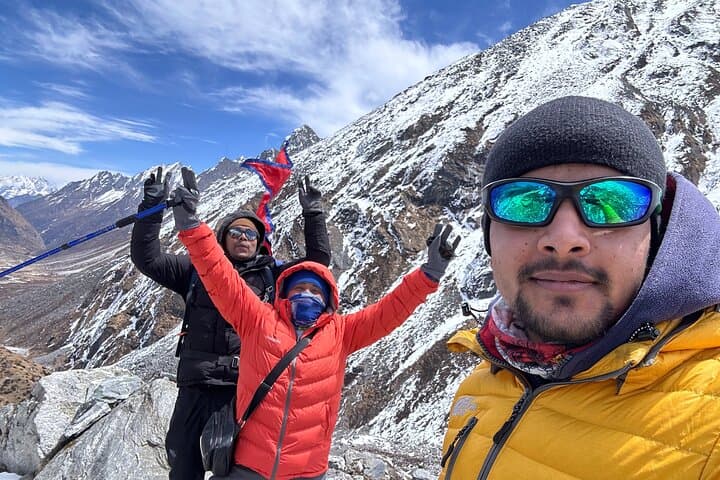
Dawn breaks over terraced fields and a low bank of cloud as trekkers leave the riverside town of Nayapul and climb into rhododendron forest. By the time you crest the ridgeline above Ghorepani, the air is thinner and the peaks—Annapurna I, Dhaulagiri and Fishtail—have edged into full view, white and abrupt against the sky.
Dawn breaks over terraced fields and a low bank of cloud as trekkers leave the riverside town of Nayapul and climb into rhododendron forest. By the time you crest the ridgeline above Ghorepani, the air is thinner and the peaks—Annapurna I, Dhaulagiri and Fishtail—have edged into full view, white and abrupt against the sky.
The route threads through Gurung and Magar villages, centuries-old cultures that farm the hillsides and host travelers in simple teahouses. Geologically the trail follows glacial valleys carved from uplifted Himalayan marble and granite; the final approach opens into a bowl-like amphitheater where Annapurna Base Camp (≈4,130 m) sits, ringed by jagged ridgelines. The trek’s rhythm alternates long uphill days, shorter ridge walks, and river crossings—each step revealing more altitude and clearer air.
Practically, the itinerary runs about 10–11 days on trail with daily stages of 4–7 hours and cumulative elevation gain on the order of 2,500–3,000 m from trailhead to base camp. Accommodations are teahouses with basic meals; pack a warm sleeping bag and layers for cold nights. Permits (ACAP and TIMS) are required and are typically arranged in Pokhara or on arrival. Expect mixed terrain—stone steps, muddy tracks after rain, and dusty mule tracks—and allow an extra acclimatization day if uncertain about altitude.
Hydrate, pace uphill sections deliberately, and plan for clear morning views and afternoon cloud buildups. The trek rewards persistent hikers with close-up mountainscapes, communal village stops, and the rare hush of high alpine light when the massif seems to hold its breath.