THE ADVENTURE COLLECTIVE® · Independent discovery and booking for outdoor travel

An 11-day loop that circles Alpamayo and the Santa Cruz massif, this high‑altitude trek links glacier-fed lakes, multiple 4,300–4,860 m passes and remote Quechua campsites. Ideal for trekkers with altitude experience who want sustained alpine scenery and technical camping logistics.
An 11-day loop that circles Alpamayo and the Santa Cruz massif, this high‑altitude trek links glacier-fed lakes, multiple 4,300–4,860 m passes and remote Quechua campsites. Ideal for trekkers with altitude experience who want sustained alpine scenery and technical camping logistics.
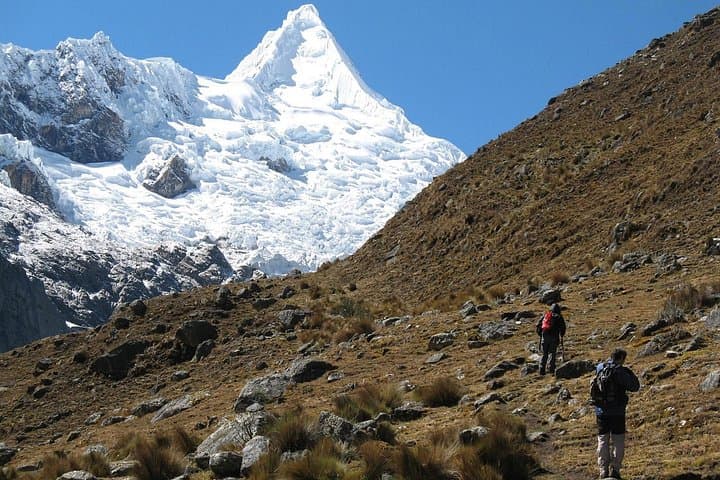
A cold wind cuts across the moraine as the first headlamps disappear into the dark — you follow a narrow track between tents pitched under the stars, glaciers looming like slow-moving white engines above. The 11-day Alpamayo Circuit threads the northern Cordillera Blanca from the Llamacorral valley, over multiple 4,300–4,860 m passes, and circles the sculpted faces of Alpamayo and the Santa Cruz massif.
Verified experiences and guided adventures in the surrounding area.
Operated by Peru Bergsport · Huaraz, Ancash
A cold wind cuts across the moraine as the first headlamps disappear into the dark — you follow a narrow track between tents pitched under the stars, glaciers looming like slow-moving white engines above. The 11-day Alpamayo Circuit threads the northern Cordillera Blanca from the Llamacorral valley, over multiple 4,300–4,860 m passes, and circles the sculpted faces of Alpamayo and the Santa Cruz massif.
Geology here is stark: granite spines and cirques carved by Pleistocene ice, glaciers that channel meltwater into cobalt lakes Ichicocha, Jatuncocha and Cullicocha. The route crosses passes such as Punta Union, Jatunvientona and Caracara; each pass offers different vantage points on Alpamayo’s celebrated north and south faces. Culturally, the trek moves through Quechua-speaking highland communities whose seasonal herding and agriculture persist amid the peaks.
Expect long days of steady ascent and descent on mixed trail — rocky steps, scree, and narrow moraine tracks — with overnight camps at 3,600–4,650 m. Acclimatization is built into the itinerary with a rest day near Alpamayo’s base camp.
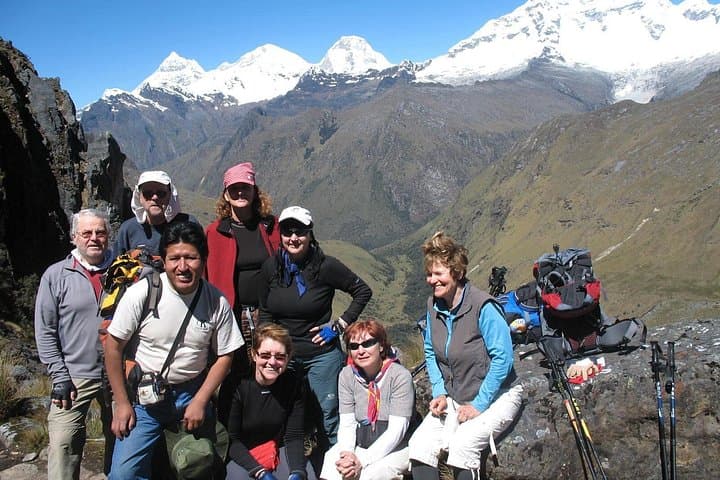
Practical edge: prioritize layered clothing, a warm sleeping system, daily hydration and slow pacing on passes above 4,200 m. Footwear with firm soles and ankle support helps on steep descents; trekking poles reduce knee strain. Book during the dry season (June–August) for the most stable conditions, and be prepared for rapid weather shifts and strong UV at altitude. This circuit is a classic high‑altitude trek — immersive, demanding, and deeply scenic.
challenging.
11 days.
Participants should have regular cardio fitness and experience with multi‑day hiking; be prepared for sustained uphill days and thin air.
The dry season (June–August) offers the most stable weather and clearer views; April–May and September can also work but expect occasional rain or snow.
No technical glacier travel or climbing is required for the established circuit route, but good high‑altitude trekking experience and sure-footedness are essential.
The trek reaches passes near 4,860 m; altitude sickness is a real risk—acclimatize, hydrate, ascend slowly and know evacuation procedures.
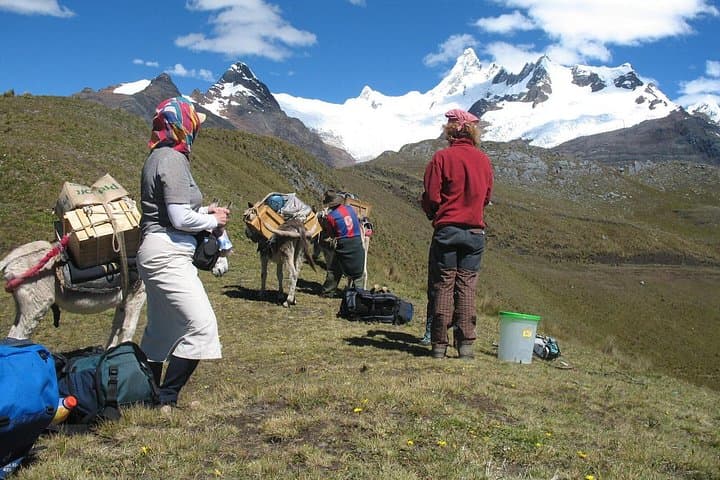
Accommodation is two-person tents at campsites and meals (breakfast, lunch, dinner) are included daily as per the itinerary; bring personal snacks and any specialty dietary needs.
The Cordillera Blanca has long been home to Quechua communities and seasonal shepherding; modern trekking routes were popularized by European mountaineers in the 20th century.
The high‑altitude environment is fragile—practice pack‑in, pack‑out, avoid disturbing water sources and use established campsites to minimize impact.
Peru Bergsport operates guided outdoor trips and adventures with an emphasis on safety, stewardship, and memorable experiences.
A cold wind cuts across the moraine as the first headlamps disappear into the dark — you follow a narrow track between tents pitched under the stars, glaciers looming like slow-moving white engines above. The 11-day Alpamayo Circuit threads the northern Cordillera Blanca from the Llamacorral valley, over multiple 4,300–4,860 m passes, and circles the sculpted faces of Alpamayo and the Santa Cruz massif.
A cold wind cuts across the moraine as the first headlamps disappear into the dark — you follow a narrow track between tents pitched under the stars, glaciers looming like slow-moving white engines above. The 11-day Alpamayo Circuit threads the northern Cordillera Blanca from the Llamacorral valley, over multiple 4,300–4,860 m passes, and circles the sculpted faces of Alpamayo and the Santa Cruz massif.
Geology here is stark: granite spines and cirques carved by Pleistocene ice, glaciers that channel meltwater into cobalt lakes Ichicocha, Jatuncocha and Cullicocha. The route crosses passes such as Punta Union, Jatunvientona and Caracara; each pass offers different vantage points on Alpamayo’s celebrated north and south faces. Culturally, the trek moves through Quechua-speaking highland communities whose seasonal herding and agriculture persist amid the peaks.
Expect long days of steady ascent and descent on mixed trail — rocky steps, scree, and narrow moraine tracks — with overnight camps at 3,600–4,650 m. Acclimatization is built into the itinerary with a rest day near Alpamayo’s base camp.
Practical edge: prioritize layered clothing, a warm sleeping system, daily hydration and slow pacing on passes above 4,200 m. Footwear with firm soles and ankle support helps on steep descents; trekking poles reduce knee strain. Book during the dry season (June–August) for the most stable conditions, and be prepared for rapid weather shifts and strong UV at altitude. This circuit is a classic high‑altitude trek — immersive, demanding, and deeply scenic.