THE ADVENTURE COLLECTIVE® · Independent discovery and booking for outdoor travel

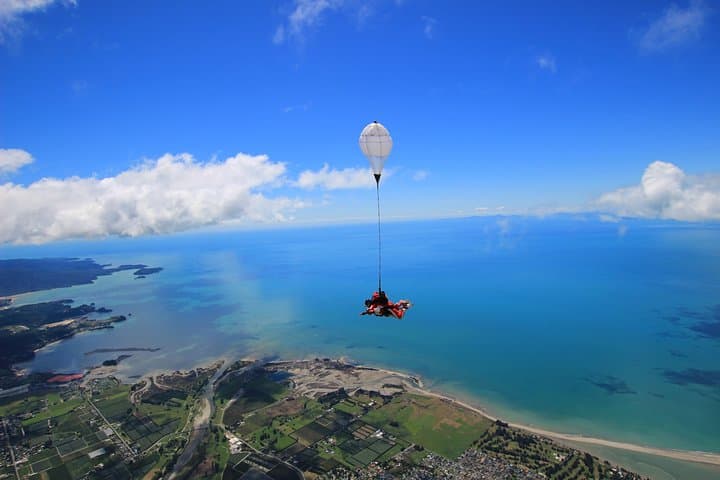
Launch from 10,000 feet above Motueka and fall toward Abel Tasman’s coastline—sandbars, bays and granite headlands spread beneath you. This tandem skydive pairs a sharp freefall with a calm canopy ride and a briefing-first operation that makes the experience accessible for many travelers.
Launch from 10,000 feet above Motueka and fall toward Abel Tasman’s coastline—sandbars, bays and granite headlands spread beneath you. This tandem skydive pairs a sharp freefall with a calm canopy ride and a briefing-first operation that makes the experience accessible for many travelers.
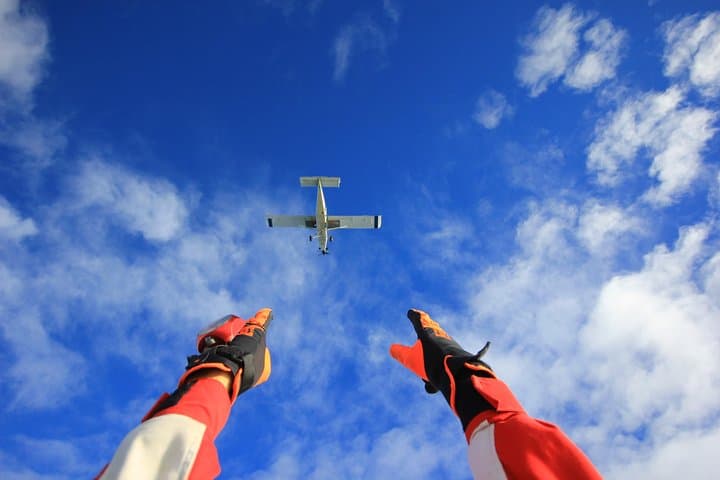
You step onto the tarmac in Motueka and the sky already looks like a map—patches of blue, strips of coastal gold, and the jagged green of Abel Tasman below daring you to move faster.
Verified experiences and guided adventures in the surrounding area.
Operated by Skydive Abel Tasman · Motueka, Tasman
You step onto the tarmac in Motueka and the sky already looks like a map—patches of blue, strips of coastal gold, and the jagged green of Abel Tasman below daring you to move faster.
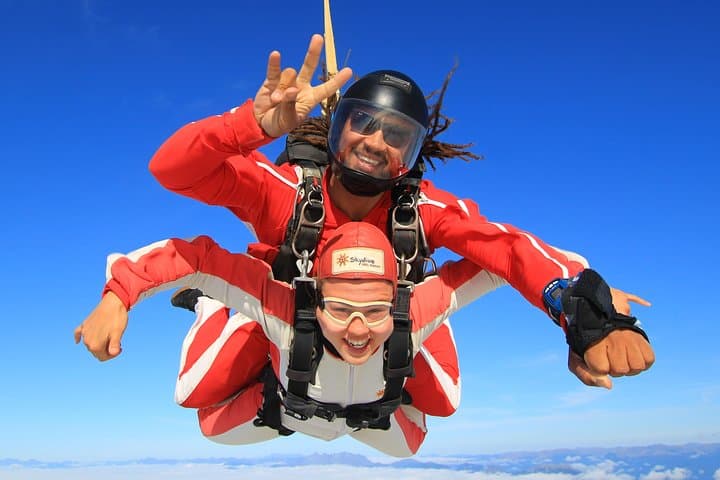
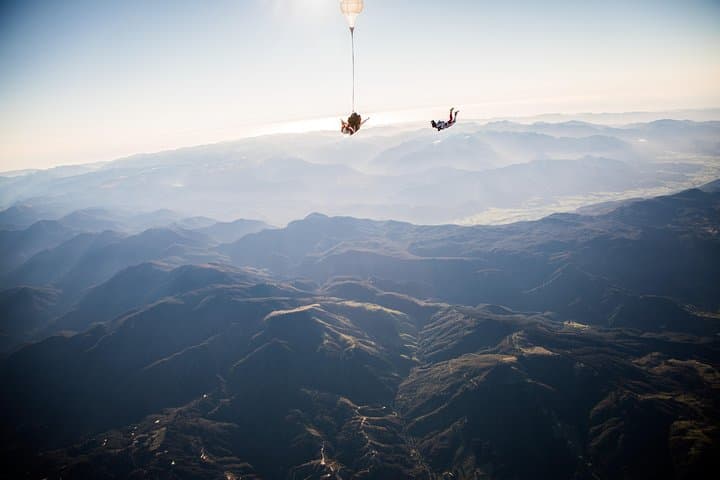
At 10,000 feet a tandem skydive with Skydive Abel Tasman makes the coast feel immediate: the Tasman Sea stretches westward, the two islands sit like bookends, and beaches and bays resolve into paint strokes as you exit the plane. The freefall time is short and sharp—roughly 30–50 seconds—before the parachute blooms and the coast slows to a patient, panoramic glide.
Abel Tasman’s coastline is recent in geological terms—marine terraces cut from ancient seabed and granite outcrops sculpted by wind and wave. European history here began with Dutch explorer Abel Tasman in 1642; Māori have long-standing ties to these shores, and local guides will often point out place names and coastal uses that predate modern maps.
Practical realities matter: check-in includes a safety briefing, weight checks, and a harness fitting. Weather dictates flights—wind and low cloud can cancel—and operators run short, focused sessions so you’re not left waiting all day.
For planning: arrive with closed-toe shoes, a warm layer for high-altitude wind, and a willingness to follow your instructor’s commands. Photo and video packages are available from the operator; if you want your own footage, confirm camera policies in advance. Expect clear instructions, short bursts of adrenaline, and a view that makes the coastline feel like a route you can almost walk from the sky.
moderate.
2 hours (includes briefing and travel time).
Suitable for most people in reasonable health; no advanced fitness required but good cardiovascular health is recommended.
Age and weight limits vary by operator; commonly participants must be at least 16–18 (with guardian consent if under 18) and fall below a maximum weight for tandem safety—check the operator’s booking page and declare accurate weight.
Freefall from 10,000 ft typically lasts about 30–50 seconds; the full session including briefing, ascent, freefall, and canopy ride runs around 2 hours from arrival to finish.
Flights are weather-dependent—high winds, low cloud, or rain can cancel jumps; operators usually offer a refund or rebooking and recommend flexible travel plans.
For safety reasons personal cameras are generally not permitted during tandem jumps; most operators sell professional photo/video packages that record the jump.
Abel Tasman was the first European to sight these coasts in 1642; the area later became protected as Abel Tasman National Park (established in 1942) and remains important to local Māori iwi.
Operators work within coastal and aviation rules to minimize disturbance; stick to signage on land, avoid approaching wildlife, and support local eco-friendly businesses.
Skydive Abel Tasman operates guided outdoor trips and adventures with an emphasis on safety, stewardship, and memorable experiences.
You step onto the tarmac in Motueka and the sky already looks like a map—patches of blue, strips of coastal gold, and the jagged green of Abel Tasman below daring you to move faster.
You step onto the tarmac in Motueka and the sky already looks like a map—patches of blue, strips of coastal gold, and the jagged green of Abel Tasman below daring you to move faster.
At 10,000 feet a tandem skydive with Skydive Abel Tasman makes the coast feel immediate: the Tasman Sea stretches westward, the two islands sit like bookends, and beaches and bays resolve into paint strokes as you exit the plane. The freefall time is short and sharp—roughly 30–50 seconds—before the parachute blooms and the coast slows to a patient, panoramic glide.
Abel Tasman’s coastline is recent in geological terms—marine terraces cut from ancient seabed and granite outcrops sculpted by wind and wave. European history here began with Dutch explorer Abel Tasman in 1642; Māori have long-standing ties to these shores, and local guides will often point out place names and coastal uses that predate modern maps.
Practical realities matter: check-in includes a safety briefing, weight checks, and a harness fitting. Weather dictates flights—wind and low cloud can cancel—and operators run short, focused sessions so you’re not left waiting all day.
For planning: arrive with closed-toe shoes, a warm layer for high-altitude wind, and a willingness to follow your instructor’s commands. Photo and video packages are available from the operator; if you want your own footage, confirm camera policies in advance. Expect clear instructions, short bursts of adrenaline, and a view that makes the coastline feel like a route you can almost walk from the sky.