THE ADVENTURE COLLECTIVE® · Independent discovery and booking for outdoor travel

A private 10-night loop from Casablanca through Chefchaouen, Fez, the Sahara and Marrakech, this itinerary pairs historic medinas and High Atlas passes with a luxury desert camp overnight. Expect long drives, short guided walks, camel rides at sunset, and immersive local encounters.
A private 10-night loop from Casablanca through Chefchaouen, Fez, the Sahara and Marrakech, this itinerary pairs historic medinas and High Atlas passes with a luxury desert camp overnight. Expect long drives, short guided walks, camel rides at sunset, and immersive local encounters.
You step from Casablanca airport into warm North African light, the road humming as an air-conditioned vehicle unfurls the map for the next ten nights. Cities rise and fall—whitewashed Chefchaouen clinging to Rif slopes, the honeyed alleys of Fez, long asphalt climbs across the High Atlas—and then the desert opens, dunes shifting like a living map under the sky.
Verified experiences and guided adventures in the surrounding area.
Operated by Morocco Arukikata · Casablanca, Casablanca-Settat
You step from Casablanca airport into warm North African light, the road humming as an air-conditioned vehicle unfurls the map for the next ten nights. Cities rise and fall—whitewashed Chefchaouen clinging to Rif slopes, the honeyed alleys of Fez, long asphalt climbs across the High Atlas—and then the desert opens, dunes shifting like a living map under the sky.
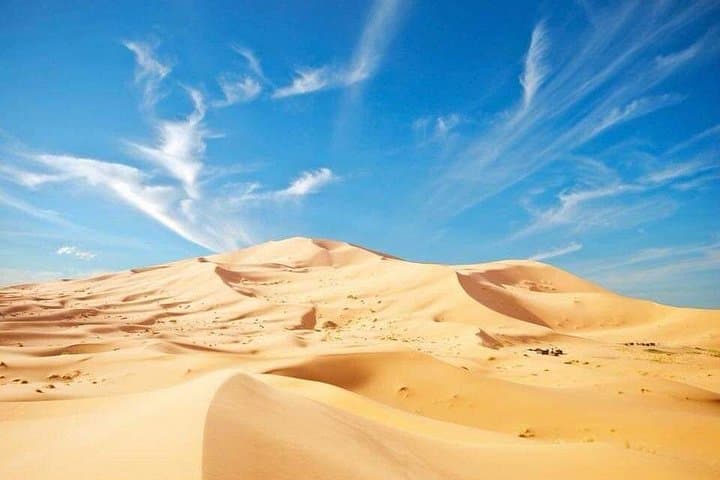
This private loop threads Morocco’s deep history: Roman ruins at Volubilis, the medieval learning centers of Fez’s medina, and the earthen kasbahs of Ait Ben Haddou—an architecture of mudbrick and communal craft that also doubled as cinematic backdrop for global films. Geology alternates between limestone gorges at Todgha, cedar-clad middle elevations that host Barbary macaques, and the Erg Chebbi sands whose grain-size and wind patterns produce the classic star-scape.
Culture here is kinetic—Berber hospitality in nomad villages, evening drums in a luxury desert camp, and riad courtyards where mint tea marks every greeting. Expect long drive days (several 4–6 hour transfers), frequent short walking tours through medina lanes, a camel-led sunset to camp, and comfortable riad or hotel nights.
Practical guidance: pack layers for 10–20°C swings, sun protection and a small daypack for walking, and be prepared for unpaved tracks near the dunes. Carry cash for small purchases, wear sturdy shoes for cobbled medinas and canyon trails, and plan arrival/departure around Casablanca or Marrakech airports. This route balances cultural depth with outdoor rhythm—bring curiosity and a readiness for sustained travel time between highlights.
moderate.
10–11 days.
Suitable for travelers in average fitness who can handle several hours of walking and multiple long vehicle transfers each day.
Visa requirements depend on your nationality; many countries have visa-free entry for short stays—check Moroccan consulate rules before travel.
Most activities are low to moderate: guided walking tours, short canyon walks and camel rides; long driving days are the primary physical demand.
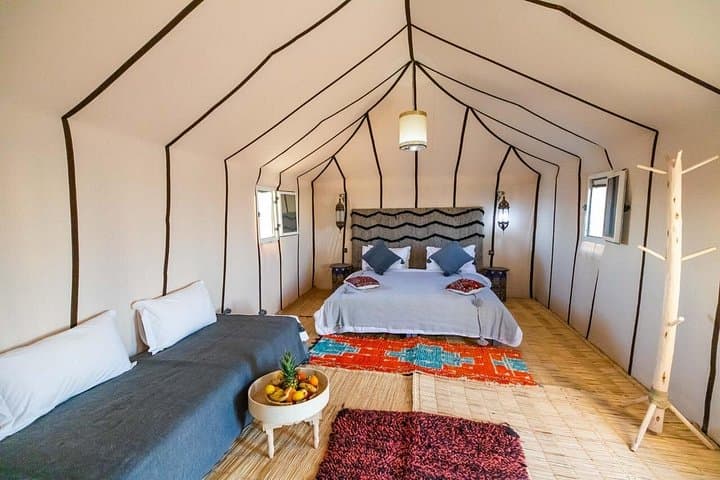
Luxury desert camps typically offer private tents with beds, shared or private washrooms, evening meals and cultural entertainment under the stars.
This tour lists professional English-speaking drivers/guides; French and Arabic are also commonly spoken.
The route crosses ancient trade and scholarship corridors—Fez’s medina contains one of the oldest continually operating universities, while Volubilis preserves extensive Roman mosaics from Morocco’s imperial past.
Dune ecosystems are fragile and water is scarce—minimize waste, stay on established tracks, and prioritize refillable water and responsible interactions with local communities.
Morocco Arukikata operates guided outdoor trips and adventures with an emphasis on safety, stewardship, and memorable experiences.
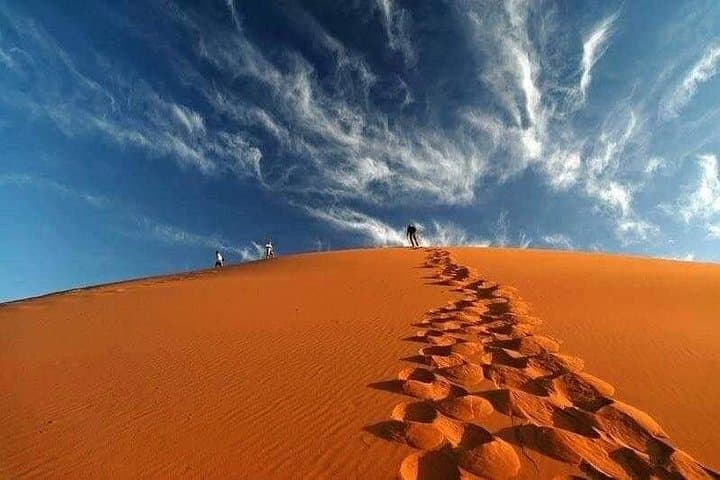

You step from Casablanca airport into warm North African light, the road humming as an air-conditioned vehicle unfurls the map for the next ten nights. Cities rise and fall—whitewashed Chefchaouen clinging to Rif slopes, the honeyed alleys of Fez, long asphalt climbs across the High Atlas—and then the desert opens, dunes shifting like a living map under the sky.
You step from Casablanca airport into warm North African light, the road humming as an air-conditioned vehicle unfurls the map for the next ten nights. Cities rise and fall—whitewashed Chefchaouen clinging to Rif slopes, the honeyed alleys of Fez, long asphalt climbs across the High Atlas—and then the desert opens, dunes shifting like a living map under the sky.
This private loop threads Morocco’s deep history: Roman ruins at Volubilis, the medieval learning centers of Fez’s medina, and the earthen kasbahs of Ait Ben Haddou—an architecture of mudbrick and communal craft that also doubled as cinematic backdrop for global films. Geology alternates between limestone gorges at Todgha, cedar-clad middle elevations that host Barbary macaques, and the Erg Chebbi sands whose grain-size and wind patterns produce the classic star-scape.
Culture here is kinetic—Berber hospitality in nomad villages, evening drums in a luxury desert camp, and riad courtyards where mint tea marks every greeting. Expect long drive days (several 4–6 hour transfers), frequent short walking tours through medina lanes, a camel-led sunset to camp, and comfortable riad or hotel nights.
Practical guidance: pack layers for 10–20°C swings, sun protection and a small daypack for walking, and be prepared for unpaved tracks near the dunes. Carry cash for small purchases, wear sturdy shoes for cobbled medinas and canyon trails, and plan arrival/departure around Casablanca or Marrakech airports. This route balances cultural depth with outdoor rhythm—bring curiosity and a readiness for sustained travel time between highlights.