THE ADVENTURE COLLECTIVE® · Independent discovery and booking for outdoor travel

Cross dunes that feel endless and sleep under cathedral‑dark skies on a 10‑day Saharan trek from Marrakech. This expedition blends long desert walks, oasis stops and nights in bivouac camps for a full immersion in Morocco's southern desert.
Cross dunes that feel endless and sleep under cathedral‑dark skies on a 10‑day Saharan trek from Marrakech. This expedition blends long desert walks, oasis stops and nights in bivouac camps for a full immersion in Morocco's southern desert.
You step out of the vehicle into a vault of sky; the dunes ahead rise and fall like a slow sea, and the wind sculpts each crest while the sand dares you to cross it. Days begin with cool air that sharpens the horizon and end under a vault of stars so bright they make conversation optional.
Verified experiences and guided adventures in the surrounding area.
Operated by Sunny Morocco · Marrakech, Marrakesh-Safi
You step out of the vehicle into a vault of sky; the dunes ahead rise and fall like a slow sea, and the wind sculpts each crest while the sand dares you to cross it. Days begin with cool air that sharpens the horizon and end under a vault of stars so bright they make conversation optional.
This route follows ancient caravan corridors that linked Marrakech to sub‑Saharan trade routes. Geologically the region shifts from folded Atlas foothills and stony hamada to wind‑built erg fields—Chegaga’s towering dunes are modern sculptures on a very old surface. Local culture is Berber and Saharan: small ksours, palm‑lined oases and nomadic camps where tea is both greeting and ritual.
Expect long walking days across mixed terrain—sandy ridges, compacted regs and occasional rocky passes—interspersed with nights in desert bivouacs and traditional camp tents. Guides read the landscape for water, shelter and tracks; camel drivers still move goods and people where wheels struggle.
Practically, carry layered clothing for big temperature swings, sun protection and at least 3–4 liters of water per day. Footwear with good traction and gaiters help keep sand out; trekking poles ease steep dune ascents and descents. Plan travel time to avoid mid‑day heat, and budget for short transfers to reach remote bivouacs. Showers and comfort vary—M’Hamid may offer a rinse; deep sand will test both your legs and patience. Cross this desert prepared and it will reward you with silence, scale and a slow, elemental kind of travel.
challenging.
10 days.
Good endurance and the ability to walk 4–6 hours daily on sand and rocky regs; prior multi‑day hiking experience helpful
You should have moderate to good fitness—expect multiple days of 4–6 hour walks over sand and rocky ground; prior multi‑day hiking is recommended.
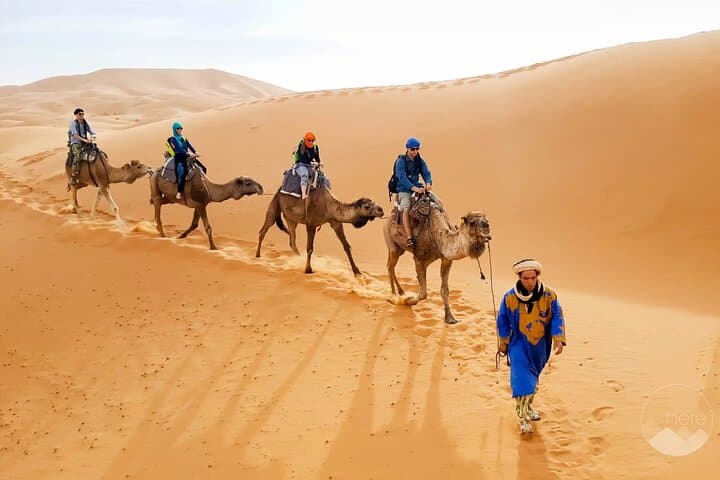
Itineraries on this route traditionally include camel transfers for parts of the route or as an option—confirm with the operator for each departure.
Basic shower facilities may be available at M’Hamid or support camps, but most nights in bivouacs have limited amenities; pack quick‑dry items and hygiene supplies.
This trip is not recommended for pregnant travelers or those with serious back or cardiovascular issues; suitability for children depends on age and stamina—check operator policies.
The route traces former caravan roads that connected southern Morocco to trans‑Saharan trade, with centuries of Berber and nomadic presence shaping local settlement patterns.
The Sahara’s ecosystems are fragile—stick to established routes, minimize water waste and pack out all non‑biodegradable waste to reduce impact.
Sunny Morocco operates guided outdoor trips and adventures with an emphasis on safety, stewardship, and memorable experiences.
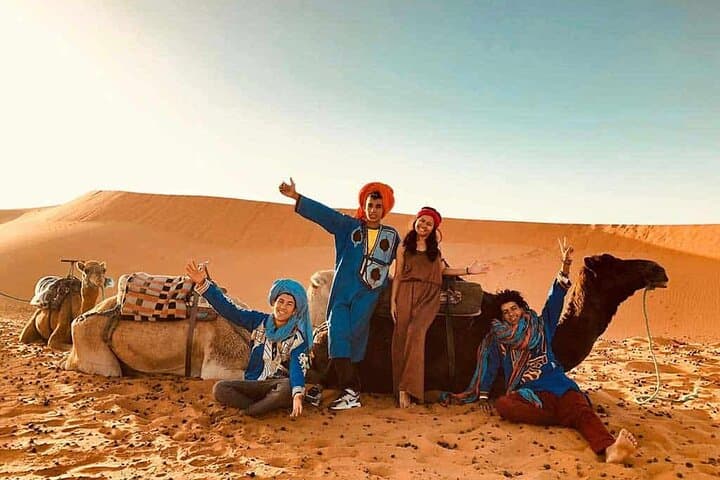
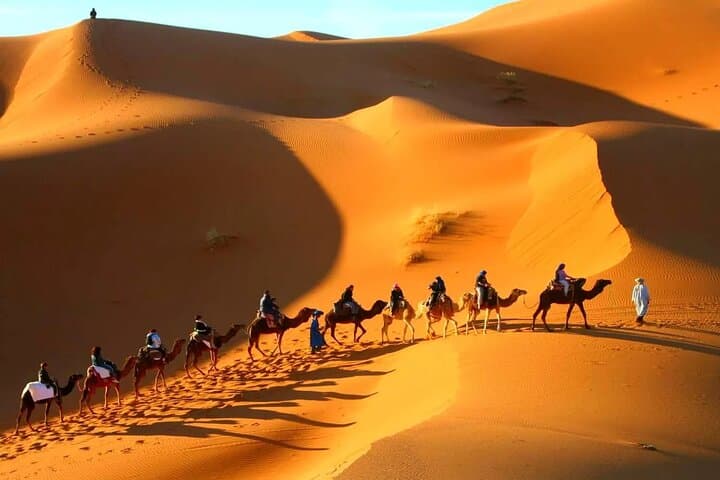
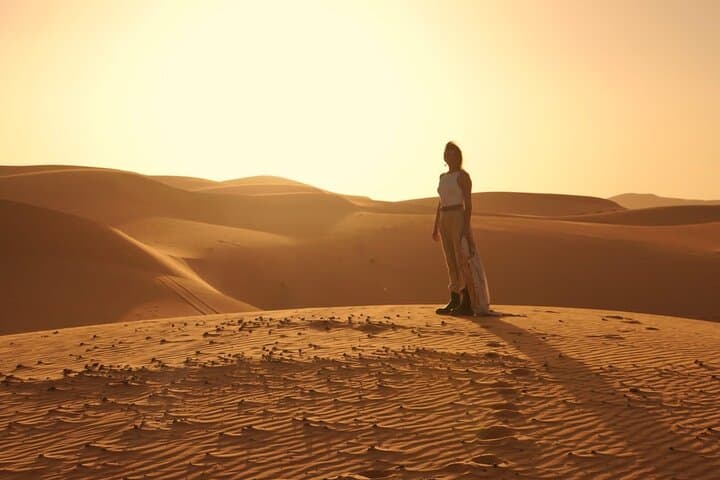
You step out of the vehicle into a vault of sky; the dunes ahead rise and fall like a slow sea, and the wind sculpts each crest while the sand dares you to cross it. Days begin with cool air that sharpens the horizon and end under a vault of stars so bright they make conversation optional.
You step out of the vehicle into a vault of sky; the dunes ahead rise and fall like a slow sea, and the wind sculpts each crest while the sand dares you to cross it. Days begin with cool air that sharpens the horizon and end under a vault of stars so bright they make conversation optional.
This route follows ancient caravan corridors that linked Marrakech to sub‑Saharan trade routes. Geologically the region shifts from folded Atlas foothills and stony hamada to wind‑built erg fields—Chegaga’s towering dunes are modern sculptures on a very old surface. Local culture is Berber and Saharan: small ksours, palm‑lined oases and nomadic camps where tea is both greeting and ritual.
Expect long walking days across mixed terrain—sandy ridges, compacted regs and occasional rocky passes—interspersed with nights in desert bivouacs and traditional camp tents. Guides read the landscape for water, shelter and tracks; camel drivers still move goods and people where wheels struggle.
Practically, carry layered clothing for big temperature swings, sun protection and at least 3–4 liters of water per day. Footwear with good traction and gaiters help keep sand out; trekking poles ease steep dune ascents and descents. Plan travel time to avoid mid‑day heat, and budget for short transfers to reach remote bivouacs. Showers and comfort vary—M’Hamid may offer a rinse; deep sand will test both your legs and patience. Cross this desert prepared and it will reward you with silence, scale and a slow, elemental kind of travel.