THE ADVENTURE COLLECTIVE® · Independent discovery and booking for outdoor travel

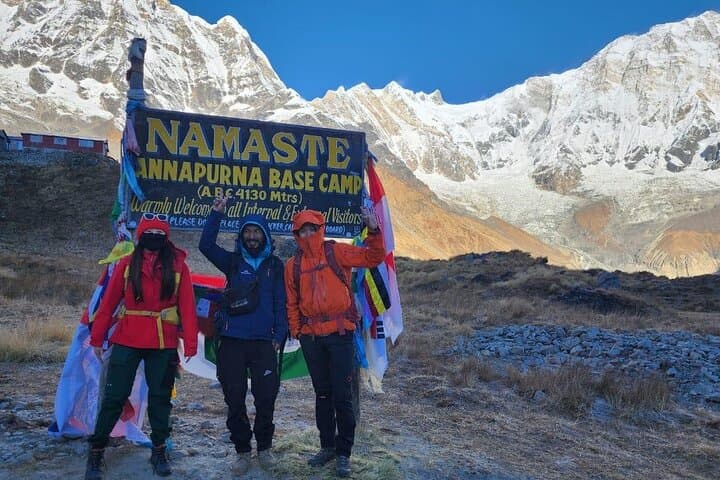
A 10-day private trek from Pokhara into the Annapurna Sanctuary that climbs to 4,130 m at Annapurna Base Camp. Expect stone steps, bamboo forests, alpine moraine and close-up views of Annapurna’s major summits.
A 10-day private trek from Pokhara into the Annapurna Sanctuary that climbs to 4,130 m at Annapurna Base Camp. Expect stone steps, bamboo forests, alpine moraine and close-up views of Annapurna’s major summits.
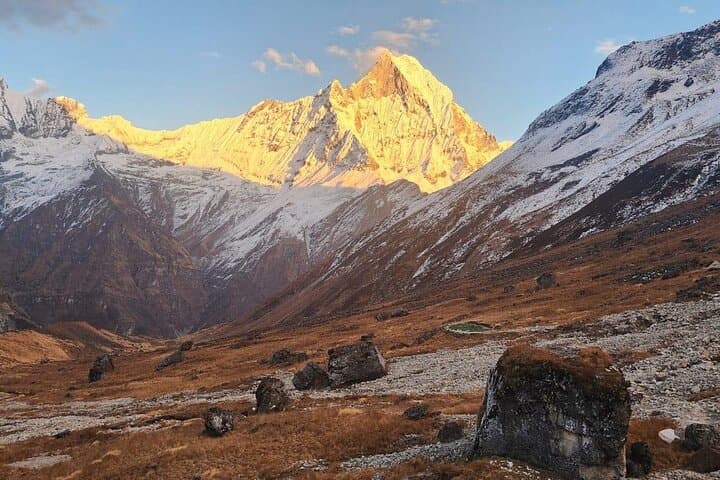
A cold wind pushes across the Modi River as you step out of the lodge at dawn, headlamp cutting a narrow cone through bamboo and rhododendron. The valley tightens; stone steps climb underfoot and a wall of white peaks—Annapurna I, III, South, and Machhapuchhre—slowly resolve above the treeline. By mid-morning the forest opens to scree and alpine scrub and the sanctuary’s amphitheater reveals itself: a glacier-fed basin rimmed by sheer snowfields.
Verified experiences and guided adventures in the surrounding area.
Operated by View Nepal Treks and Expedition · Pokhara, Gandaki Province
A cold wind pushes across the Modi River as you step out of the lodge at dawn, headlamp cutting a narrow cone through bamboo and rhododendron. The valley tightens; stone steps climb underfoot and a wall of white peaks—Annapurna I, III, South, and Machhapuchhre—slowly resolve above the treeline. By mid-morning the forest opens to scree and alpine scrub and the sanctuary’s amphitheater reveals itself: a glacier-fed basin rimmed by sheer snowfields.
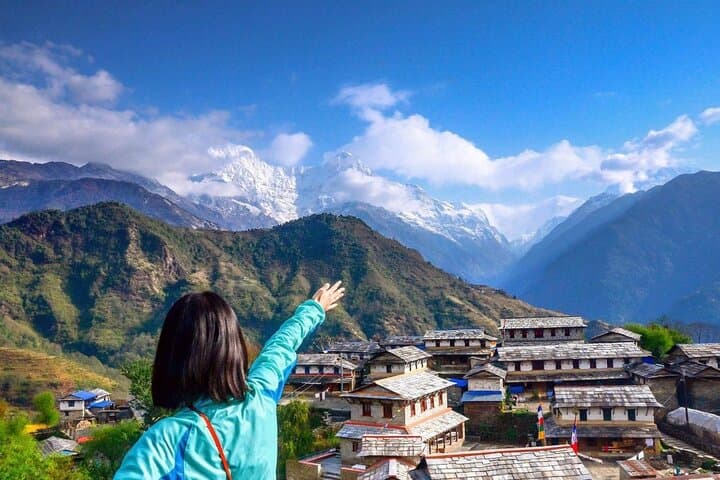
This route follows centuries-old shepherd tracks and modern teahouse lines through Gurung villages like Ghandruk and Chomrong, where cultural life interleaves with mountain geology—granite ridges weathered into steep faces and the Modi River carving its gorge. The Annapurna Sanctuary was mapped in the early 20th century and later protected as a national park; the trail threads through terraced farms, bamboo groves, oak and rhododendron belts, then up into moraine and alpine meadow.
Expect roughly 70–85 km round-trip with cumulative ascent from ~820 m (Pokhara) to 4,130 m (ABC), daily stages of 4–7 hours over mixed terrain: paved stone steps, singletrack, exposed scree and river crossings.
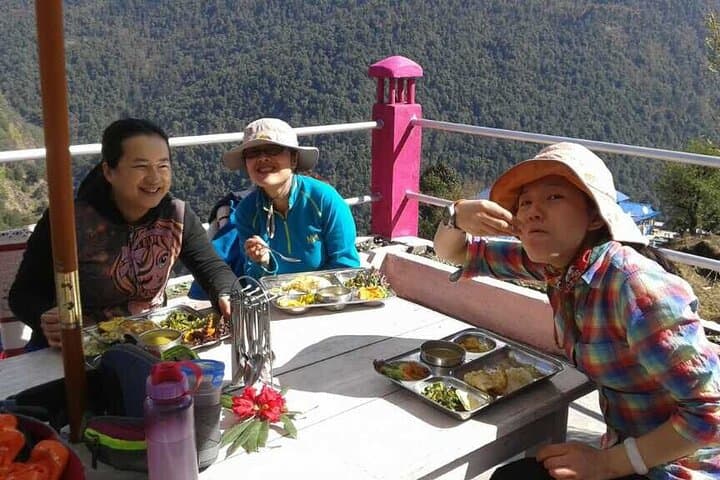
Practical edge: acclimatize (rest day or short hikes), carry layers for sudden weather and a warm sleeping layer for high nights. Lodges provide simple meals; water should be treated or boiled. Plan for early starts to avoid afternoon storms; a visit to Jhinu hot springs on descent rewards tired legs. With straightforward navigation, steady pacing and respect for altitude, this private 10-day itinerary delivers close-range summit walls, glacier views and a clear sense of Himalayan scale.
challenging.
10 days.
Good cardiovascular fitness with experience on multi-day hikes; able to sustain 4–7 hour days with pack and manage altitude changes.
Yes—trekkers need an Annapurna Conservation Area Project (ACAP) permit and a TIMS card; guides typically help arrange these before or at the trailhead.
The route is non-technical but steep in places—expect long stone staircases and some scree; no climbing gear is required for the standard trail.
Fall (Sept–Nov) and spring (Mar–May) offer the most stable weather and best visibility; winter is colder with potential snow, while monsoon season brings heavy rain.
Yes—tea houses provide basic rooms, hot meals and boiling water; expect shared bathrooms and simple bedding, with fewer services higher on the trail.
The Annapurna Sanctuary was first explored by western expeditions in the mid-20th century and later designated part of Annapurna Conservation Area to protect local ecology and communities.
Visitors should stay on trails, carry out waste, and use refillable bottles—local lodges participate in waste-management programs to limit impact.
View Nepal Treks and Expedition operates guided outdoor trips and adventures with an emphasis on safety, stewardship, and memorable experiences.
A cold wind pushes across the Modi River as you step out of the lodge at dawn, headlamp cutting a narrow cone through bamboo and rhododendron. The valley tightens; stone steps climb underfoot and a wall of white peaks—Annapurna I, III, South, and Machhapuchhre—slowly resolve above the treeline. By mid-morning the forest opens to scree and alpine scrub and the sanctuary’s amphitheater reveals itself: a glacier-fed basin rimmed by sheer snowfields.
A cold wind pushes across the Modi River as you step out of the lodge at dawn, headlamp cutting a narrow cone through bamboo and rhododendron. The valley tightens; stone steps climb underfoot and a wall of white peaks—Annapurna I, III, South, and Machhapuchhre—slowly resolve above the treeline. By mid-morning the forest opens to scree and alpine scrub and the sanctuary’s amphitheater reveals itself: a glacier-fed basin rimmed by sheer snowfields.
This route follows centuries-old shepherd tracks and modern teahouse lines through Gurung villages like Ghandruk and Chomrong, where cultural life interleaves with mountain geology—granite ridges weathered into steep faces and the Modi River carving its gorge. The Annapurna Sanctuary was mapped in the early 20th century and later protected as a national park; the trail threads through terraced farms, bamboo groves, oak and rhododendron belts, then up into moraine and alpine meadow.
Expect roughly 70–85 km round-trip with cumulative ascent from ~820 m (Pokhara) to 4,130 m (ABC), daily stages of 4–7 hours over mixed terrain: paved stone steps, singletrack, exposed scree and river crossings.
Practical edge: acclimatize (rest day or short hikes), carry layers for sudden weather and a warm sleeping layer for high nights. Lodges provide simple meals; water should be treated or boiled. Plan for early starts to avoid afternoon storms; a visit to Jhinu hot springs on descent rewards tired legs. With straightforward navigation, steady pacing and respect for altitude, this private 10-day itinerary delivers close-range summit walls, glacier views and a clear sense of Himalayan scale.