THE ADVENTURE COLLECTIVE® · Independent discovery and booking for outdoor travel

A 10-day circuit from Tangier to Marrakech that links imperial cities, Roman ruins and the rolling dunes of Erg Chebbi. Expect long drives, mountain passes and desert nights under visible stars.
A 10-day circuit from Tangier to Marrakech that links imperial cities, Roman ruins and the rolling dunes of Erg Chebbi. Expect long drives, mountain passes and desert nights under visible stars.
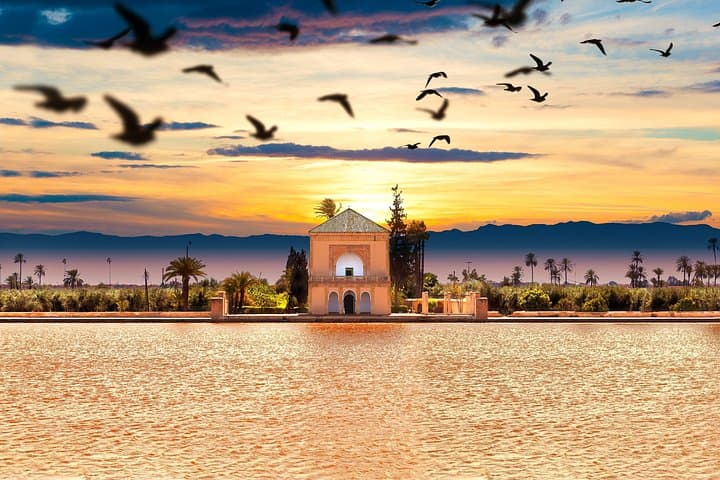
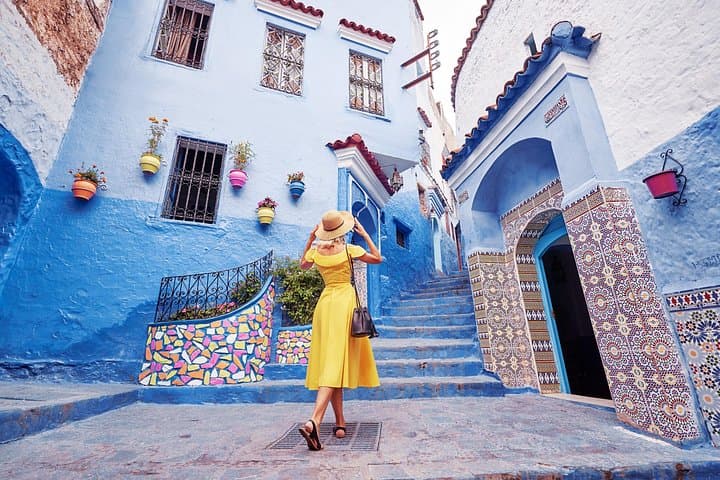
Arrive in Tangier as the Atlantic wind pushes market scents and seafront chatter toward you; within hours the route bends into blue-washed alleys, cedar forests and finally a vast pulse of sand at Erg Chebbi.
Verified experiences and guided adventures in the surrounding area.
Operated by DesertTrips · Tangier, Tanger-Tetouan-Al Hoceima
Arrive in Tangier as the Atlantic wind pushes market scents and seafront chatter toward you; within hours the route bends into blue-washed alleys, cedar forests and finally a vast pulse of sand at Erg Chebbi.
This 10-day circuit threads Morocco’s layered history — Phoenician and Roman ruins at Volubilis, the fortified ksars and kasbahs of the High Atlas, and the living craft economies of medinas in Fes and Marrakech. Geologically the itinerary moves fast: coastal limestone gives way to the volcanic and metamorphic folds of the Rif and Atlas, then the aeolian architecture of Sahara dunes, where wind sculpts ripples that migrate seasonally.
Culturally the trip emphasizes Berber hospitality: riads with interior courtyards, market barter rituals, and desert camps that host evening gnawa and berber songs. Expect climbing passes to roughly 2,178 m in the Middle Atlas, wide highway drives between towns, short hikes such as Akchour waterfalls (2–3 hours) and the option to climb sand ridges for sunrise views.
Practical guidance: travel days are long—packet snacks and a filled water bottle matter. Layer for big diurnal swings: hot days in the dunes, cool mountain nights. Comfortable, broken-in walking shoes handle medina cobbles and light scrambling in gorges; a headlamp and basic toiletries suffice for desert camp stays. Time visits to medinas in the morning or late afternoon to avoid peak sun and the busiest crowds. If you want slower pacing, allow extra nights in Fes or Merzouga to convert long drives into relax-and-explore days.
The route balances immersive cultural stops with outdoor moments—sand, stone and cedar—making it a practical, adventurous primer on Morocco’s varied landscapes.
moderate.
10 days.
Suitable for travelers with regular mobility; able to walk 1–3 hours on uneven surfaces and endure full-day transfers.
Yes — the itinerary notes suitability for all fitness levels; transport between destinations is by private vehicle and can be paced for families or older travelers.
Bring warm sleep layers, a hat and toiletries; the tour provides a private tent and bedding, but temperatures can drop significantly after sunset.
The itinerary lists breakfasts and some dinners included; specific museum or site admissions may be extra—confirm details with the operator before travel.
Several days involve long transfers (up to 6–8 hours) over mountain routes; expect a mix of full travel days and shorter sightseeing days.
The route links ancient trade corridors: Volubilis was a key Roman outpost, while Aït Benhaddou guarded trans-Saharan caravan routes and evolved into a fortified ksar.
Respect local water scarcity by minimizing shower time and using refillable bottles; stick to marked paths in fragile dune and oasis areas to reduce erosion.
DesertTrips operates guided outdoor trips and adventures with an emphasis on safety, stewardship, and memorable experiences.

Arrive in Tangier as the Atlantic wind pushes market scents and seafront chatter toward you; within hours the route bends into blue-washed alleys, cedar forests and finally a vast pulse of sand at Erg Chebbi.
Arrive in Tangier as the Atlantic wind pushes market scents and seafront chatter toward you; within hours the route bends into blue-washed alleys, cedar forests and finally a vast pulse of sand at Erg Chebbi.
This 10-day circuit threads Morocco’s layered history — Phoenician and Roman ruins at Volubilis, the fortified ksars and kasbahs of the High Atlas, and the living craft economies of medinas in Fes and Marrakech. Geologically the itinerary moves fast: coastal limestone gives way to the volcanic and metamorphic folds of the Rif and Atlas, then the aeolian architecture of Sahara dunes, where wind sculpts ripples that migrate seasonally.
Culturally the trip emphasizes Berber hospitality: riads with interior courtyards, market barter rituals, and desert camps that host evening gnawa and berber songs. Expect climbing passes to roughly 2,178 m in the Middle Atlas, wide highway drives between towns, short hikes such as Akchour waterfalls (2–3 hours) and the option to climb sand ridges for sunrise views.
Practical guidance: travel days are long—packet snacks and a filled water bottle matter. Layer for big diurnal swings: hot days in the dunes, cool mountain nights. Comfortable, broken-in walking shoes handle medina cobbles and light scrambling in gorges; a headlamp and basic toiletries suffice for desert camp stays. Time visits to medinas in the morning or late afternoon to avoid peak sun and the busiest crowds. If you want slower pacing, allow extra nights in Fes or Merzouga to convert long drives into relax-and-explore days.
The route balances immersive cultural stops with outdoor moments—sand, stone and cedar—making it a practical, adventurous primer on Morocco’s varied landscapes.