THE ADVENTURE COLLECTIVE® · Independent discovery and booking for outdoor travel

A ten-day passage up Kilimanjaro’s Machame Route is a measured negotiation with altitude and terrain: rainforest, moorland and scree lead to Uhuru Peak. This guide lays out what to expect, day-to-day terrain, and practical tips to maximize your summit chances.
A ten-day passage up Kilimanjaro’s Machame Route is a measured negotiation with altitude and terrain: rainforest, moorland and scree lead to Uhuru Peak. This guide lays out what to expect, day-to-day terrain, and practical tips to maximize your summit chances.
There is a moment on the Machame Route when the rainforest opens and the mountain appears like a raw, glaciated wall above the moorland — abrupt, indifferent, and impossibly high. Morning mist peels off the ferns as porters shoulder canvas tents and the crew whistles up the line; hikers tighten gaiters and settle into the rhythm of steps measured against thinning air. This is less a single summit push than a staged negotiation with elevation: forest, heath, alpine desert and finally, the scree fields below Kibo’s rim.
Verified experiences and guided adventures in the surrounding area.
Operated by Real Life Adventure Travel · Moshi, Kilimanjaro Region
There is a moment on the Machame Route when the rainforest opens and the mountain appears like a raw, glaciated wall above the moorland — abrupt, indifferent, and impossibly high. Morning mist peels off the ferns as porters shoulder canvas tents and the crew whistles up the line; hikers tighten gaiters and settle into the rhythm of steps measured against thinning air. This is less a single summit push than a staged negotiation with elevation: forest, heath, alpine desert and finally, the scree fields below Kibo’s rim.
Kilimanjaro is a stratovolcano whose last major eruptions were hundreds of thousands of years ago, leaving three volcanic cones — Kibo, Mawenzi and Shira — sculpted by ice and wind. The Machame Route approaches from the southwest and is prized for variety: you climb through the rainforest into moorland, cross the Shira Plateau, skirt the Great Barranco Wall and move beneath the southern ice fields before the final ascent to Uhuru Peak (5,895m/19,341ft). The route’s history is entwined with the Chagga people of Kilimanjaro’s foothills, whose agricultural terraces and mountain lore shaped early guides’ trails into the routes climbers use today.
Culturally the ascent is a shared enterprise: guides, cooks and porters form the backbone of the climb. Respectful tipping, clear communication about pace and gear, and attention to local protocols make the mountain safer and the economy fairer. Geologically, the Shira Plateau is a broad lava plateau that gives way to jagged volcanic scree — terrain that demands steady feet and humility.
Practical guidance is straightforward: this is a challenging, non-technical trek that rewards patience and acclimatization. The itinerary spreads elevation gain across ten days, which increases summit odds over shorter routes. Expect daily hikes of 3–7 hours on mixed terrain, with one long summit push that begins around midnight and lasts 6–8 hours to the crater rim and Uhuru Peak.
Hydration, layered clothing, and an honest appraisal of fitness are the fundamentals. Use trekking poles to conserve knees and to help on loose scree. Night temperatures at Barafu and above plunge well below freezing; a four-season sleeping bag and windproof shell are essential. Carry a small daypack with rain protection, high-energy snacks, sunscreen and a headlamp.
Logistics: most climbs start and end in Moshi (or Arusha), with transfers to Machame Gate. The Machame Route descends via Mweka Gate, simplifying return transport. Park fees, crew wages, emergency oxygen and a basic medical kit are standard inclusions on reputable climbs — verify these before booking.
For adventurous hikers who can commit to sustained uphill days and cold nights, the Machame Route offers dramatic landscapes, close encounters with alpine ecology, and the rare reward of standing on Africa’s roof.
challenging.
10 days.
Good cardiovascular fitness with experience in multi-day trekking; able to hike 4–7 hours on consecutive days at altitude.
It is a challenging, non-technical trek requiring sustained hiking 4–7 hours daily and one long summit push starting at midnight; good fitness and acclimatization are key.
No technical climbing equipment is needed for Machame—ice axes and crampons are not necessary on the normal route, but conditions can change; follow guide advice.
Peak weather windows are January–March and June–October when rainfall is lower; avoid the long rains (March–May) and short rains (November).
Acute mountain sickness can occur; the 10-day itinerary reduces risk through gradual ascent and acclimatization stops, but reports of mild symptoms are common—communicate with guides early.
Travelers to Tanzania often need a visa and should be up to date on routine vaccinations; consult a travel health clinic for yellow fever vaccine requirements and malaria prophylaxis advice.
Guides, porters and cooks are privately employed—standard practice is to tip at the end of the climb; ask your operator for recommended amounts and distribute through your lead guide.
Kilimanjaro formed from volcanic activity; local Chagga communities have used the mountain’s slopes for agriculture and guided trails for over a century.
The mountain is inside Kilimanjaro National Park—follow ‘leave no trace’ rules, minimize single-use plastics, and respect porter welfare and park restrictions.
Real Life Adventure Travel operates guided outdoor trips and adventures with an emphasis on safety, stewardship, and memorable experiences.
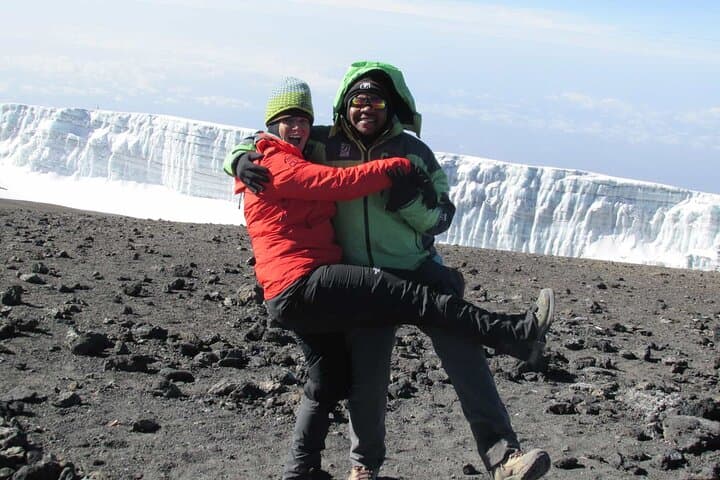
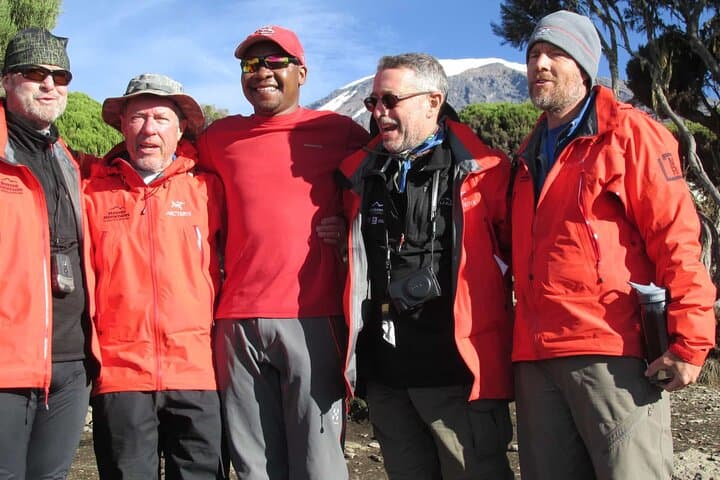
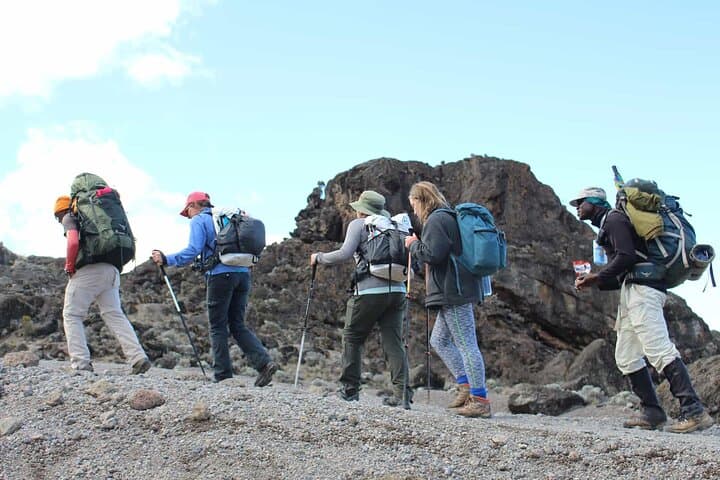
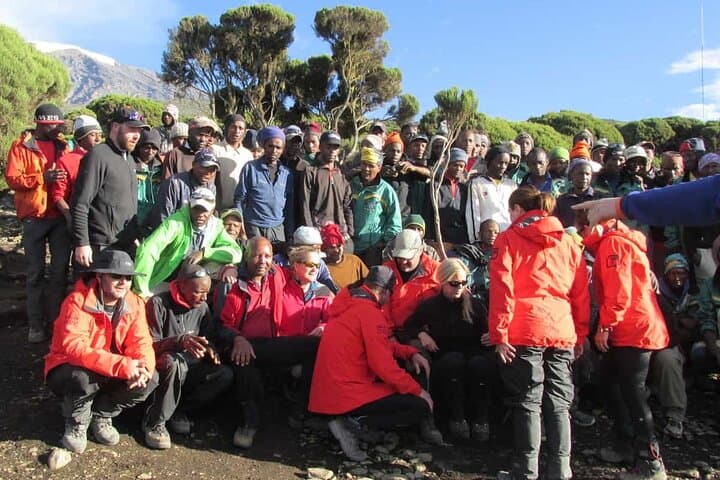
There is a moment on the Machame Route when the rainforest opens and the mountain appears like a raw, glaciated wall above the moorland — abrupt, indifferent, and impossibly high. Morning mist peels off the ferns as porters shoulder canvas tents and the crew whistles up the line; hikers tighten gaiters and settle into the rhythm of steps measured against thinning air. This is less a single summit push than a staged negotiation with elevation: forest, heath, alpine desert and finally, the scree fields below Kibo’s rim.
There is a moment on the Machame Route when the rainforest opens and the mountain appears like a raw, glaciated wall above the moorland — abrupt, indifferent, and impossibly high. Morning mist peels off the ferns as porters shoulder canvas tents and the crew whistles up the line; hikers tighten gaiters and settle into the rhythm of steps measured against thinning air. This is less a single summit push than a staged negotiation with elevation: forest, heath, alpine desert and finally, the scree fields below Kibo’s rim.
Kilimanjaro is a stratovolcano whose last major eruptions were hundreds of thousands of years ago, leaving three volcanic cones — Kibo, Mawenzi and Shira — sculpted by ice and wind. The Machame Route approaches from the southwest and is prized for variety: you climb through the rainforest into moorland, cross the Shira Plateau, skirt the Great Barranco Wall and move beneath the southern ice fields before the final ascent to Uhuru Peak (5,895m/19,341ft). The route’s history is entwined with the Chagga people of Kilimanjaro’s foothills, whose agricultural terraces and mountain lore shaped early guides’ trails into the routes climbers use today.
Culturally the ascent is a shared enterprise: guides, cooks and porters form the backbone of the climb. Respectful tipping, clear communication about pace and gear, and attention to local protocols make the mountain safer and the economy fairer. Geologically, the Shira Plateau is a broad lava plateau that gives way to jagged volcanic scree — terrain that demands steady feet and humility.
Practical guidance is straightforward: this is a challenging, non-technical trek that rewards patience and acclimatization. The itinerary spreads elevation gain across ten days, which increases summit odds over shorter routes. Expect daily hikes of 3–7 hours on mixed terrain, with one long summit push that begins around midnight and lasts 6–8 hours to the crater rim and Uhuru Peak.
Hydration, layered clothing, and an honest appraisal of fitness are the fundamentals. Use trekking poles to conserve knees and to help on loose scree. Night temperatures at Barafu and above plunge well below freezing; a four-season sleeping bag and windproof shell are essential. Carry a small daypack with rain protection, high-energy snacks, sunscreen and a headlamp.
Logistics: most climbs start and end in Moshi (or Arusha), with transfers to Machame Gate. The Machame Route descends via Mweka Gate, simplifying return transport. Park fees, crew wages, emergency oxygen and a basic medical kit are standard inclusions on reputable climbs — verify these before booking.
For adventurous hikers who can commit to sustained uphill days and cold nights, the Machame Route offers dramatic landscapes, close encounters with alpine ecology, and the rare reward of standing on Africa’s roof.