THE ADVENTURE COLLECTIVE® · Independent discovery and booking for outdoor travel

Follow the quieter Lemosho Route across the Shira Plateau and up through the Western Breach to Uhuru Peak. This 10-day itinerary prioritizes acclimatization and offers varied terrain from rainforest to alpine desert.
Follow the quieter Lemosho Route across the Shira Plateau and up through the Western Breach to Uhuru Peak. This 10-day itinerary prioritizes acclimatization and offers varied terrain from rainforest to alpine desert.
Mist clings to the montane forest as porters drift ahead, their heads bobbing under canvas loads; the trail opens to a flat of high moorland where wind scours the ground and the peak of Kibo rises like a raw promise above the Shira Plateau.
Verified experiences and guided adventures in the surrounding area.
Operated by Gracepatt Safaris · Moshi, Kilimanjaro Region
Mist clings to the montane forest as porters drift ahead, their heads bobbing under canvas loads; the trail opens to a flat of high moorland where wind scours the ground and the peak of Kibo rises like a raw promise above the Shira Plateau.
The Lemosho route approaches Kilimanjaro from the west, introduced to climbers for its quieter trails and superior acclimatization profile. Geologically Kilimanjaro is a dormant stratovolcano with three cones—Kibo, Mawenzi and Shira—whose volcanic history carved the plateaus and steep breach used on the Western ascent. Culturally the mountain is central to Chagga life on its southern slopes; Moshi serves as the staging town where logistics and porter teams assemble.
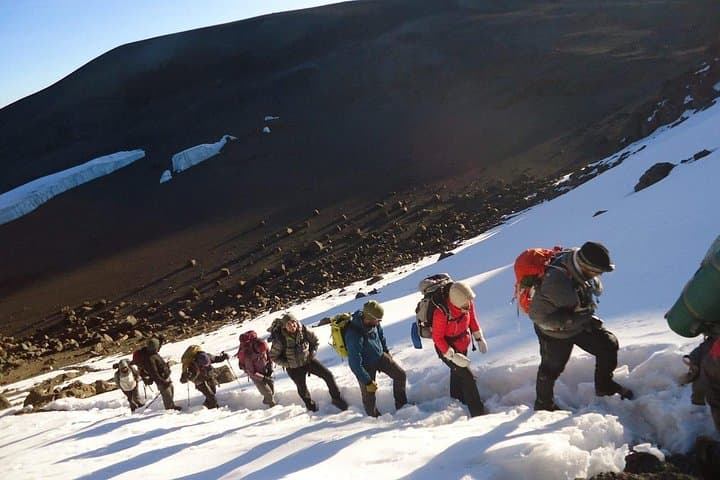
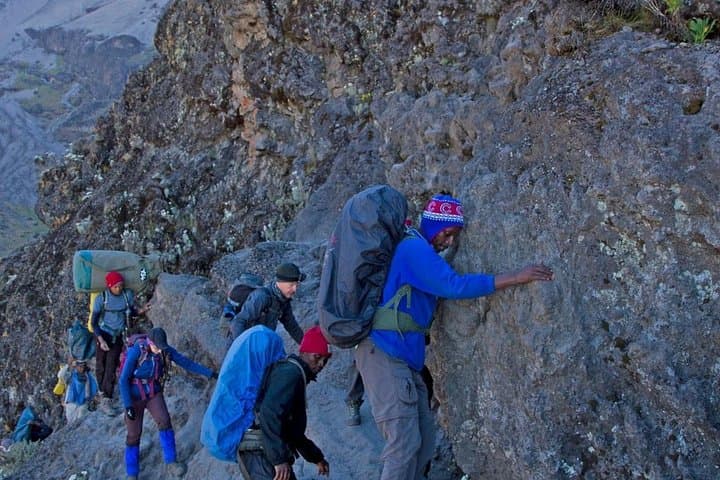
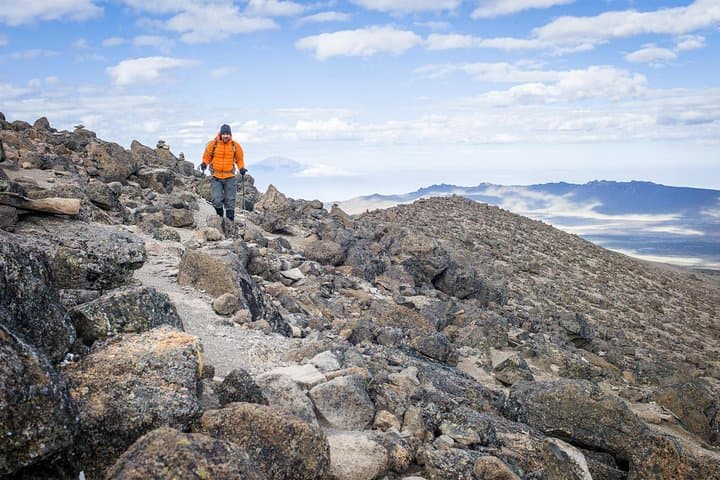
Expect roughly 60–70 km of hiking over 10 days with an elevation gain from the trailhead (~2,100–2,400 m) to Uhuru Peak at 5,895 m—about 3,600–3,800 m net gain. Terrain shifts from dense evergreen forest with colobus monkeys to heather and giant lobelias on the heath, then sparse alpine scree and volcanic ash above Lava Tower (~4,600 m). The Western Breach section is steep and exposed in places but generally non-technical; the itinerary builds acclimatization with nights at Mti Mkubwa, Shira, Fisher, Arrow/Crater floor and Mweka.
Practical guidance: pace conservatively, drink frequently to aid acclimatization, layer for large temperature swings, and train on sustained uphill hikes beforehand. Summit night is the hardest—expect 10–14 hours round trip with very cold conditions, high wind and limited oxygen. A guided, properly equipped team is essential for safety and success.
challenging.
10 days.
Requires good cardiovascular fitness, experience with multi-day hikes, and prior uphill training for sustained ascents at altitude.
The Western Breach is steeper and more exposed than standard routes but is generally non-technical; good acclimatization and a guided rope-assisted section may be used depending on conditions.
Ten-day Lemosho itineraries typically offer higher summit success due to gradual ascent profiles and acclimatization days, though success depends on fitness, weather and altitude response.
Previous high-altitude experience helps, but consistent training and following acclimatization protocols make it achievable for experienced hikers in good health.
Travelers should check current Tanzania entry requirements and get routine vaccinations; park fees and summit permits are included by reputable operators but confirm details before booking.
Kilimanjaro’s peak has long held cultural significance for the Chagga people and was first summited in 1889 by Hans Meyer and Ludwig Purtscheller.
Visitors should stick to established trails and use licensed guides; controlled access and porter protections are key to reducing ecological and social impact.
Gracepatt Safaris operates guided outdoor trips and adventures with an emphasis on safety, stewardship, and memorable experiences.

Mist clings to the montane forest as porters drift ahead, their heads bobbing under canvas loads; the trail opens to a flat of high moorland where wind scours the ground and the peak of Kibo rises like a raw promise above the Shira Plateau.
Mist clings to the montane forest as porters drift ahead, their heads bobbing under canvas loads; the trail opens to a flat of high moorland where wind scours the ground and the peak of Kibo rises like a raw promise above the Shira Plateau.
The Lemosho route approaches Kilimanjaro from the west, introduced to climbers for its quieter trails and superior acclimatization profile. Geologically Kilimanjaro is a dormant stratovolcano with three cones—Kibo, Mawenzi and Shira—whose volcanic history carved the plateaus and steep breach used on the Western ascent. Culturally the mountain is central to Chagga life on its southern slopes; Moshi serves as the staging town where logistics and porter teams assemble.
Expect roughly 60–70 km of hiking over 10 days with an elevation gain from the trailhead (~2,100–2,400 m) to Uhuru Peak at 5,895 m—about 3,600–3,800 m net gain. Terrain shifts from dense evergreen forest with colobus monkeys to heather and giant lobelias on the heath, then sparse alpine scree and volcanic ash above Lava Tower (~4,600 m). The Western Breach section is steep and exposed in places but generally non-technical; the itinerary builds acclimatization with nights at Mti Mkubwa, Shira, Fisher, Arrow/Crater floor and Mweka.
Practical guidance: pace conservatively, drink frequently to aid acclimatization, layer for large temperature swings, and train on sustained uphill hikes beforehand. Summit night is the hardest—expect 10–14 hours round trip with very cold conditions, high wind and limited oxygen. A guided, properly equipped team is essential for safety and success.