THE ADVENTURE COLLECTIVE® · Independent discovery and booking for outdoor travel

Covering Vietnam, Cambodia and Laos in ten days, this trip threads river life, wartime history and Angkor’s temples into a single fast-paced route. Expect long transfers, early starts for temple and market visits, and an immersive mix of landscapes and living culture.
Covering Vietnam, Cambodia and Laos in ten days, this trip threads river life, wartime history and Angkor’s temples into a single fast-paced route. Expect long transfers, early starts for temple and market visits, and an immersive mix of landscapes and living culture.
You step off the plane into Ho Chi Minh City humidity and the low hum of motorbikes — the first breath of a ten-day arc that moves from river-slick delta palms to the stone faces of Angkor and the limestone ridges above Luang Prabang.
Verified experiences and guided adventures in the surrounding area.
Operated by Hoi An Express Travel · Ho Chi Minh City, Ho Chi Minh
You step off the plane into Ho Chi Minh City humidity and the low hum of motorbikes — the first breath of a ten-day arc that moves from river-slick delta palms to the stone faces of Angkor and the limestone ridges above Luang Prabang.
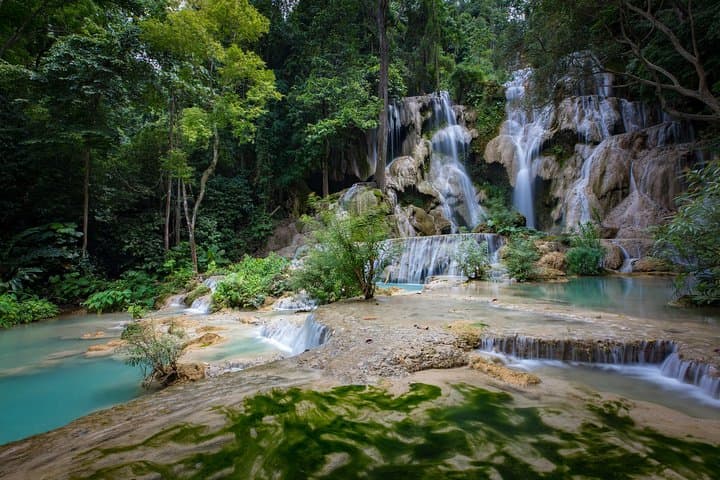
The route threads living history: the Mekong’s braided channels that shaped rice economies for centuries; the Cu Chi tunnels dug from lateritic earth and clay that still hold stories of resistance; Angkor’s sandstone galleries carved by the Khmer Empire between the 9th and 13th centuries; and Luang Prabang’s saffron-robed mornings and Kuang Si’s terraced cascades cut into karst. Geology shows up in the river’s sediment, the laterite that stabilizes Cu Chi, and the limestone caves of Pak Ou.
Culture here is tactile — pagoda incense that lingers on hands, markets where sticky rice and coconut candy are sold beside textiles, and village craft workshops where weaving and boat-building persist. Nature is insistent: the Mekong pushes traders upriver, waterfalls dare you to cool off, and temple trees gradually reclaim stone.
Practical essentials: carry a copy of your passport and visa documents, pack breathable layers and sun protection, and expect at least one long overland transfer (a 13-hour bus between Ho Chi Minh and Siem Reap). Temple visits require shoulders and knees covered; comfortable walking shoes are a must for uneven stone and forest trails; bring a light rain shell for monsoon-season squalls.
Plan for early starts (alms at dawn in Luang Prabang), modest tipping for guides and drivers, and flexible pacing — this itinerary covers ground fast, rewarding travelers who balance curiosity with stamina.
moderate.
10 days.
Suitable for travelers in reasonable shape who can handle day walks, stairs at temples and occasional uneven terrain; expect early mornings and full touring days.
Most travelers need visas for Cambodia and Laos and possibly Vietnam depending on nationality—check embassy sites and arrange in advance where possible.
The tour is moderate: sightseeing days include walking on uneven ground, stairs and short hikes; the program suits travelers who can spend full days on their feet.
Breakfasts (9) and four lunches are included; the itinerary notes a 20 kg checked baggage and 7 kg hand baggage allowance on the included regional flight (Siem Reap–Luang Prabang).
Room type is twin/shared by default; single-room upgrades are available on request for an extra surcharge—book early to secure availability.
Angkor was the heart of the Khmer Empire; French colonial presence shaped architecture and urban planning in Saigon and Luang Prabang was Laos' royal capital until 1975.
High visitor volumes at Angkor and Kuang Si have led to managed access and preservation efforts—follow path restrictions, avoid climbing on ruined bas-reliefs, and minimize single-use plastics.
Hoi An Express Travel operates guided outdoor trips and adventures with an emphasis on safety, stewardship, and memorable experiences.

You step off the plane into Ho Chi Minh City humidity and the low hum of motorbikes — the first breath of a ten-day arc that moves from river-slick delta palms to the stone faces of Angkor and the limestone ridges above Luang Prabang.
You step off the plane into Ho Chi Minh City humidity and the low hum of motorbikes — the first breath of a ten-day arc that moves from river-slick delta palms to the stone faces of Angkor and the limestone ridges above Luang Prabang.
The route threads living history: the Mekong’s braided channels that shaped rice economies for centuries; the Cu Chi tunnels dug from lateritic earth and clay that still hold stories of resistance; Angkor’s sandstone galleries carved by the Khmer Empire between the 9th and 13th centuries; and Luang Prabang’s saffron-robed mornings and Kuang Si’s terraced cascades cut into karst. Geology shows up in the river’s sediment, the laterite that stabilizes Cu Chi, and the limestone caves of Pak Ou.
Culture here is tactile — pagoda incense that lingers on hands, markets where sticky rice and coconut candy are sold beside textiles, and village craft workshops where weaving and boat-building persist. Nature is insistent: the Mekong pushes traders upriver, waterfalls dare you to cool off, and temple trees gradually reclaim stone.
Practical essentials: carry a copy of your passport and visa documents, pack breathable layers and sun protection, and expect at least one long overland transfer (a 13-hour bus between Ho Chi Minh and Siem Reap). Temple visits require shoulders and knees covered; comfortable walking shoes are a must for uneven stone and forest trails; bring a light rain shell for monsoon-season squalls.
Plan for early starts (alms at dawn in Luang Prabang), modest tipping for guides and drivers, and flexible pacing — this itinerary covers ground fast, rewarding travelers who balance curiosity with stamina.