THE ADVENTURE COLLECTIVE® · Independent discovery and booking for outdoor travel

A demanding 10‑day trek from Kasese up through bamboo, bog and alpine rock to Margherita Peak on Mount Rwenzori. Expect muddy trails, glacier travel on the summit day, and hut nights with local guides and porters.
A demanding 10‑day trek from Kasese up through bamboo, bog and alpine rock to Margherita Peak on Mount Rwenzori. Expect muddy trails, glacier travel on the summit day, and hut nights with local guides and porters.
Mist hangs low in the valley as the driver leaves Kasese and the Rwenzori massif fills the windscreen—massive ribs of rock and ice that seem to push clouds aside. On this 10‑day itinerary you move from humid foothill forest to bamboo and alpine bog, and finally to the thin, metallic air above 5,000 meters where Margherita Peak sits like a cold crown.
Verified experiences and guided adventures in the surrounding area.
Operated by All in Africa Safaris · Kasese, Western Region
Mist hangs low in the valley as the driver leaves Kasese and the Rwenzori massif fills the windscreen—massive ribs of rock and ice that seem to push clouds aside. On this 10‑day itinerary you move from humid foothill forest to bamboo and alpine bog, and finally to the thin, metallic air above 5,000 meters where Margherita Peak sits like a cold crown.
The Rwenzori range, mapped by European explorers in the late 19th century and climbed by the Duke of the Abruzzi’s party in 1906, is geologically young: uplifted crystalline bedrock carved by glaciers into sharp ridges, high plateaux and tarn‑filled basins. Local Bakonzo culture treats the mountains with reverence and the name Rwenzori — often translated as “rain maker” — reflects how frequently the range summons clouds.
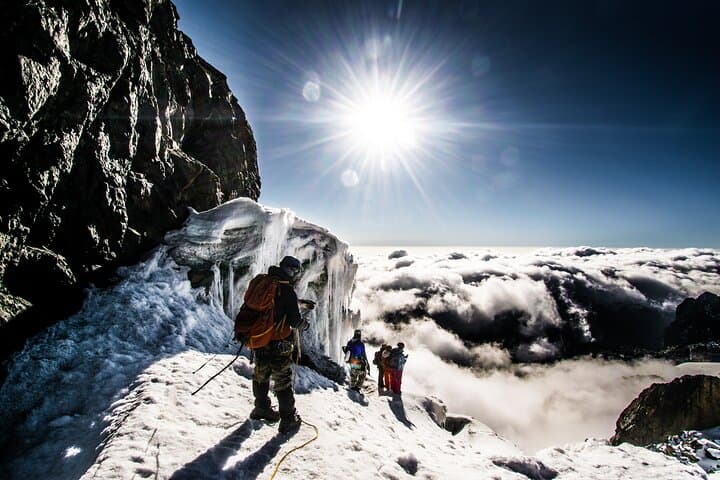
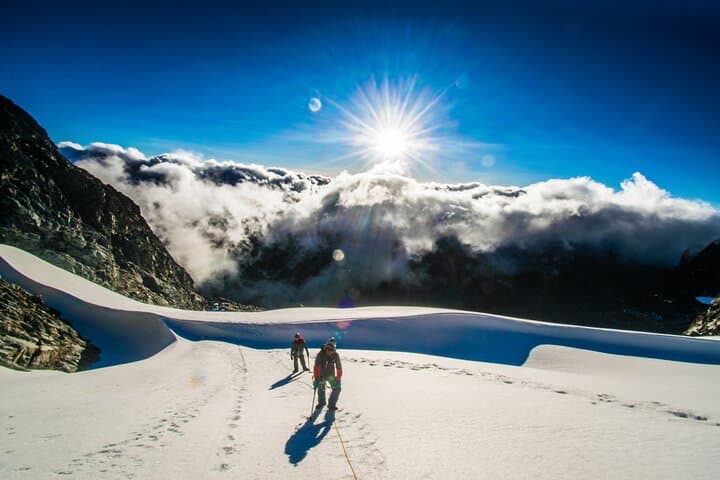
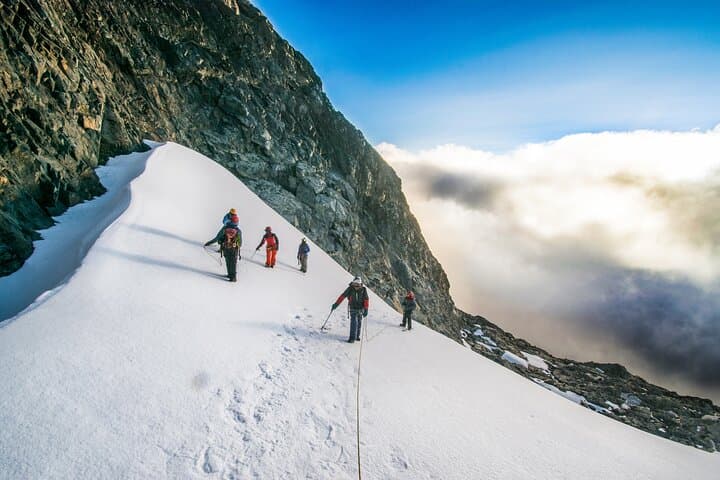
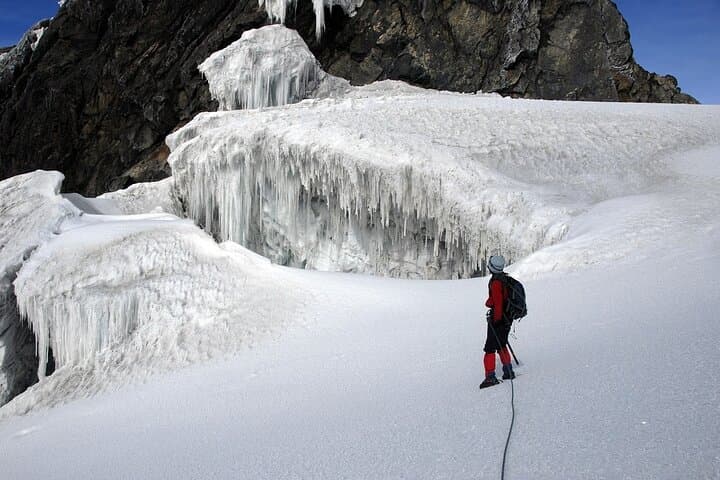
Practically, the route is a progression in terrain and technical demand. Days 1–3 climb through river valleys, swampy ground and bamboo; midweek moves into alpine moorland and rock; the summit push requires crampons, an ice axe and careful footing across a short glacier band. Expect camp or hut nights with communal cooking and basic facilities; porters and guides are standard and required for permits.
Plan for sudden weather, boggy descents and slow vertical gain to help acclimatize. Breaks at lakes like Bujuku reward wet boots with mirror views of peaks. Hydrate, layer for wind and wet, and budget time for muscle and altitude recovery—this is a mountaineering trek disguised as a hike. The payoff is visceral: close glaciers, rare alpine plants, and an unobstructed view from Africa’s icy roof.
challenging.
10 days.
High: sustained hiking with heavy packs, daily 5–9 hour approaches and one technical summit day at 5,109 m
Yes — Rwenzori National Park requires entry permits and certified guides; your operator usually arranges these before departure.
Dry windows from July–December and December–February offer firmer trails and clearer summit conditions, though weather in the range remains unpredictable year‑round.
Risk increases above 3,000 m; the itinerary staggers elevation gain and includes rest nights, but bring altitude awareness, medication if prescribed, and follow your guide’s advice.
Huts are basic: communal sleeping, mattresses and simple meals are standard; expect local cooking and group dining with hot breakfasts and dinners provided.
Margherita Peak received its name after the 1906 Duke of Abruzzi expedition; the range has long been significant to Bakonzo communities and early European explorers.
The alpine bogs and high‑altitude flora are fragile; stick to established trails, use local guides, and follow park rules to minimize erosion and disturbance.
All in Africa Safaris operates guided outdoor trips and adventures with an emphasis on safety, stewardship, and memorable experiences.
Mist hangs low in the valley as the driver leaves Kasese and the Rwenzori massif fills the windscreen—massive ribs of rock and ice that seem to push clouds aside. On this 10‑day itinerary you move from humid foothill forest to bamboo and alpine bog, and finally to the thin, metallic air above 5,000 meters where Margherita Peak sits like a cold crown.
Mist hangs low in the valley as the driver leaves Kasese and the Rwenzori massif fills the windscreen—massive ribs of rock and ice that seem to push clouds aside. On this 10‑day itinerary you move from humid foothill forest to bamboo and alpine bog, and finally to the thin, metallic air above 5,000 meters where Margherita Peak sits like a cold crown.
The Rwenzori range, mapped by European explorers in the late 19th century and climbed by the Duke of the Abruzzi’s party in 1906, is geologically young: uplifted crystalline bedrock carved by glaciers into sharp ridges, high plateaux and tarn‑filled basins. Local Bakonzo culture treats the mountains with reverence and the name Rwenzori — often translated as “rain maker” — reflects how frequently the range summons clouds.
Practically, the route is a progression in terrain and technical demand. Days 1–3 climb through river valleys, swampy ground and bamboo; midweek moves into alpine moorland and rock; the summit push requires crampons, an ice axe and careful footing across a short glacier band. Expect camp or hut nights with communal cooking and basic facilities; porters and guides are standard and required for permits.
Plan for sudden weather, boggy descents and slow vertical gain to help acclimatize. Breaks at lakes like Bujuku reward wet boots with mirror views of peaks. Hydrate, layer for wind and wet, and budget time for muscle and altitude recovery—this is a mountaineering trek disguised as a hike. The payoff is visceral: close glaciers, rare alpine plants, and an unobstructed view from Africa’s icy roof.