THE ADVENTURE COLLECTIVE® · Independent discovery and booking for outdoor travel

Combine Cairo’s pyramids with a multi-night Nile cruise through Luxor and Aswan on this 10-day itinerary. Explore Karnak, the Valley of the Kings, Kom Ombo and Philae while traveling in comfortable hotels and a 5-star cruise ship.
Combine Cairo’s pyramids with a multi-night Nile cruise through Luxor and Aswan on this 10-day itinerary. Explore Karnak, the Valley of the Kings, Kom Ombo and Philae while traveling in comfortable hotels and a 5-star cruise ship.
Morning light breaks across the Nile as the cruise slips away from Luxor, the river itself seeming to urge travelers forward toward sandstone temples and sun-baked tombs.
Verified experiences and guided adventures in the surrounding area.
Operated by CRUISE ERA · Cairo, Cairo Governorate
Morning light breaks across the Nile as the cruise slips away from Luxor, the river itself seeming to urge travelers forward toward sandstone temples and sun-baked tombs.
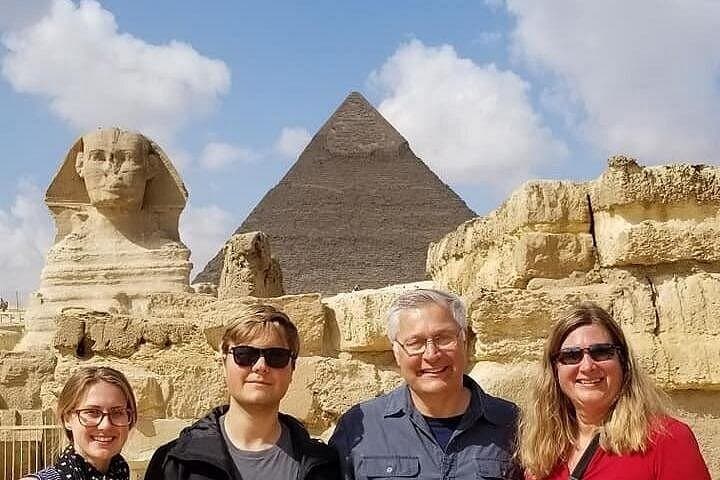
This 10-day itinerary threads Cairo’s millennia-old monuments with Upper Egypt’s riverine splendor. In Cairo, visitors stand beneath the Great Pyramids and the Sphinx on the Giza Plateau, then move through layers of history at the Egyptian Museum and Coptic quarter. The Nile—geology’s slow architect—carved fertile banks that supported pharaonic power; Karnak alone sprawls across roughly 200 acres of columned halls and shifting shadows. On the West Bank, the Valley of the Kings cuts into limestone hills where royal tombs were hewn into the rock; at Aswan, the High Dam and relocated Philae Temple illustrate modern engineering meeting ancient devotion.
Cultural rhythms are straightforward: early starts to avoid heat, late afternoons for temple light, and felucca sails for quiet perspective. Expect steady walking on paved and uneven surfaces, stairways into tombs, and short vehicle transfers between sites. Temperatures vary widely—summer is hot and dry; winter mornings can be cool on deck.
Practical guidance: carry a small day pack with 1–2 liters of water, wear sturdy closed-toe shoes for uneven stone, and bring a brimmed hat and sunscreen. Modest clothing is required at religious sites; photocopies of passports and a small local-currency float are useful. Respect site rules—no touching carvings, and follow guide instructions during tomb entries. With steady pacing and sensible gear, this tour balances immersive history with comfortable travel across some of Egypt’s most iconic landscapes.
moderate.
10 days.
Suitable for travelers in average physical condition; involves repeated walks up to a few kilometres per day, stairs, and boarding small boats.
Most days involve short to moderate walks at sites (0.5–3 km) plus steps; transfers are by private vehicle or short boat rides, with time to rest aboard the cruise.
The itinerary includes most breakfasts, several lunches and dinners listed, and entrance fees noted in the itinerary—confirm specific sites with the operator before travel.
The Nile is a calm river and the cruise ships used on this route are stable; however, travelers prone to motion sensitivity should pack remedies and request a mid-ship cabin if possible.
Many nationalities require a visa for Egypt—check current embassy information well before travel and carry necessary documents; some visitors can obtain a visa on arrival or e-visa depending on nationality.
The Nile’s annual inundation shaped ancient Egyptian agriculture and settlement; temples like Karnak and Luxor grew where the river provided stable food and transport routes.
High visitor numbers and changing Nile management affect archaeological sites and river ecology—follow site rules, avoid touching reliefs, and minimize single-use plastics on board and ashore.
CRUISE ERA operates guided outdoor trips and adventures with an emphasis on safety, stewardship, and memorable experiences.



Morning light breaks across the Nile as the cruise slips away from Luxor, the river itself seeming to urge travelers forward toward sandstone temples and sun-baked tombs.
Morning light breaks across the Nile as the cruise slips away from Luxor, the river itself seeming to urge travelers forward toward sandstone temples and sun-baked tombs.
This 10-day itinerary threads Cairo’s millennia-old monuments with Upper Egypt’s riverine splendor. In Cairo, visitors stand beneath the Great Pyramids and the Sphinx on the Giza Plateau, then move through layers of history at the Egyptian Museum and Coptic quarter. The Nile—geology’s slow architect—carved fertile banks that supported pharaonic power; Karnak alone sprawls across roughly 200 acres of columned halls and shifting shadows. On the West Bank, the Valley of the Kings cuts into limestone hills where royal tombs were hewn into the rock; at Aswan, the High Dam and relocated Philae Temple illustrate modern engineering meeting ancient devotion.
Cultural rhythms are straightforward: early starts to avoid heat, late afternoons for temple light, and felucca sails for quiet perspective. Expect steady walking on paved and uneven surfaces, stairways into tombs, and short vehicle transfers between sites. Temperatures vary widely—summer is hot and dry; winter mornings can be cool on deck.
Practical guidance: carry a small day pack with 1–2 liters of water, wear sturdy closed-toe shoes for uneven stone, and bring a brimmed hat and sunscreen. Modest clothing is required at religious sites; photocopies of passports and a small local-currency float are useful. Respect site rules—no touching carvings, and follow guide instructions during tomb entries. With steady pacing and sensible gear, this tour balances immersive history with comfortable travel across some of Egypt’s most iconic landscapes.