THE ADVENTURE COLLECTIVE® · Independent discovery and booking for outdoor travel

A classic 10-day loop from Pokhara to Annapurna Base Camp, this trek threads Gurung villages, rhododendron forests and high-mountain panoramas—ideal for fit hikers who want a true Himalayan experience with teahouse comforts.
A classic 10-day loop from Pokhara to Annapurna Base Camp, this trek threads Gurung villages, rhododendron forests and high-mountain panoramas—ideal for fit hikers who want a true Himalayan experience with teahouse comforts.
The trail opens like a living map: stone staircases spiral out of Pokhara’s rice terraces, the Modi River daring you to keep pace while oak and rhododendron push shade across the path. By mid-trek, Machhapuchhre’s fluted summit looms—its sheer faces catching afternoon light—before the valley walls tighten and the sanctuary folds you into a bowl of moraine and snow.
Verified experiences and guided adventures in the surrounding area.
Operated by Eve Holidays · Pokhara, Gandaki Province
The trail opens like a living map: stone staircases spiral out of Pokhara’s rice terraces, the Modi River daring you to keep pace while oak and rhododendron push shade across the path. By mid-trek, Machhapuchhre’s fluted summit looms—its sheer faces catching afternoon light—before the valley walls tighten and the sanctuary folds you into a bowl of moraine and snow.
This route follows traditional Gurung villages—Ghandruk and Chhomrong—whose stone houses and terraced fields have hosted traders and porters for centuries. Geologically, you cross schist and glacial deposits carved by the Annapurna massif; the Sanctuary is a classic cirque, ringed by 6,000–8,000 m peaks. Culturally, teahouses run by local families provide both fuel and insight into mountain life; the area sits inside the Annapurna Conservation Area, a community-managed reserve balancing tourism and grazing.
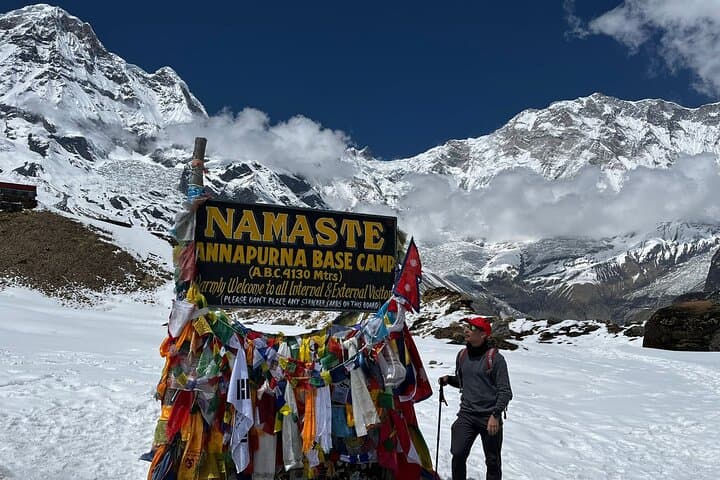
Expect steady ascents, sun-soaked ridgelines, and a final climb to Annapurna Base Camp (~4,130 m) with sweeping views of Annapurna I and Hiunchuli. Nights are in lodges and teahouses; you’ll pass suspension bridges, bamboo groves and natural hot springs at Jhinu Danda.
Practical guidance: pace conservatively to manage altitude, carry layered insulation for cold nights and a water treatment method for remote sections. Walking poles reduce knee strain on steep descents, and bring cash—card facilities are limited beyond Pokhara. Best to allow rest days if you’re sensitive to altitude; a certified guide speeds permits and route choices. This itinerary balances immersive village trails with high-mountain exposure, making it a classic, accessible Himalayan trek.
challenging.
9–10 days.
Good aerobic fitness with experience on multi-day mountain hikes; able to carry a daypack and handle sustained ascents.
Yes—trekkers need the Annapurna Conservation Area Permit (ACAP) and a TIMS card; guides and operators typically handle paperwork before departure.
Physically demanding but non-technical; a first-time hiker with solid fitness can complete it if they acclimatize properly and follow a guided itinerary.
Basic first-aid is available at lodges and with guides; serious issues require evacuation to Pokhara—consider travel insurance covering helicopter rescue.
Nepali rupees are required for remote purchases; sporadic mobile coverage appears near larger villages but is unreliable in the Sanctuary.
The route crosses Gurung communities with a long history of hill agriculture and service as mountain guides and porters; the area is managed under the Annapurna Conservation Area for community-based tourism.
The Annapurna Conservation Area enforces permits and fees to fund local conservation; practice leave-no-trace, avoid single-use plastics, and support family-run lodges.
Eve Holidays operates guided outdoor trips and adventures with an emphasis on safety, stewardship, and memorable experiences.
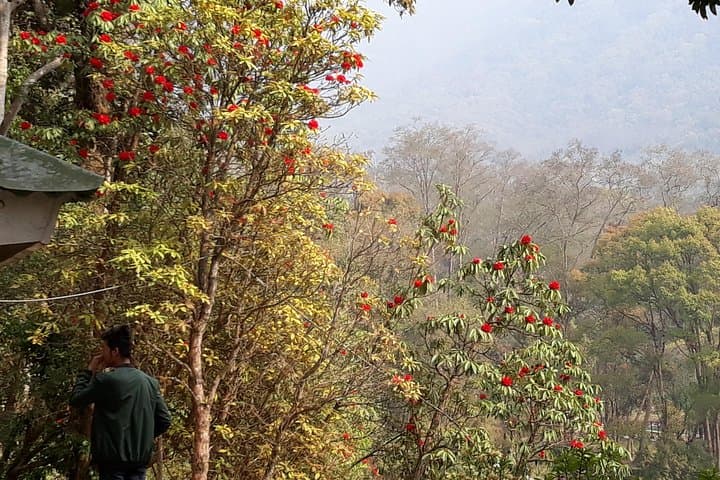
The trail opens like a living map: stone staircases spiral out of Pokhara’s rice terraces, the Modi River daring you to keep pace while oak and rhododendron push shade across the path. By mid-trek, Machhapuchhre’s fluted summit looms—its sheer faces catching afternoon light—before the valley walls tighten and the sanctuary folds you into a bowl of moraine and snow.
The trail opens like a living map: stone staircases spiral out of Pokhara’s rice terraces, the Modi River daring you to keep pace while oak and rhododendron push shade across the path. By mid-trek, Machhapuchhre’s fluted summit looms—its sheer faces catching afternoon light—before the valley walls tighten and the sanctuary folds you into a bowl of moraine and snow.
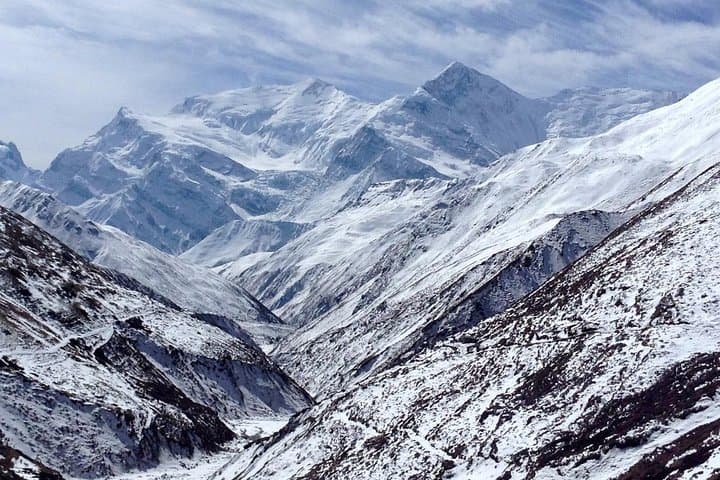
This route follows traditional Gurung villages—Ghandruk and Chhomrong—whose stone houses and terraced fields have hosted traders and porters for centuries. Geologically, you cross schist and glacial deposits carved by the Annapurna massif; the Sanctuary is a classic cirque, ringed by 6,000–8,000 m peaks. Culturally, teahouses run by local families provide both fuel and insight into mountain life; the area sits inside the Annapurna Conservation Area, a community-managed reserve balancing tourism and grazing.
Expect steady ascents, sun-soaked ridgelines, and a final climb to Annapurna Base Camp (~4,130 m) with sweeping views of Annapurna I and Hiunchuli. Nights are in lodges and teahouses; you’ll pass suspension bridges, bamboo groves and natural hot springs at Jhinu Danda.
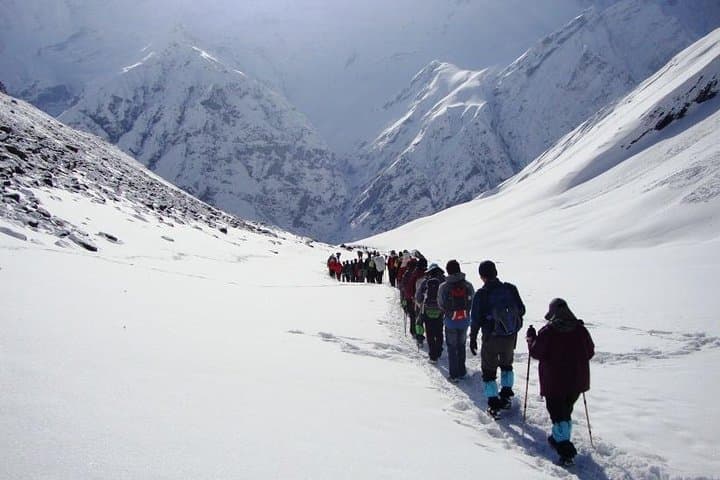
Practical guidance: pace conservatively to manage altitude, carry layered insulation for cold nights and a water treatment method for remote sections. Walking poles reduce knee strain on steep descents, and bring cash—card facilities are limited beyond Pokhara. Best to allow rest days if you’re sensitive to altitude; a certified guide speeds permits and route choices. This itinerary balances immersive village trails with high-mountain exposure, making it a classic, accessible Himalayan trek.