THE ADVENTURE COLLECTIVE® · Independent discovery and booking for outdoor travel

Harness the power of a sled dog team and glide across river flats and willow thickets near Fairbanks. This one-hour mushing run pairs hands-on instruction with kennel time for a compact, authentic taste of Alaskan winter travel.
Harness the power of a sled dog team and glide across river flats and willow thickets near Fairbanks. This one-hour mushing run pairs hands-on instruction with kennel time for a compact, authentic taste of Alaskan winter travel.
The sled creaks, the dogs surge forward, and cold air sharpens every detail—your breath fogs, snow kicks up in a spray of diamonds, and the rhythmic panting of huskies becomes the engine that propels you down a willow-lined trail.
Verified experiences and guided adventures in the surrounding area.
Operated by 1st Alaska Outdoor School · Fairbanks, Alaska
The sled creaks, the dogs surge forward, and cold air sharpens every detail—your breath fogs, snow kicks up in a spray of diamonds, and the rhythmic panting of huskies becomes the engine that propels you down a willow-lined trail.
Dog sledding around Fairbanks is as much a lesson in place as it is a rush. The region sits on glacial deposits and river flats carved by the Chena River; its broad winter plains and willow thickets are the same corridors used by Native Athabaskan hunters and, later, by miners and mushers. Mushing here is tied to the Iditarod-era culture and everyday winter transportation: teams, trails, and the gear evolved for survival and speed.
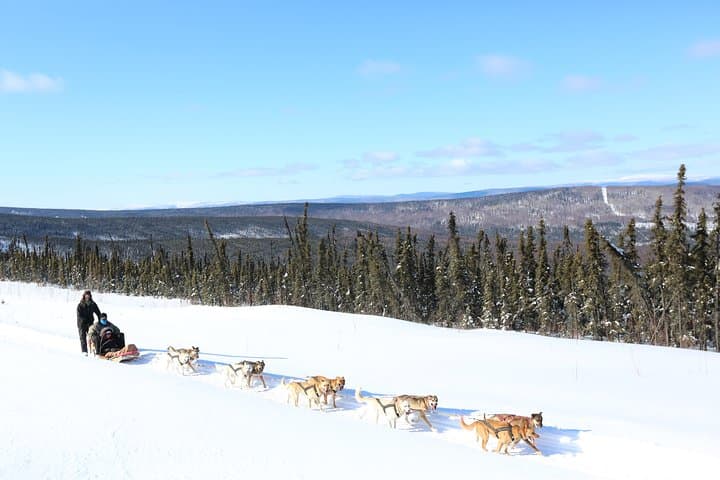
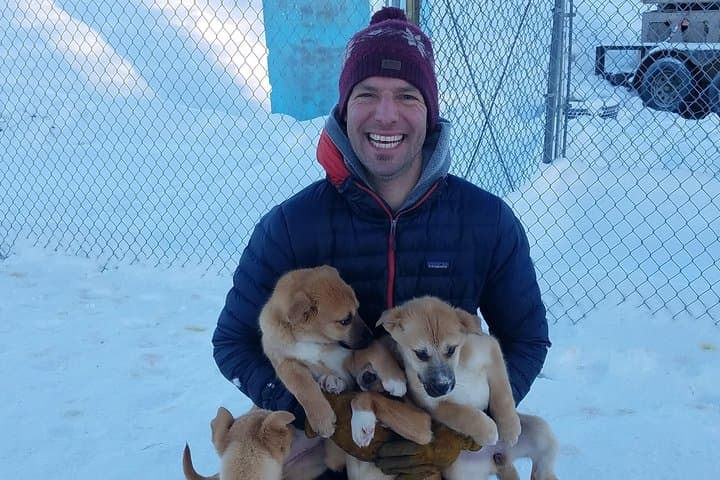
On a typical one-hour run you’ll meet the kennel, learn basic commands, and either ride or take a turn with a guide at the brake and handlebar. Trails used by local mushers cross frozen floodplains and scrub forests, offering wide sightlines and occasional views of distant hills. The experience is social—handlers introduce you to pups, explain pack hierarchy, and pose opportunities for photos in classic snowy frames.
Practicalities matter: dress in insulated layers, bring a windproof outer shell and insulated boots, and expect single-digit to sub-zero Fahrenheit temps depending on season and night-time aurora activity. The operator limits weight per rider and requires a minimum number of participants to run. Expect roughly three hours total with transfers, and plan arrival and camera batteries accordingly.
This is a compact, tactile slice of Alaskan winter—fast, sensory, and rooted in regional mushing tradition.
easy.
1–3 hours.
Suitable for most fitness levels; you should be able to stand on a sled platform and follow basic safety instructions.
Yes—operators typically welcome children but may require an adult to ride with small kids; check minimum age and safety rules when booking.
The sled run is one hour; including hotel pickup and kennel introduction, expect about three hours total as stated by the operator.
Trips may be canceled for bad weather or insufficient participants; the operator will offer an alternative date or a full refund per their policy.
Yes—there is a maximum weight of 250 pounds per person; confirm any special arrangements with the operator before booking.
Dog mushing in Alaska evolved from Indigenous transport and frontier supply routes and later became a competitive and cultural touchstone with events like the Iditarod highlighting the sport.
Respect kennel routines, minimize noise around dogs, and stay on marked trails to reduce vegetation damage and disturbance to local wildlife.
1st Alaska Outdoor School operates guided outdoor trips and adventures with an emphasis on safety, stewardship, and memorable experiences.
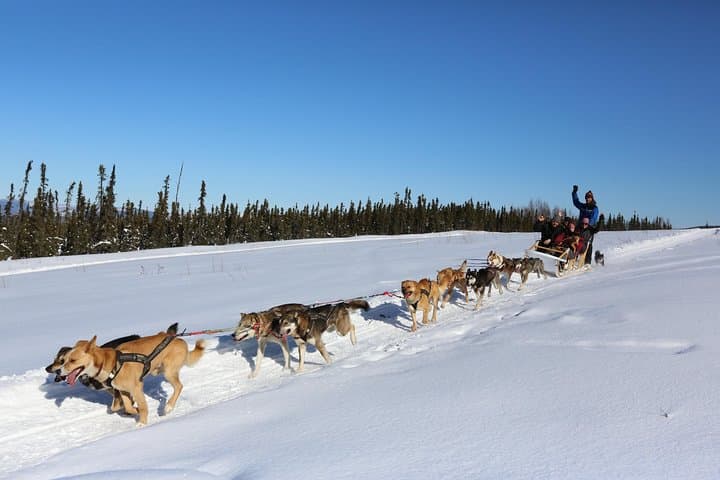
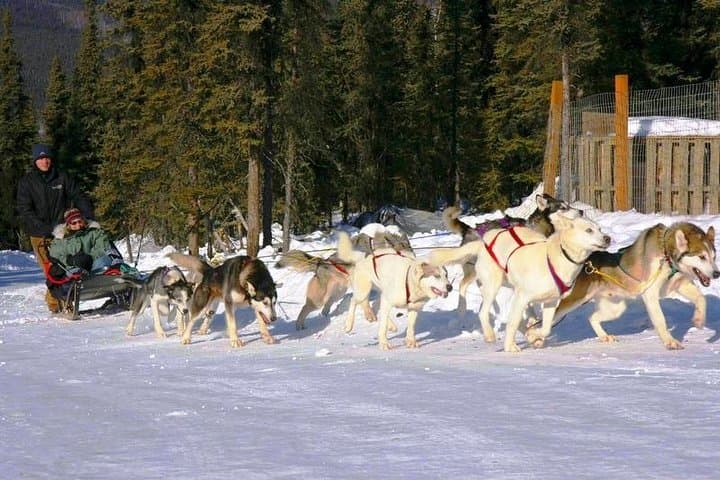
The sled creaks, the dogs surge forward, and cold air sharpens every detail—your breath fogs, snow kicks up in a spray of diamonds, and the rhythmic panting of huskies becomes the engine that propels you down a willow-lined trail.
The sled creaks, the dogs surge forward, and cold air sharpens every detail—your breath fogs, snow kicks up in a spray of diamonds, and the rhythmic panting of huskies becomes the engine that propels you down a willow-lined trail.
Dog sledding around Fairbanks is as much a lesson in place as it is a rush. The region sits on glacial deposits and river flats carved by the Chena River; its broad winter plains and willow thickets are the same corridors used by Native Athabaskan hunters and, later, by miners and mushers. Mushing here is tied to the Iditarod-era culture and everyday winter transportation: teams, trails, and the gear evolved for survival and speed.
On a typical one-hour run you’ll meet the kennel, learn basic commands, and either ride or take a turn with a guide at the brake and handlebar. Trails used by local mushers cross frozen floodplains and scrub forests, offering wide sightlines and occasional views of distant hills. The experience is social—handlers introduce you to pups, explain pack hierarchy, and pose opportunities for photos in classic snowy frames.
Practicalities matter: dress in insulated layers, bring a windproof outer shell and insulated boots, and expect single-digit to sub-zero Fahrenheit temps depending on season and night-time aurora activity. The operator limits weight per rider and requires a minimum number of participants to run. Expect roughly three hours total with transfers, and plan arrival and camera batteries accordingly.
This is a compact, tactile slice of Alaskan winter—fast, sensory, and rooted in regional mushing tradition.