THE ADVENTURE COLLECTIVE® · Independent discovery and booking for outdoor travel

Stand on the runners as a team of huskies pulls you across interior Alaska’s snowy plain. This one-hour Fairbanks dog sledding tour is a hands-on intro to mushing, with photo stops, a handler briefing, and warm drinks afterward.
Stand on the runners as a team of huskies pulls you across interior Alaska’s snowy plain. This one-hour Fairbanks dog sledding tour is a hands-on intro to mushing, with photo stops, a handler briefing, and warm drinks afterward.
The sled pads a steady rhythm across a pale field of snow, the dogs' breath steaming in the cold air as the forest edges blur past. You stand on the runners, fingers tucked into mitts, while a team of eager huskies leans into the harness—each animal a practiced engine of winter. The wind doesn’t bite so much as insist, pushing you forward along trails used by Alaskan mushers for generations.
Verified experiences and guided adventures in the surrounding area.
Operated by 1st Alaska Outdoor School · Fairbanks, Alaska
The sled pads a steady rhythm across a pale field of snow, the dogs' breath steaming in the cold air as the forest edges blur past. You stand on the runners, fingers tucked into mitts, while a team of eager huskies leans into the harness—each animal a practiced engine of winter. The wind doesn’t bite so much as insist, pushing you forward along trails used by Alaskan mushers for generations.
Dog mushing in Interior Alaska traces back centuries, evolving from Indigenous travel systems into a competitive and cultural practice that shaped settlement patterns and winter lifeways. Fairbanks sits on an alluvial plain carved by the Chena and Tanana Rivers; the flat tundra and black spruce stands create open sightlines that make sled runs feel fast and exposed. Locally, kennels balance tourism with breeding and training programs—expect to hear handlers explain lines, commands, and the dogs' care.
Practically: this one-hour experience is a hands-on intro rather than an expedition—ideal for first-timers who want real trail time and photo stops. Operators typically require a rental car, ask for passenger weights at booking, and enforce a 250-lb max per person (two-seat purchases accepted). Dress in layered, windproof clothing, insulated boots and bring warm gloves. Arrive 30 minutes early, be ready to follow mushers’ safety briefings, and plan for brief outdoor waits at trailheads.
This trip pairs a short, exhilarating taste of Alaskan winter sport with responsible kennel practices; it’s compact, social, and an authentic way to meet the animals that made northern travel possible.
moderate.
1 hour.
Light to moderate—able to stand on runners and follow short instructions; no long-distance endurance required
Yes — the tour is self-drive; directions are provided after confirmation and you should arrive 30 minutes early and wait in your vehicle for the musher.
A minimum number of two people per booking applies; there is a 250 lb per-person maximum and the activity is suitable for most fitness levels, though spinal injuries and pregnancy are not recommended.
This introductory run typically gives guests hands-on time standing on the runners under musher supervision, but final driving opportunities depend on conditions and the musher’s discretion.
All sales are final, but operators may cancel for bad weather or insufficient participants and will offer a refund or alternative when that occurs.
Dog mushing evolved from Indigenous winter travel and became a critical transport method during Alaska’s settlement and gold rush eras, later transforming into sport and cultural heritage.
Kennels and guides emphasize responsible interaction with dogs and trails—follow handler instructions, stay on groomed routes, and limit disturbance to wildlife and habitat.
1st Alaska Outdoor School operates guided outdoor trips and adventures with an emphasis on safety, stewardship, and memorable experiences.
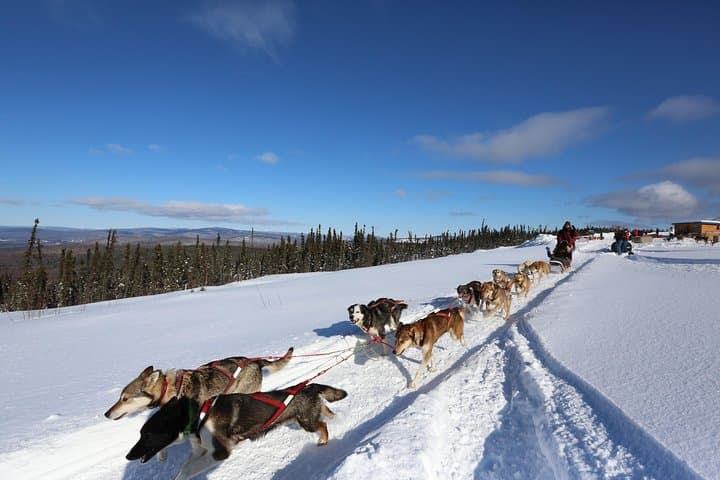
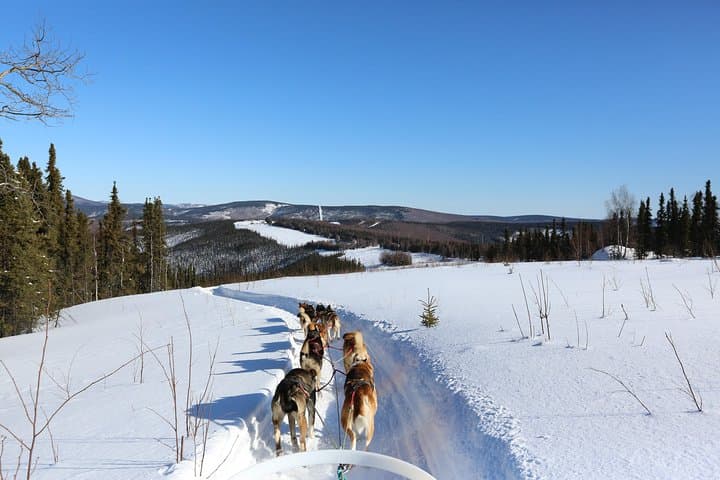

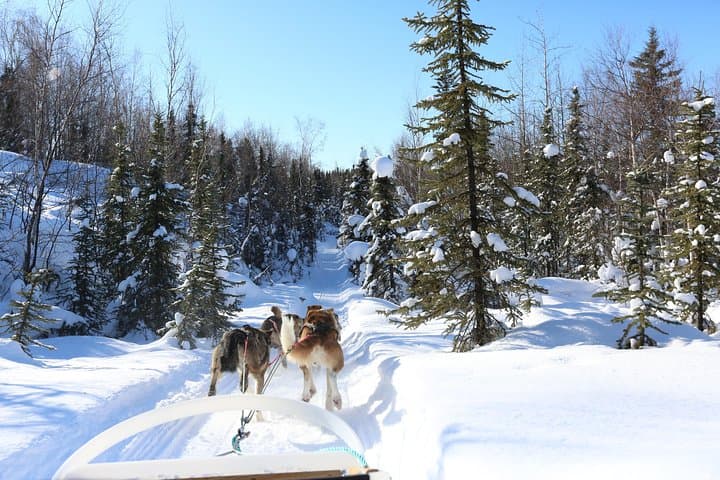
The sled pads a steady rhythm across a pale field of snow, the dogs' breath steaming in the cold air as the forest edges blur past. You stand on the runners, fingers tucked into mitts, while a team of eager huskies leans into the harness—each animal a practiced engine of winter. The wind doesn’t bite so much as insist, pushing you forward along trails used by Alaskan mushers for generations.
The sled pads a steady rhythm across a pale field of snow, the dogs' breath steaming in the cold air as the forest edges blur past. You stand on the runners, fingers tucked into mitts, while a team of eager huskies leans into the harness—each animal a practiced engine of winter. The wind doesn’t bite so much as insist, pushing you forward along trails used by Alaskan mushers for generations.
Dog mushing in Interior Alaska traces back centuries, evolving from Indigenous travel systems into a competitive and cultural practice that shaped settlement patterns and winter lifeways. Fairbanks sits on an alluvial plain carved by the Chena and Tanana Rivers; the flat tundra and black spruce stands create open sightlines that make sled runs feel fast and exposed. Locally, kennels balance tourism with breeding and training programs—expect to hear handlers explain lines, commands, and the dogs' care.
Practically: this one-hour experience is a hands-on intro rather than an expedition—ideal for first-timers who want real trail time and photo stops. Operators typically require a rental car, ask for passenger weights at booking, and enforce a 250-lb max per person (two-seat purchases accepted). Dress in layered, windproof clothing, insulated boots and bring warm gloves. Arrive 30 minutes early, be ready to follow mushers’ safety briefings, and plan for brief outdoor waits at trailheads.
This trip pairs a short, exhilarating taste of Alaskan winter sport with responsible kennel practices; it’s compact, social, and an authentic way to meet the animals that made northern travel possible.