THE ADVENTURE COLLECTIVE® · Independent discovery and booking for outdoor travel

A long single-day climb on the Machame Route takes you from the forested gate to Machame Camp at ~3,000m. Expect steep uphill, close encounters with montane flora and monkeys, and panoramic views of Kilimanjaro’s volcanic cones—without an overnight.
A long single-day climb on the Machame Route takes you from the forested gate to Machame Camp at ~3,000m. Expect steep uphill, close encounters with montane flora and monkeys, and panoramic views of Kilimanjaro’s volcanic cones—without an overnight.
The minivan slips off the asphalt and the landscape loosens into banana terraces and coffee bushes. Rain-wet leaves flash silver as you cross the last dirt road and register at Machame Gate. Guides check permits beneath a stretched tarp; a thin band of montane forest presses up against the trailhead and, for the next hours, it will both hide and reveal Kilimanjaro’s raw architecture.
Verified experiences and guided adventures in the surrounding area.
Operated by Topi Adventure · Moshi, Kilimanjaro Region
The minivan slips off the asphalt and the landscape loosens into banana terraces and coffee bushes. Rain-wet leaves flash silver as you cross the last dirt road and register at Machame Gate. Guides check permits beneath a stretched tarp; a thin band of montane forest presses up against the trailhead and, for the next hours, it will both hide and reveal Kilimanjaro’s raw architecture.
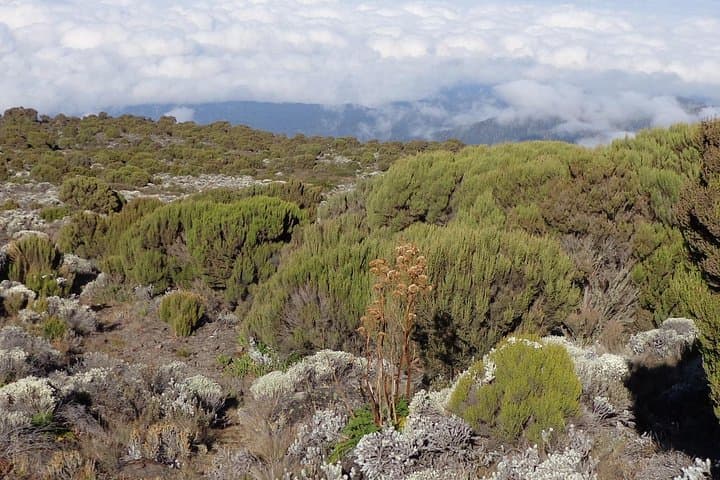
You walk into a place shaped by fire and ice. The massif ahead—Kibo and Mawenzi—are volcanic siblings carved by long-ago glaciers; today they wear a crown of cloud. The Machame Route threads steeply through moss-draped trunks and thickets of Impatiens kilimanjari, a high-altitude wildflower you won’t find elsewhere on the mountain. Blue monkeys and black-and-white colobus move like punctuation through the canopy, and the forest floor smells of loam and coffee.
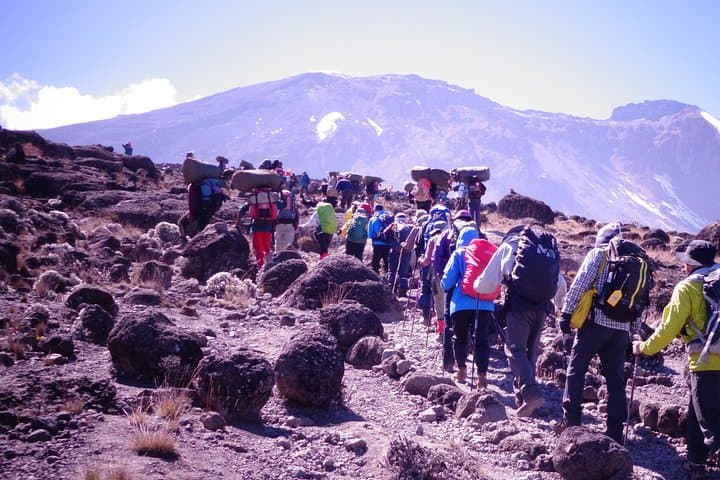
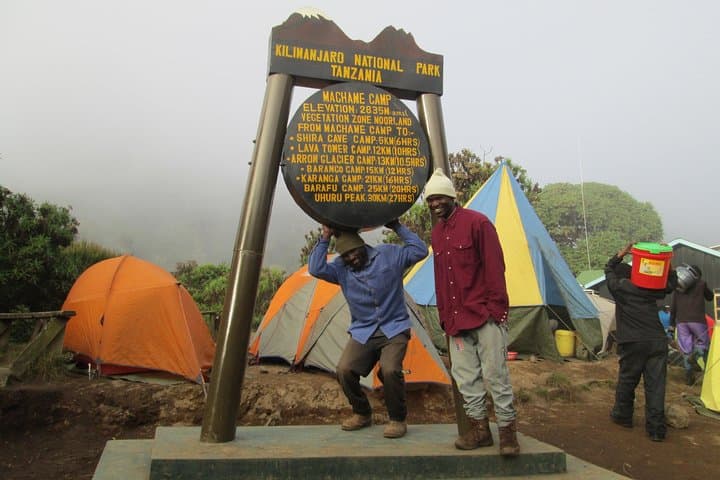
By the time the path opens onto Machame Camp—listed here with tents at roughly 3,000 meters—the slope has done its work: lungs are breathing harder, legs have felt their weight, and the summit looms as an austere silhouette. On a clear afternoon, the summit cone of Kibo catches the light; from the camp there are small windows of tundra and rock, a reminder of how quickly the ecosystem flips from humid forest to alpine scrub on Kilimanjaro’s flanks.
This is a long single-day trek: the climb from Machame Gate to Machame Camp is about 11 km (one way), roughly 1,200 meters of elevation gain, and 4–5 hours uphill. Guides from Topi Adventure handle permits, park fees and a boxed lunch; transportation from Moshi takes about 45–60 minutes. The route offers an intense taste of the mountain’s geology, ecology and local culture—especially the Chagga agricultural terraces you pass coming and going.
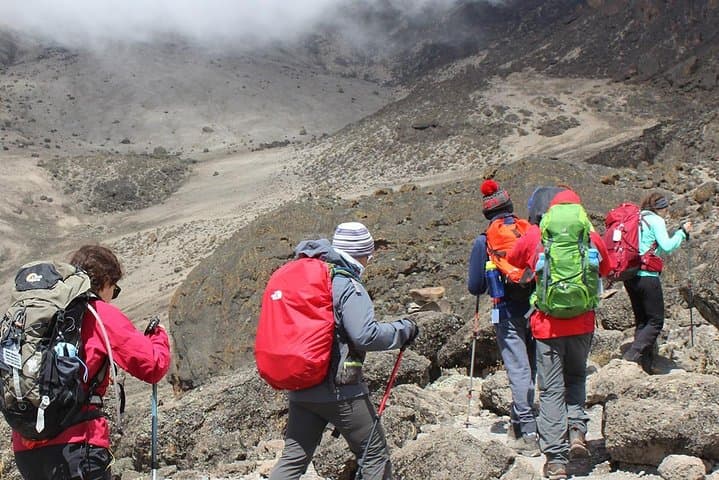
Practical edge: start early, move steadily, and respect altitude. The route is technically straightforward—no ropework—but the distance and elevation change make this a challenging outing for anyone not used to sustained climbs. Layers and waterproofs matter more than ultralight cuffs; daytime sun can be fierce and afternoon clouds turn the trail slippery. Bring more water than you expect, eat slowly, and keep a steady pace.
If the summit is your goal later, treat this as reconnaissance; it’s also an excellent option for travelers short on time who still want the mountain experience below 4,000 meters. Park rangers and guides are visible and active—park fees support conservation and local livelihoods—so travel thoughtfully, keep to trails, and leave the delicate high-altitude plants where they grow.
challenging.
8–10 hours.
Good aerobic fitness and lower-body endurance; should be comfortable hiking steep trails for multiple hours.
Yes — permits are issued at Machame Gate and organized by your tour operator; park fees are included in this trip.
It’s challenging: about 11 km each way with ~1,200 m gain to camp; expect 4–5 hours each direction depending on pace and conditions.
Because you reach ~3,000 m, mild altitude effects are possible; avoid alcohol, hydrate, and descend if symptoms worsen.
Private transport from Moshi, park fees, guide service, bottled water, boxed lunch, and government taxes are included per the operator’s listing.
Depends on fitness—children and older adults with good endurance and no serious medical issues can do it, but consult your guide and consider acclimatization needs.
The trail is non-technical with no ropes required, but it can be steep, muddy and slippery in places, so proper footwear is important.
The Chagga people have farmed Kilimanjaro’s lower slopes for centuries; terraces and coffee fields you pass are part of their living landscape.
Kilimanjaro National Park fees fund rangers and trail maintenance; stick to trails and avoid collecting plants to protect fragile montane ecosystems.
Topi Adventure operates guided outdoor trips and adventures with an emphasis on safety, stewardship, and memorable experiences.
The minivan slips off the asphalt and the landscape loosens into banana terraces and coffee bushes. Rain-wet leaves flash silver as you cross the last dirt road and register at Machame Gate. Guides check permits beneath a stretched tarp; a thin band of montane forest presses up against the trailhead and, for the next hours, it will both hide and reveal Kilimanjaro’s raw architecture.
The minivan slips off the asphalt and the landscape loosens into banana terraces and coffee bushes. Rain-wet leaves flash silver as you cross the last dirt road and register at Machame Gate. Guides check permits beneath a stretched tarp; a thin band of montane forest presses up against the trailhead and, for the next hours, it will both hide and reveal Kilimanjaro’s raw architecture.
You walk into a place shaped by fire and ice. The massif ahead—Kibo and Mawenzi—are volcanic siblings carved by long-ago glaciers; today they wear a crown of cloud. The Machame Route threads steeply through moss-draped trunks and thickets of Impatiens kilimanjari, a high-altitude wildflower you won’t find elsewhere on the mountain. Blue monkeys and black-and-white colobus move like punctuation through the canopy, and the forest floor smells of loam and coffee.
By the time the path opens onto Machame Camp—listed here with tents at roughly 3,000 meters—the slope has done its work: lungs are breathing harder, legs have felt their weight, and the summit looms as an austere silhouette. On a clear afternoon, the summit cone of Kibo catches the light; from the camp there are small windows of tundra and rock, a reminder of how quickly the ecosystem flips from humid forest to alpine scrub on Kilimanjaro’s flanks.
This is a long single-day trek: the climb from Machame Gate to Machame Camp is about 11 km (one way), roughly 1,200 meters of elevation gain, and 4–5 hours uphill. Guides from Topi Adventure handle permits, park fees and a boxed lunch; transportation from Moshi takes about 45–60 minutes. The route offers an intense taste of the mountain’s geology, ecology and local culture—especially the Chagga agricultural terraces you pass coming and going.
Practical edge: start early, move steadily, and respect altitude. The route is technically straightforward—no ropework—but the distance and elevation change make this a challenging outing for anyone not used to sustained climbs. Layers and waterproofs matter more than ultralight cuffs; daytime sun can be fierce and afternoon clouds turn the trail slippery. Bring more water than you expect, eat slowly, and keep a steady pace.
If the summit is your goal later, treat this as reconnaissance; it’s also an excellent option for travelers short on time who still want the mountain experience below 4,000 meters. Park rangers and guides are visible and active—park fees support conservation and local livelihoods—so travel thoughtfully, keep to trails, and leave the delicate high-altitude plants where they grow.