
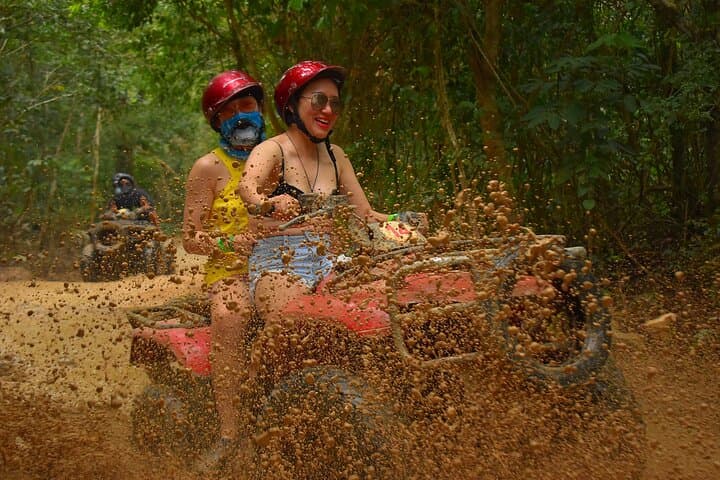
What the day feels like
You arrive with dust on your shoes and the humid punch of the Caribbean jungle in the air. Guides check helmets and hand you goggles; motors rumble like distant thunder. For the next four hours you will trade one pace for another—clattering through rutted trails on an ATV, slicing wind on a zip line high above verdant canopy, then dropping into a shadowed cenote where fresh subterranean water erases the dust and resets your pulse. The sequence feels like a short, sharp movie: land, air, water. Each element tests a different sense of balance and bravery, and together they frame one of the most efficient adventure loops you can do out of Cancún.
The route is straightforward and purpose-built for visitors: a plated ATV track that threads secondary jungle, a multi-station zip line complex that surveys the same green from above, and a sinkhole cenote where Mayan cosmology meets clear, cool limestone water. Geologically, cenotes are collapse features of the Yucatán’s limestone bedrock where rainwater has dissolved underground caverns for millennia; they are windows into a freshwater aquifer and—historically—sacred sites to Maya communities. The jungle here is not a continuous wilderness but a patchwork of secondary forest and palm-dotted growth that shelters howler monkeys, parrots, and the occasional coati. The whole experience is anchored to Cancún for ease—departures, pickups, and post-adventure tacos are all arranged with the convenience modern travelers expect.
Culturally, the cenote swim is the most resonant piece. The Maya considered cenotes portals and sources of life. Guides often speak respectfully of these places, and operators typically include a brief orientation emphasizing respect and preservation—no sunscreen in the water, minimal splashing, and an awareness that these pools feed the local groundwater. That blend of adrenaline and pause—the zipline adrenaline quick, the cenote calm long—gives the day a satisfying arc.
Practically speaking: the tour runs roughly four hours from pickup to drop-off, priced from about US$56.25 per person on public listings. It’s an efficient half-day that makes a good companion to a beach morning or an evening in Cancún’s hotel zone. Physically, you’ll need basic mobility—getting on and off an ATV, clipping into zip line harnesses, and stepping down into uneven steps at the cenote. All equipment—helmets, harnesses, life vests—is provided, and guides will brief you on safety protocols.
If you’re planning the trip, think timing first. Morning departures are best: the jungle is cooler, lines are shorter, and the cenote feels fresher. Wear quick-dry clothing and closed-toe shoes for the ATV; bring a swimsuit under your clothes and a small dry bag for valuables. Don’t overpack jewelry or loose items—the zip line and ATV both favor minimal carry.
On the ATV, the terrain is mostly flat to gently rolling, with rutted dirt, occasional puddles, and sandy patches. Guides keep groups tight and brief riders on throttle control and safe overtaking. The zip line portion usually includes a progression of platforms that step you higher above the canopy, and the sensation is less about speed and more about perspective: the jungle flattens into a green sea and the coastline sometimes glints on the far horizon. The cenote is a cooling reward—clear, deep water shaded by limestone walls and dangling roots. Many operators include a short guided swim and time to float or snorkel; it’s a quiet counterpoint to the rush you just earned.
Safety and comfort for this half-day adventure come down to preparation. Hydrate before you leave, use biodegradable sunscreen (and rinse before entering the cenote if using any), and be candid with guides about weight or medical conditions. If you’re traveling with children, check minimum age and weight requirements—most operators set them for safety. The guides are used to mixed-ability groups and will pace the experience accordingly.
After the tour, reward yourself with a late lunch of Yucatán flavors: cochinita pibil tacos, fresh ceviche, or a quick horchata. Many operators return you to your hotel or a central meeting point in Cancún, which makes it easy to keep the day flexible.
Why do this? It’s an exceptionally efficient sampler of what the Riviera Maya region does best: jungle, thrill, and water, condensed into a half-day that still lets you chew into the landscape rather than simply skim it. For travelers short on time but hungry for variety, it’s an ideal pick. For thrill-seekers, the zip lines and ATVs are tangible, hands-on ways to test comfort zones. For slower travelers, the cenote’s cool quiet offers a restorative finish.
This is not the deepest jungle expedition or the most technical zip-line in Mexico, and it shouldn’t pretend to be. Its charm is honest: accessible adventure, local geology and history woven in, and the practical convenience of a short, well-run tour out of Cancún. If you want a concentrated dose of the Yucatán’s three primary outdoor currencies—land, air, and water—this Jungle Zipline + ATV + Cenote swim is a smart, energizing buy.
Trail wisdom
Small choices, better day.
Start early
Morning slots are cooler, less crowded, and usually offer calmer cenote water.
Wear closed-toe shoes
ATV tracks are rough and the zip-line platforms need secure footing.
Use biodegradable sunscreen
Protect your skin but avoid contaminating the cenote—rinse before swimming.
Secure loose items
Leave jewelry and phones in a dry bag or locker to avoid loss during zips and rides.
Local knowledge
Read the place, not just the route.
Watch for native species including Howler monkeys, Tropical parrots (e.g., parakeets).
Keep an eye out for wildlife during the transition between areas and habitats. Respect distance guidelines.
Operators typically request no sunscreen in the cenote to protect the aquifer; stay on marked trails and pack out all trash to preserve the fragile limestone environment.
Follow the guide's instructions on size limits, ethical handling, and leave-no-trace practices.
Small local cenotes outside the main complexes (ask guides for quieter spots). Roadside stalls selling marquesitas—crispy Yucatán desserts—near common meeting points
Locally recommended viewpoints and quiet spots known best to local operators.
Cenotes were sacred to the Maya and were often sites for offerings; they remain culturally significant and ecologically vital.
Maritime roots and regional tradition shape the waterways and working coasts.
Seasonal guide
Four versions of the same landscape.
Spring
Best forCooler mornings · Fewer crowds · Wildflower and bird activity
ChallengesOccasional showers · Variable water levels
Spring often delivers comfortable temperatures and active wildlife, though short rains can appear—pack a lightweight rain layer.
Summer
Best forWarm cenote swims · Extended daylight · Lush jungle foliage
ChallengesHigh heat and humidity · Hurricane-season risk (late summer)
Summer is lush and hot—prepare for heat, bring hydration, and watch the forecast during hurricane season.
Fall
Best forLower crowds after peak season · Warm water · Good value deals
ChallengesPotential storms (early fall) · Higher humidity
Fall can be an economical time to visit with warm waters; keep an eye on weather advisories during hurricane months.
Winter
Best forDry weather · Clear skies · Milder daytime temps
ChallengesCooler mornings · More booked tours during holidays
Winter offers dry, pleasant conditions ideal for outdoor activity—book early during holiday periods.
Pack with intention
What to bring.
Good to know
Common questions.
The full experience, including hotel transfer and briefings, runs about four hours from pickup to drop-off.
Plan the edges
The details that make the day easier.
Cenotes are the exposed parts of the Yucatán’s aquifer and some contain archaeological remains and pottery from ancient Maya offerings—archaeologists have used cenotes to learn about pre-Columbian ritual practices.
After the tour head back toward Cancún or Puerto Morelos for local eats—seek out a small taquería for cochinita pibil or a seafood stand for fresh ceviche. For a relaxed drink, try a michelada or a local craft beer at a beachfront bar and listen to live guitar at sunset.
- Closest airport
- Cancún International Airport (CUN)
- Typical pickup
- hotel zone or central Cancún
- Driving distance from Cancún
- 20–45 minutes depending on meeting point
- Cell service
- Generally good near tour centers; limited underground at cenotes
- Permits
- Included in tour price—no separate permits required
This eco‑sensitive landscape depends on responsible visitation—use biodegradable products, avoid touching stalactites or rock formations in cenotes, and follow guide instructions to reduce impact.
Explore by topic
Follow the threads.
Keep exploring
Make the story part of the trip.
Set out from Bass Harbor for a private, customizable day on Blue Hill Bay — lighthouses, puffins, seals, and the chance to feel Acadia from the water. Small groups, local captains, unforgettable views.
In four hours you can move from shaded canyon ferns to wind-scoured coastal ridgelines, guided by someone who knows where the light—and the hidden views—live. This private half-day hike on the Monterey Peninsula or Big Sur is compact, curated, and perfect for travelers who want depth without a multiday commitment.
 Related story
Beneath a sky of shifting light, Skaftafell’s ice reads like a map of time. This three-hour guided glacier hike mixes technical instruction with geology and culture: compact, safe, and unforgettable.