
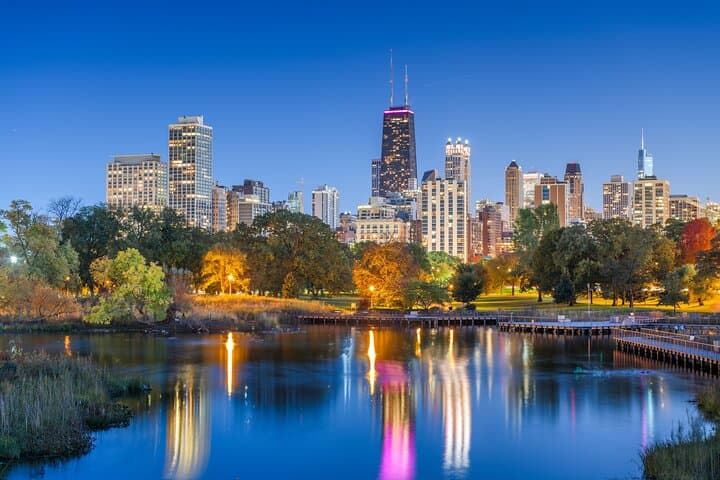
What the day feels like
You start at the edge of a plaza where metal clouds reflect a fractured skyline. Wind pushes off Lake Michigan like a prodding friend—brisk, insistent—and the city answers in a chorus of footsteps, rumbling trains and distant sirens. An app pings. A voice—part guide, part riddler—invites you to look up, to count stories, to find the mark hidden in plain sight. This is not a passive museum tour. It’s a chase: through plazas and across bridges, into alleys hemmed with murals, and along a river that was once persuaded to run the other way.
The Wonders of Chicago Audio Tour Adventure compresses the city’s disparate histories into a compact, do-it-yourself hunt. Ninety minutes is the promised runtime, and in that short span the walk stitches together the city’s defining themes—architecture as bold statement, water as civic battleground, and neighborhoods as living, evolving chapters. It’s efficient and playful: part trivia game, part local primer, all on your schedule.
Chicago’s story is geological as much as human. The skyline sits on a flat lake plain—remnants of glacial lakes and Chicago’s glacial till—making the city low and wide, a kind of stage for the vertical drama of steel and glass. The river, once vital to trade and then fouled by industry, was famously reversed in 1900 to protect drinking-water intakes in Lake Michigan; the city literally rewrote its hydrology to survive. Those choices echo through the city’s streets: bridges that lift and drop, water that frames the architecture, and canals that dared engineers to dream.
Architecture is the tour’s great teacher. From the limestone ornament of early 20th-century facades to the glass ribbons of contemporary towers, each stop is annotated with why a building matters—how it solved a problem or made a claim. You’ll hear about the Chicago School’s innovations, the scars of the Great Fire of 1871 and the rebirth that followed, and the subtle civic arguments played out in plazas and riverbanks. The narrative makes the city legible: not just pretty things to photograph but decisions with consequences.
Culture threads through every block. There are mentions of blues clubs where the music once soothed migrants from the Delta, restaurants still serving Chicago standards—deep-dish and Italian beef—and neighborhoods where recent newcomers add new light to old patterns. Public art and hidden murals pop up like punctuation marks, and local guides in the app point toward quieter spots—an intimate garden behind a brick building, a tucked-away viewpoint on the river—where the city breathes differently.
Practicalities are part of the charm. The route covers about 2–3 miles of mostly flat pavement, with brief stretches of stairs at some riverwalk entries and elevated walkways. Expect city sidewalks and crosswalks, so comfortable shoes matter more than mountaineering boots. The activity is self-guided: the app sets the pace and purpose. You’re free to linger at an overlook or take a detour into a market, but plan for ninety minutes of focused wandering to get the narrative arc the way it’s meant to land.
Timing changes everything. Early morning brings a quieter city and soft light on the glass; late afternoon gilds façades and tints the river gold. Summer demands hydration and sunscreen; in winter the wind off the lake is a factor—dress in layers. Public transit is tidy and efficient for getting to start points and returning to neighborhoods for a celebratory meal.
Safety and respect are practical forms of stewardship here. Keep your group compact on narrow sidewalks, follow traffic signals, and be mindful that some clues or stops skirt private businesses—take photos but don’t assume access. The app’s puzzles add competitive flair, but the real reward is the context: hearing the city explain itself while you walk it. You end where you started or at a recommended post-tour spot, warmed from motion and smarter about how the city became one of America’s great urban experiments.
Why book this kind of experience? For travelers who want more than a list of sights, the Wonders of Chicago tour is a curated curiosity machine. It’s family-friendly and adaptable—teams can compete, couples can savor moments, solo travelers can use its narrative to meet the city on its own terms. It’s also a low-commitment way to get a sense of Chicago’s architecture, civic history, and local flavors without a rigid schedule or group tour personality.
If you go, come with a charged phone, comfortable shoes, and a willingness to look past façades. Let the river feel like a character—capricious, stubborn, decisive—and listen to how the city’s buildings argue back. The best tours don’t just show you places; they teach you how to read them. In ninety minutes, this one will make you a better reader of Chicago.
Trail wisdom
Small choices, better day.
Charge Your Battery
The tour runs from an app—carry a full phone battery or a small power bank so your guide doesn’t cut out mid-clue.
Comfortable Footwear
Expect 2–3 miles on pavement with some stairs; supportive sneakers make the tour easier and more enjoyable.
Plan for Weather
Summer heat and winter lake wind are real—check forecasts and dress in layers or bring sun protection.
Use Public Transit
Start and finish near Millennium Park or the Riverwalk to take advantage of CTA service and avoid parking hassles.
Local knowledge
Read the place, not just the route.
Watch for native species including Peregrine falcons atop high-rises, Canada geese along the lakefront.
Keep an eye out for wildlife during the transition between areas and habitats. Respect distance guidelines.
The Chicago River’s reversal is a reminder of large-scale engineering to protect water—today, river cleanup and native planting projects aim to restore habitat and water quality.
Follow the guide's instructions on size limits, ethical handling, and leave-no-trace practices.
A quiet seating terrace behind a downtown courthouse. A colorful mural-lined alley in the West Loop
Locally recommended viewpoints and quiet spots known best to local operators.
Chicago’s rebirth after the Great Fire of 1871 spurred innovations in commercial architecture and urban planning that shaped modern skyscrapers.
Maritime roots and regional tradition shape the waterways and working coasts.
Seasonal guide
Four versions of the same landscape.
Spring
Best forBlooming parks · Milder walking weather · Fewer tourists than summer
ChallengesPossible rain · Unpredictable temps
Spring is pleasant for walking—bring a light waterproof layer and expect sporadic showers.
Summer
Best forExtended daylight · Festivals and outdoor events · Vibrant river activity
ChallengesHigh heat and humidity · Crowded hotspots
Summer offers long days and energy, but start early and hydrate to avoid heat fatigue.
Fall
Best forCrisp skies and color · Comfortable walking temps · Festival season winds down
ChallengesCooler evenings · Occasional wind from Lake Michigan
Fall is ideal—cool air and clear light make architecture pop and walking comfortable.
Winter
Best forFewer tourists · Striking winter light on glass · Off-season prices
ChallengesCold winds off the lake · Icy sidewalks
Winter is dramatic but bracing—dress for wind and traction on sidewalks.
Operator details
What the booking data adds.
Included
- ✓App Access
- ✓Digital Copies of your scavenger hunt photos
- ✓Customer support
Good to know
- ✓Wheelchair accessible
- ✓Infants and small children can ride in a pram or stroller
- ✓Service animals allowed
- ✓Public transportation options are available nearby
- ✓Not recommended for travelers with spinal injuries
- ✓Not recommended for pregnant travelers
- ✓Not recommended for travelers with poor cardiovascular health
- ✓Travelers should have at least a moderate level of physical fitness
Pack with intention
What to bring.
Good to know
Common questions.
The guided experience is designed to take about 90 minutes, covering roughly 2–3 miles of mostly flat pavement.
Plan the edges
The details that make the day easier.
In 1900 engineers reversed the flow of the Chicago River to send wastewater away from Lake Michigan and protect the city’s drinking water—one of the largest civil-engineering projects of its era.
After the tour, refuel nearby: grab deep-dish at a classic pizzeria, a hearty Italian beef sandwich, or head to West Loop for inventive small plates and craft beer—the neighborhood bar scene is lively and walkable.
- Closest airports
- O'Hare (ORD) ~17 miles, Midway (MDW) ~11 miles
- Start point
- Millennium Park or Riverwalk
- Driving
- downtown parking limited and costly
- Cell service
- generally strong
- Permits
- none for self-guided audio
Take public transit where possible, carry a reusable bottle, and dispose of trash responsibly—the city is investing in river and shoreline restoration, and small choices help preserve urban waterways.
Explore by topic
Follow the threads.
Keep exploring
Make the story part of the trip.
Set out from Bass Harbor for a private, customizable day on Blue Hill Bay — lighthouses, puffins, seals, and the chance to feel Acadia from the water. Small groups, local captains, unforgettable views.
In four hours you can move from shaded canyon ferns to wind-scoured coastal ridgelines, guided by someone who knows where the light—and the hidden views—live. This private half-day hike on the Monterey Peninsula or Big Sur is compact, curated, and perfect for travelers who want depth without a multiday commitment.
 Related story
Beneath a sky of shifting light, Skaftafell’s ice reads like a map of time. This three-hour guided glacier hike mixes technical instruction with geology and culture: compact, safe, and unforgettable.