
What the day feels like
The Roaring Fork speaks first—low and steady, a river clearing its throat as Aspen rubs sleep from its eyes. Cottonwoods flutter like pages turning, and the path pulls you east, past tidy porches and old miner’s cottages, toward the hush where neighborhoods yield to willow and water. This is the kind of outing that doesn’t demand heroics. It asks you to match its pace. Two hours. Two miles. A ribbon of trail that keeps one hand on town and the other in the creek.
On the <a href="https://app.advcollective.com/local-experts/leisure-hike-east-aspen-hunter-creek">Leisure Hike - East Aspen Hunter Creek</a>, you slip into rhythm quick. Footbridges creak, the current nudges, and sunlight edits itself through aspen leaves into small, moving pieces. The route threads from the Roaring Fork to lower Hunter Creek, a clean, moderate walk with just enough roots and short climbs to wake the legs. Bikers whisper by on the Rio Grande Trail. A dipper—black as river stone—bobs in the riffles, then vanishes underwater as if on a dare.
It’s easy to forget how much story is packed into this gentle valley. Long before ski lifts and art galleries, Ute bands moved through here with the seasons, reading the land the way we read maps. In the late 1800s, Aspen exploded on silver—nearby Smuggler Mountain produced one of the most famous strikes in mining history. The old rail bed became the Rio Grande Trail, a spider-silk line drawing walkers, cyclists, and runners along the river’s quiet pulse. Today’s neighborhoods tuck neatly into the foothills, but their edges loosen fast: within minutes, you’re in the company of alder, chokecherry, and the constant grammar of water over stone.
Geologically, Hunter Creek is a classroom with great views. The Elk Mountains are a palimpsest of granite, gneiss, and ancient sediments buckled by time. Glacial scouring carved these side valleys, leaving steep walls and a bed full of cobbles that the creek still rearranges after spring runoff. The valley’s cool, damp air grows willows thick and green. The trail dodges roots and water-worn rocks, asks for attention but not expertise. It’s a fine place to ease into Aspen’s elevation—around 8,000 feet—without committing to a slog.
Expect a good cross-section of local life out here. Dogs pad the banks. Slow travelers and stroller-pushers claim the riverwalk sections; trail runners bounce past toward Smuggler’s switchbacks. You can keep it leisurely: follow the lower Hunter Creek loop, pause on the wooden footbridge to watch froth muscle through the narrows, then wander back along the Roaring Fork for a closing chorus. Or tack on a brief spur toward Herron Park and the John Denver Sanctuary, where song lyrics are etched into granite and the river braids into gentle channels fit for bare feet.
What makes this stroll compelling isn’t a summit or a superlative. It’s proximity: the edge-of-town wildness that invites you to step out your door and, within a block or two, be inside a different conversation. The creek cajoles you forward. Cottonwood leaves applaud your timing. The air—drier than sea-level lungs expect—asks for sips of water more often than you think. It’s a hike that teaches good habits: go slower than you planned, look closer than you intended.
Plan on two unhurried hours. Expect roughly two miles with brief undulations, a few rooty steps, and short, punchy grades that top out quickly. Trail shoes are ideal; street sneakers can work on dry days but will feel slick when the path is damp. Sun exposure flickers in and out—bring a hat and sunscreen even for morning outings. If you’re fresh off the plane, this is the right first-day move. Hydrate, keep your effort conversational, and let the creek set the metronome.
Timing matters. Early morning finds long, clean light sliding through aspen trunks and fewer people on the path. Midday can be bright and busy but still cool along the water. Evenings bring shadows and, often, a breeze moving down-valley. Spring offers snowmelt drama and birdsong; summer runs lush and green, with wildflowers stenciling the banks; fall is a quiet riot of gold—aspens flickering like coins in the sun; winter flattens sound and turns the creek into a gallery of icework, though this particular itinerary shines best snow-free.
Above all, the hike is approachable. You’re never far from town, which means you can tuck it between breakfast and an art walk, or use it as a reset after a longer day in the high country. And if you want a little context beyond your map app, consider joining a guided version—local naturalists fold in stories about the town’s mining booms, water rights, and riparian ecology as you go. Start with the <a href="https://app.advcollective.com/local-experts/leisure-hike-east-aspen-hunter-creek">East Aspen & Hunter Creek hike</a> link, and you’ll find yourself on the path within minutes of reading.
When you finish, the river’s voice follows you back into town. It’s the same sound, only now it’s inside your stride—a reminder that Aspen’s best entry point isn’t always a summit. Sometimes it’s a small, coiled creek at the edge of a neighborhood, tugging you along for a few easy miles. For an approachable, high-reward wander with strong sense-of-place, the <a href="https://app.advcollective.com/local-experts/leisure-hike-east-aspen-hunter-creek">Leisure Hike - East Aspen Hunter Creek</a> is exactly what the day ordered.
Practical notes: allow two hours door to door; carry at least one liter of water and light layers; expect some cell coverage near town but pockets of quiet in the lower valley; and practice trail etiquette—yield to uphill hikers, give anglers room to cast, and keep dogs leashed where posted. If you need a map or a nudge on where to start, bookmark the <a href="https://app.advcollective.com/local-experts/leisure-hike-east-aspen-hunter-creek">guided walk in Aspen</a> resource and go meet the creek where it lives—right at the edge of everything.
Trail wisdom
Small choices, better day.
Hydrate Early and Often
Aspen sits near 8,000 feet; even an easy hike can feel tougher without water. Carry at least 1 liter and sip regularly.
Watch for Rooted Steps
Sections along lower Hunter Creek have roots and slick rocks—use deliberate foot placement, especially after rain.
Sun-Savvy Even in Shade
Shade comes and goes; high-elevation sun burns fast. Reapply SPF and wear a brimmed hat.
Pause on the Footbridges
The best creek views are from the wooden spans—stop for photos and to spot American dippers in the froth.
Local knowledge
Read the place, not just the route.
Watch for native species including Mule deer, American dipper.
Keep an eye out for wildlife during the transition between areas and habitats. Respect distance guidelines.
You’re in the Roaring Fork watershed—stay on established paths to protect riparian plants and pack out everything you bring.
Follow the guide's instructions on size limits, ethical handling, and leave-no-trace practices.
John Denver Sanctuary’s engraved lyric boulders near the river’s edge. The wooden Hunter Creek footbridge—prime spot to watch American dippers
Locally recommended viewpoints and quiet spots known best to local operators.
Smuggler Mountain, just above town, yielded one of the largest silver nuggets ever recorded in 1894, fueling Aspen’s mining-era boom.
Maritime roots and regional tradition shape the waterways and working coasts.
Seasonal guide
Four versions of the same landscape.
Spring
Best forRushing snowmelt views · Birdwatching
ChallengesMuddy, slick trail sections · Variable weather
Expect cool mornings, wet tread, and lively flows that animate the creek. Layers and traction help.
Summer
Best forShaded creek walks · Wildflowers
ChallengesAfternoon thunderstorms · Heavier trail traffic
Lush banks and steady shade make this route a heat-beater. Start early to avoid storms and crowds.
Fall
Best forAspen foliage · Crisp, clear air
ChallengesCool mornings · Shorter daylight
Gold-lit trees frame the creek and views pop. Bring a warm layer and catch the early light.
Winter
Best forQuiet paths · Icy creek formations
ChallengesSnow/ice on trail · Cold temperatures
With proper traction and layers, winter walks can be serene, but expect icy patches and colder air near the water.
Pack with intention
What to bring.
Good to know
Common questions.
Yes. It’s a two-mile, two-hour creekside walk with short, gentle climbs—ideal for beginners acclimating to Aspen’s elevation.
Plan the edges
The details that make the day easier.
In 1894, Aspen’s Smuggler Mine produced a 1,840-pound silver nugget—one of the largest ever recorded—cementing the town’s place in Colorado mining history.
Refuel at Local Coffee House on E Hyman for a cortado and pastry, then grab a casual bite at White House Tavern. If it’s warm, stroll the John Denver Sanctuary to cool your legs in the shallows before dinner along the pedestrian mall.
- Closest airport
- Aspen
- Pitkin County (ASE). Trail access
- Herron Park or Hunter Creek Trailhead (Lone Pine Rd). From downtown Aspen, the start is a 5–15 minute walk. Cell service: generally good, with spotty pockets near the creek. Permits: none for day hiking; follow leash and seasonal wildlife rules.
This corridor feeds the Roaring Fork River—pack out all trash, keep dogs leashed near wildlife, and avoid trampling streamside plants by staying on durable surfaces.
Explore by topic
Follow the threads.
Keep exploring
Make the story part of the trip.
In four hours you can move from shaded canyon ferns to wind-scoured coastal ridgelines, guided by someone who knows where the light—and the hidden views—live. This private half-day hike on the Monterey Peninsula or Big Sur is compact, curated, and perfect for travelers who want depth without a multiday commitment.
 Related story
Beneath a sky of shifting light, Skaftafell’s ice reads like a map of time. This three-hour guided glacier hike mixes technical instruction with geology and culture: compact, safe, and unforgettable.
 Related story
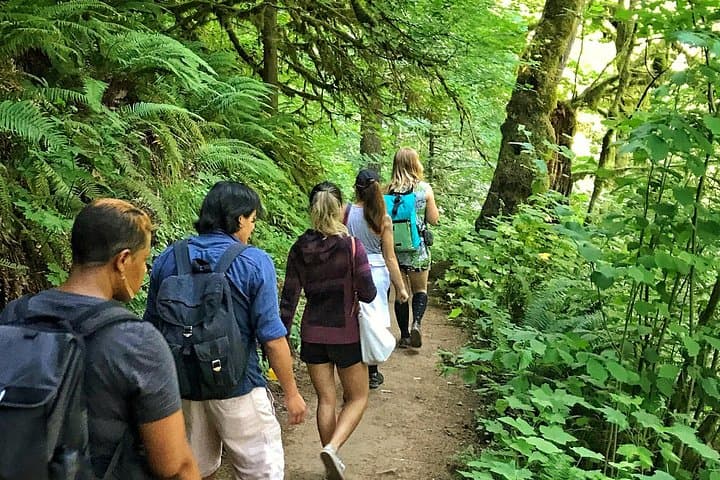
Lose the city for a few hours without leaving it: this 5-mile, 900-foot-gain Forest Park loop threads old-growth pockets, city viewpoints, and cultural landmarks for a compact taste of Portland’s wild side. Expect moss, roots, and stories.