
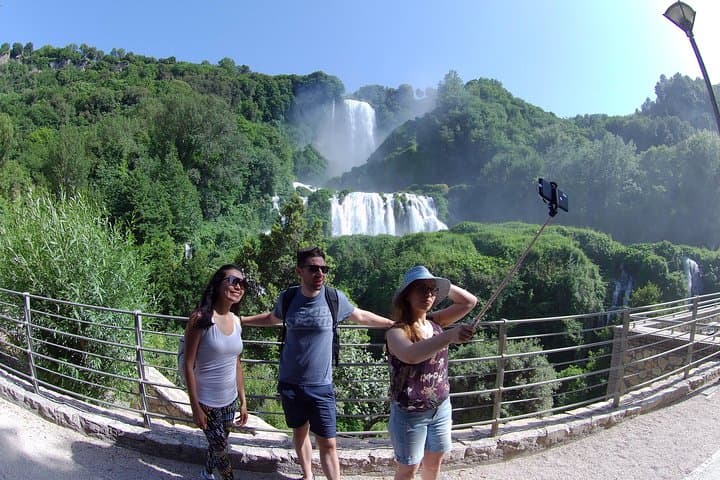
What the day feels like
By the time the whistle echoes through the gorge, the Nera River is already gathering its nerve. The gates open and water charges over the lip in a bright roar, turning sunlight into moving glass and mist into a cool breath on your cheeks. Cascata delle Marmore, the Roman-made waterfall outside Terni, doesn’t just fall—it performs. The torrent tumbles in three fierce acts, each tier throwing its weight at mossy cliffs and travertine ledges before plunging again, daring you to follow on foot. This is not a stroll by a fountain; it’s a day where geology, ancient engineering, and a well-built trail network conspire to deliver a hike that feels as alive as the landscape itself.
If you’re coming from Rome, the shift happens quickly. The city loosens its grip after an hour and a half by train to Terni, and a short bus ride threads you into forest and spray. The lower belvedere—Belvedere Inferiore—drops you at river level with the curtain of water thundering above. Here, stone paths and woodland steps begin to climb, and the falls set the rhythm: surge and hush, surge and hush. You fall into step, rising along Sentiero 1, where damp staircases cling to the cliff and the air tastes metallic and clean.
Marmore is the rare waterfall with a biography. In 271 BC, Roman consul Manius Curius Dentatus ordered a canal cut from the Velino River to drain marshes that plagued the Reate plain. The solution sent water spilling over a limestone wall into the Nera, creating a staggered cascade some 165 meters high. Centuries of modifications—by popes, engineers, and ultimately hydroelectric projects—shaped the flow into today’s spectacle. What looks wild is partly choreography. On release days, the dam above opens at set hours, transforming a gentle stream into a full symphony. Hikers time their ascents to the show.
The terrain cycles between forested singletrack and stone-cut staircases, with handrails on exposed sections and frequent overlooks. Mist beads on eyelashes. The falls talk in percussive beats against the rock, and the trail answers with switchbacks that test your legs but never punish them. Expect 3–5 miles of hiking depending on how you link the paths, and around 650–800 feet of cumulative gain if you climb from the lower to the upper viewpoint and add a few detours. The famous Balcone degli Innamorati—the Lovers’ Balcony—hides behind the second drop, reachable through a short tunnel. Step out and the world narrows to spray, thunder, and a rainbow that seems to breathe with the wind.
From the upper belvedere, the panorama opens over the Valnerina’s quilt of fields and stone villages. On a clear day, you can trace the line of the canal that started it all. Culture clings to these hills: the fortified village of Labro perches like a sentinel above Lago di Piediluco, its narrow lanes of pale stone twisting toward a view that seems designed for late-afternoon light. Piediluco’s lakeside cafes, meanwhile, speak the language of post-hike hunger—trout and perch, simple pastas, bitter espresso. This corner of Umbria is less hyped than its western cousins, and that’s a good thing. The pace is human. The history is tangible. And the trails give you the story with each footfall.
Geology here is written in limestone and water. The cliff face is studded with travertine, a sedimentary rock formed by mineral-rich springs that deposit calcite as they flow. Look closely and you’ll see fuzzy green drapery—the moss and ferns that anchor in spray zones—slowly becoming stone over time. It’s a reminder to stay on marked paths; these living rock gardens are fragile and take decades to rebuild after a careless shortcut.
Planning the day is straightforward. Most hikers begin at the lower entrance to feel the muscle of the falls up close, then climb to the upper belvedere for broad views and a quieter picnic. Check the release schedule in advance—flows are typically strongest on weekends and holidays, and weekdays may have limited hours. Arriving before the first opening lets you hike in hush and then watch the river’s pulse shift from trickle to thunder. If you have extra time, tack on a visit to Labro or a loop along Lago di Piediluco, where willows rake their fingers across the water and rowers cut clean lines at dawn.
Wear shoes that grip—those stone steps wear a slick sheen of mist—and bring a light rain shell even on cloudless days. The falls create their own weather. A small dry bag keeps your phone and camera happy, and trekking poles help on the steeper staircases. Families do well here; there are railings, frequent exits, and short routes for shorter legs. But respect the scale. The current pushes forward even when you can’t see it, and the paths feel different when the release begins. That’s part of the appeal: you are moving through a landscape that moves back.
For travelers who want a day in nature without abandoning the cultural thread of the trip, Marmore is an elegant compromise. Rome is close enough for a dawn-to-dusk outing, yet the experience is distinctly Umbrian—quieter, more personal, with layers of history that don’t need a docent. You’ll leave with the falls in your ears and the Roman knack for ambitious problem-solving in your head. Two thousand years later, their water still runs, and the trail still climbs to meet it.
Trail wisdom
Small choices, better day.
Time Your Hike to the Water Release
Check the official flow schedule and aim to be at the lower belvedere just before the gates open to watch the falls transform from trickle to thunder.
Footwear With Bite
Stone steps stay slick from constant spray—wear shoes with grippy rubber and consider light trekking poles for the steeper staircases.
Bring a Shell for the Mist
Even on sunny days, the falls generate their own weather. A lightweight rain jacket and a small dry bag will save your layers and electronics.
Choose Your Gate Wisely
Start at the lower entrance for power and proximity; begin at the upper entrance for big views and an easier descent.
Local knowledge
Read the place, not just the route.
Watch for native species including Common kingfisher, Peregrine falcon.
Keep an eye out for wildlife during the transition between areas and habitats. Respect distance guidelines.
Fragile travertine and spray-zone vegetation develop over decades—stay on marked paths and avoid shortcuts. Flow schedules balance ecology, hydroelectric needs, and visitor safety.
Follow the guide's instructions on size limits, ethical handling, and leave-no-trace practices.
Balcone degli Innamorati viewpoint behind the cascade. Belvedere Specola overlook above the upper drop
Locally recommended viewpoints and quiet spots known best to local operators.
The waterfall was created when Roman engineers cut the Cavo Curiano canal in 271 BC to drain the Velino marshes into the Nera River; later papal and modern works refined its course and flow.
Maritime roots and regional tradition shape the waterways and working coasts.
Seasonal guide
Four versions of the same landscape.
Spring
Best forFull water flows · Wildflowers
ChallengesCool, damp conditions · Crowds on holidays
Expect strong releases, lush greenery, and cool air in the gorge—ideal for long climbs with layers.
Summer
Best forLong daylight · Family outings
ChallengesHeat and humidity · Peak crowds and parking pressure
Arrive early or late for cooler temps; midday heat and mist can make stairs feel slick and tiring.
Fall
Best forQuieter trails · Autumn color
ChallengesShorter days · Intermittent rain
Golden forests and calmer paths reward flexible hikers. Pack a shell and headlamp just in case.
Winter
Best forPeaceful views · Photographers
ChallengesLimited release hours · Very slippery surfaces
Lower flows and fewer visitors mean contemplative walks, but take care on wet stone and check opening times.
Pack with intention
What to bring.
Good to know
Common questions.
Take a regional train from Roma Termini to Terni (about 1.5 hours). From Terni station, local buses run to Cascata delle Marmore; taxis are also available for the 20-minute ride.
Plan the edges
The details that make the day easier.
Cascata delle Marmore is one of the tallest man-made waterfalls in the world at about 165 meters (541 feet), originally engineered by the Romans in 271 BC to drain marshland near present-day Rieti.
Refuel in Terni with strangozzi al tartufo, porchetta, and a glass of Umbrian Sagrantino. For lakeside charm, head to Piediluco for grilled lake fish and espresso with a view. Craft beer bars in Terni and gelato stands near the lower entrance make for easy post-hike rewards.
- Closest airports
- Rome FCO
- CIA. Train
- Roma Termini to Terni (~1.5 hours), then local bus or taxi to the park (15–20 minutes). Driving: ~1.5–2 hours from Rome; ~15 minutes from Terni. Trailheads: Lower (Belvedere Inferiore) or Upper (Belvedere Superiore) entrances. Cell service: Spotty in the gorge, better at viewpoints. Permits: Park entry ticket required; check water release times.
This is a managed watershed and a fragile travertine environment—pack out all trash, stay on marked steps, refill a reusable bottle at designated points, and respect barriers near the cascade.
Explore by topic
Follow the threads.
Keep exploring
Make the story part of the trip.
Set out from Bass Harbor for a private, customizable day on Blue Hill Bay — lighthouses, puffins, seals, and the chance to feel Acadia from the water. Small groups, local captains, unforgettable views.
In four hours you can move from shaded canyon ferns to wind-scoured coastal ridgelines, guided by someone who knows where the light—and the hidden views—live. This private half-day hike on the Monterey Peninsula or Big Sur is compact, curated, and perfect for travelers who want depth without a multiday commitment.
 Related story
Beneath a sky of shifting light, Skaftafell’s ice reads like a map of time. This three-hour guided glacier hike mixes technical instruction with geology and culture: compact, safe, and unforgettable.