
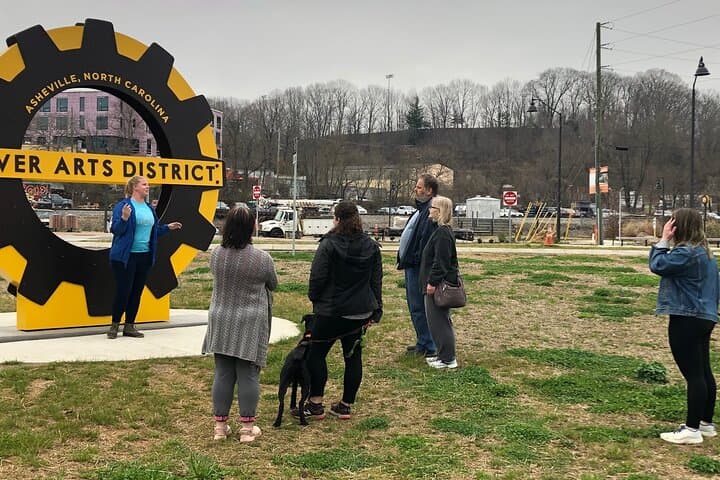
What the day feels like
The morning air along the French Broad has a way of sizing you up. It moves in slow currents that smell faintly of wet clay and coffee, ruffling the murals that climb brick walls like vines. On Asheville’s River Arts District walking tour, you don’t just stroll a neighborhood—you trace a floodplain’s heartbeat. Warehouses crouch close to the river as if listening. Artists swing open roll-up doors. Kilns thrum. The district, once bruised by water and industry, looks you in the eye and says: Watch what we make with what remains.
The route is modest—about a mile and a half across pavement, greenway, and gallery floors—but the ground underfoot is layered. Your guide starts with river logic: this is the French Broad, one of the oldest rivers in the world, stubborn and sideways, flowing north as if it has a private idea about gravity. In 1916 it climbed its banks and took Asheville’s lowlands with it. In 2024, it rose again—higher, faster—testing a century of hope and hard lessons. Doors buckled, studios drowned, inventory turned to pulp. And then the district did what artists do: it salvaged, adapted, and set the wheel spinning again.
That resilience is what you come for, and it’s everywhere. At Foundy Street, the legal graffiti walls mutter and sing—a living archive that repaints its own memory. Murals skate around corners and sprint down alleys. The old steel bones of industry, once so heavy they pinned the river to work, now lend texture to color and spark. Nature, unbothered by our categories, presses in at the edges. A great blue heron drops out of the sky and lands on a log with quiet intent. Meanwhile a glassblower draws breath, then fire, and a bubble of molten light spins at the end of a pipe. The glow licks the dark like a second sun. You think: the river floods, the furnace flares, and people keep shaping what they can hold.
This is a tour, yes, but it also acts like a conversation between forces. The guide threads together stories of potters who lost kilns in the 2024 torrent, painters who squeegeed their way back to blank canvas, and metalworkers who turned bent beams into sculpture. You’ll step into studios where the floor still tells the truth—waterlines traced into concrete—and the air smells of sawdust and varnish. There’s a small tasting somewhere along the way—maybe local chocolate, a bite of farm cheese, or a sip of something brewed nearby. Asheville likes to feed you for real. You’re reminded that creativity needs calories.
The River Arts District grew from rail spurs and factory floors. Its brick shells once held cotton mills, tannery belts, hay bales, and paper stacks. The bones remain, but the district’s new nervous system runs on craft—clay humming on wheels, presses clacking, torches speaking in parentheses. With more than 200 working artists in over 20 repurposed buildings, you can walk a few blocks and cross mediums the way you cross streets: clay to glass to paint to ink to metal. The French Broad hugs it all, daring you to notice the way water keeps time.
For travelers, this walk isn’t a summit or an endurance test; it’s a grounded adventure that invites you to participate. Bring curiosity and comfortable shoes. Plan for 2 to 2.5 hours and expect to stand often, linger, and talk. The guide offers context that matters: how the city’s greenway investments (and flood mitigation projects) reshape the river’s edge, why slow tourism supports recovery, and where your tips go. The tour is pay-as-you-wish—a gesture that fits the district’s cooperative ethos—and the more you listen, the more you realize that tips here feel less like a gratuity and more like a vote of confidence in regeneration.
As the path swings toward the greenway, the river shows its work. Eddies gather under sycamores that lean into the current like patient elders. Cyclists slide by. The new boardwalks flex slightly underfoot, a reminder that the built world has to breathe to survive in a floodplain. When wind comes up the channel, it pushes against your cheek just enough to make you lean forward, a small nudge from a wild old river that never lost its muscle.
You finish near studios that smell like possibility. It’s not precious or staged; it’s hands-on, sweaty, and resilient. You leave with a mental map of the district—the bends in the river, the alleys of color, the kilns and presses—and a better map of the people who keep making. The French Broad, with its age-old patience, seems to approve. It pushes on, quietly insisting that forward is the only direction worth taking.
Planning your walk is straightforward. Morning tours catch cooler temps and softer light; afternoons hum with open doors and live demos. Wear shoes you don’t mind getting a little paint-dusted or rain-spattered. Bring water, a small daypack, and a flexible schedule for post-tour browsing—you’ll want time to return to the studios that spoke to you. Factor in a snack at a nearby café or a pint from a brewery tucked into the brickwork. Asheville’s appetite for local flavor is as fierce as its love of craft.
Most of all, come ready to contribute. Buy a print or a mug. Tip your guide. Share the story. In a place where water has written so many hard chapters, your presence becomes part of the next one: a community reimagining itself, one kiln, one brushstroke, one steady step along the river at a time.
Trail wisdom
Small choices, better day.
Wear real walking shoes
Surfaces vary from smooth greenway to uneven warehouse floors—closed-toe sneakers or light hikers keep feet happy for 2+ hours.
Bring small bills for tips
This is a pay-as-you-wish tour; cash makes tipping quick and supports artists directly for small purchases.
Hydrate and snack smart
Carry a water bottle and a light snack; gallery visits can run long and nearby cafés can be busy during peak hours.
Mind the weather and river
Tours run rain or shine; storms can pop up fast and river levels change—pack a light rain shell and follow guide instructions.
Local knowledge
Read the place, not just the route.
Watch for native species including Great blue heron, Belted kingfisher.
Keep an eye out for wildlife during the transition between areas and habitats. Respect distance guidelines.
This is an active floodplain; greenway boardwalks and restored riparian buffers help the river breathe. Stay on paths, pack out trash, and support businesses that prioritize sustainable practices.
Follow the guide's instructions on size limits, ethical handling, and leave-no-trace practices.
Foundation Walls on Foundy Street—Asheville’s evolving legal graffiti canvas. Curve Studios & Garden—quiet courtyards with ceramics, fiber, and metalwork
Locally recommended viewpoints and quiet spots known best to local operators.
The River Arts District grew from early 20th-century mills and warehouses along the French Broad. The floods of 1916 and 2024 reshaped the area, catalyzing its transformation into a hub for working artists.
Maritime roots and regional tradition shape the waterways and working coasts.
Seasonal guide
Four versions of the same landscape.
Spring
Best forMild temps · Riverfront blooms
ChallengesRain showers · Pollen
Expect fresh color on the murals and along the greenway. Bring a light layer and be ready for quick, passing rains.
Summer
Best forLong daylight · Open studios
ChallengesHeat and humidity · Afternoon thunderstorms
Start early or later in the day to avoid heat. Shade is limited along the river; hydrate and sun-protect.
Fall
Best forLeaf color · Festival energy
ChallengesCrowds · Variable temps
Crisp air and golden light make for standout photos; book ahead and pack layers for cool mornings and warm afternoons.
Winter
Best forQuiet galleries · Clear views
ChallengesCold snaps · Short days
Bundle up and enjoy fewer crowds. Some studios keep limited hours—check listings before you go.
Operator details
What the booking data adds.
Included
- ✓Entrance to venues, tastings, and live demonstrations
Not included
- —Gratuities
Good to know
- ✓Infants and small children can ride in a pram or stroller
- ✓Service animals allowed
- ✓Public transportation options are available nearby
- ✓Suitable for all physical fitness levels
Pack with intention
What to bring.
Good to know
Common questions.
The route is roughly 1.5 miles over 2–2.5 hours, with frequent stops in studios and along the river.
Plan the edges
The details that make the day easier.
Asheville’s River Arts District is home to more than 200 working artists across over 20 former industrial buildings, making it one of the Southeast’s densest clusters of open studios.
Wrap the walk with ribs at 12 Bones Smokehouse, a pint at Wedge Brewing’s patio, or tacos by the river at White Duck Taco. For a caffeine reset, Ultra Coffeebar and Summit Coffee fuel studio hopping with local roasts and quick bites.
- Closest airport
- Asheville Regional (AVL). Meeting point: River Arts District (check confirmation). ~5–10 minutes’ drive from Downtown Asheville. Cell service is generally good; signal can fade inside brick warehouses. No permits required; free public parking in designated lots.
You’re walking a living floodplain—stay on marked routes, skip single-use plastics, and support studios rebuilding with resilient, low-waste practices. Respect artwork copyrights and ask before photographing.
Explore by topic
Follow the threads.
Keep exploring
Make the story part of the trip.
Set out from Bass Harbor for a private, customizable day on Blue Hill Bay — lighthouses, puffins, seals, and the chance to feel Acadia from the water. Small groups, local captains, unforgettable views.
In four hours you can move from shaded canyon ferns to wind-scoured coastal ridgelines, guided by someone who knows where the light—and the hidden views—live. This private half-day hike on the Monterey Peninsula or Big Sur is compact, curated, and perfect for travelers who want depth without a multiday commitment.
 Related story
Beneath a sky of shifting light, Skaftafell’s ice reads like a map of time. This three-hour guided glacier hike mixes technical instruction with geology and culture: compact, safe, and unforgettable.