
What the day feels like
The Saint Lawrence doesn't shout—it's a slow, wide presence at the city's edge, patient as a mapmaker waiting for you to draw your route. The river's tides have watched Montreal rearrange itself for centuries: Indigenous pathways, French merchants, industrial skylines, and now cyclists dancing through bike lanes. A Let's Roam audio tour takes that layered city and turns it into a game board: a 90-minute sprint of clues, small victories, and human stories that reward attention as much as speed.
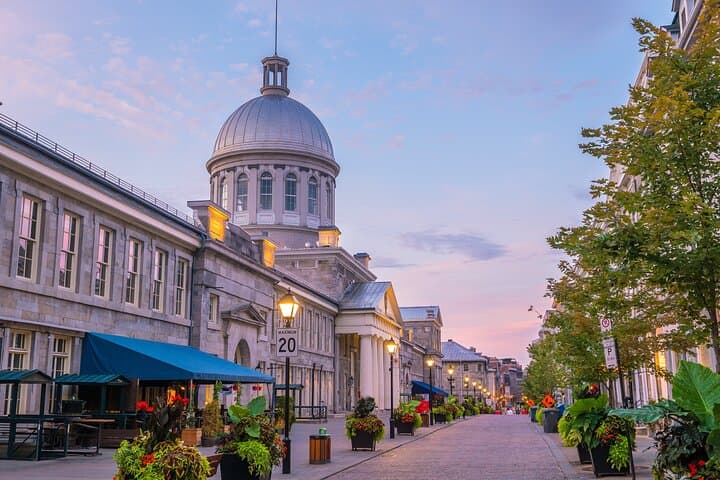
You begin with your phone and a sense of curiosity. The app's voice nudges you into motion—follow the clue, answer the trivia, claim the checkpoint. The architecture becomes punctuation: cast-iron facades and stone churches act like chapters; murals are exclamation marks. Buildings and boulevards do the storytelling, but the puzzles make you reread the lines. Montreal's history is never a dry aside here. Instead, it hides inside a riddle about a plaque, a sculpted face above a doorway, or the name of an old marketplace. The city's nicknames—Ville-Marie, a once-walled bastion of fur trade and faith—peek through the game without overwhelming the play.
This is not a museum tour. It's an urban scavenger hunt designed around active curiosity. Let’s Roam outfits the experience with timed tasks, team scoring, and local knowledge woven into each prompt. It fits everything from a sunlit first-time wander to a competitive team-building exercise: families race side-by-side, friends whisper conspiratorially over clues, and office groups translate small wins into inside jokes. For the traveler, the value is double: you leave not just having seen the city, but having engaged it with a purpose.
Montreal is a study in contrasts—French and English, old stone and glass towers, indie cafés sandwiched between dim-sum windows. That cultural cross-stitch informs the audio tour’s cadence. The voice in your ear will casually reference the city's culinary obsessions as frequently as its architecture: smoked meat, bagels, poutine, and microbreweries where locals decompress after a long day. That diversity is the point. The city rewards close observation: an ornate balcony, a bilingual street sign, the scent of roasting coffee drifting from a courtyard café.
Practicalities are simple. The experience runs for about 90 minutes (Let’s Roam notes this as a fixed duration). It’s app-led and self-guided, so flexibility is the hook—you can pause, linger, or sprint through. Price starts around US$14.99, making this a low-cost way to see a lot without hiring a guide. The app handles directions and checkpoints, so navigation stress is low, but the tour expects you to bring reliable battery life and a usable phone. The terrain is urban: cobbles in parts, long sidewalks elsewhere, and a few short flights of stairs if you detour into older quarters. Comfortable shoes matter more than a formal packing list.
A few context notes matter before you step off. Montreal is built on an island; its layout is an accretion of neighborhoods with distinct characters. Indigenous peoples stewarded these lands long before European settlement—look for acknowledgments of that history within the city’s cultural institutions and public art. Modern Montreal is proud of its French-language culture; bilingual signage is common, but leaning into French pleasantries (bonjour, merci) is appreciated. Environmentally, the city is bike-forward: expect frequent bike lanes and rental options if your route spikes beyond the walking radius.
For planners, timing is everything. Spring and early fall offer crisp, comfortable weather when cobbles aren't slick with ice or sweat; midweek or early mornings reduce crowds in popular squares. If you want to layer in food stops, end in neighborhoods like the Plateau or Old Montreal to sample a legendary smoked-meat sandwich, a poutine plate, or a wood-fired pizza—each makes for a satisfying reward.
Why choose an audio tour over a standard guided walk? Because it hands you authorship. You decide the pace, pause to take photos, or detour to a market stall. The game mechanics keep the group engaged in a way lecture-style tours rarely do; trivia questions that force you to look and read are better at teaching than two-hour monologues. For visitors with just a morning to spare, it’s an efficient, playful immersion that leaves room for the rest of the day.
If you go: charge your phone fully, wear shoes that can handle cobbles, and leave a little space in your schedule to follow a local recommendation. Let the city do the heavy lifting: the river, the stone, and the hum of cafés will supply the setting. This audio tour gives you a reason to look closely.
Bottom line: the Montreal Audio Tour Adventure is an ideal first-date-level introduction to the city—energetic, social, and anchored by story. It’s as much about pacing your curiosity as it is about solving clues. Bring friends, bring family, or go solo and let the city surprise you; with each solved riddle you’ll collect more than points—you’ll collect places.
Trail wisdom
Small choices, better day.
Charge Your Phone Fully
The tour runs through an app with GPS and media—start with a full battery or a small power bank to avoid interruptions.
Comfortable Shoes Only
Expect cobblestones and long city blocks—supportive walking shoes make the difference between a fun hour and aching feet.
Bring a Water Bottle
Hydration is simple to forget in an urban rush; refill at cafés or water fountains along the way.
Mind Bike Lanes
Montreal’s bike lanes are busy—watch for cyclists when pausing for clues or photos.
Local knowledge
Read the place, not just the route.
Watch for native species including Urban squirrels, Migratory birds along the St. Lawrence waterfront.
Keep an eye out for wildlife during the transition between areas and habitats. Respect distance guidelines.
Montreal emphasizes active transportation and green spaces—support local sustainability by using bike-share, minimizing waste, and choosing local businesses.
Follow the guide's instructions on size limits, ethical handling, and leave-no-trace practices.
Courtyards and mural alleys tucked off main boulevards. Small pastry shops with Montreal-style bagels (try a walk-up bakery)
Locally recommended viewpoints and quiet spots known best to local operators.
Montreal began as Ville-Marie in 1642 and grew into a major fur-trade and cultural hub—today the city reflects layers of Indigenous, French, and British histories.
Maritime roots and regional tradition shape the waterways and working coasts.
Seasonal guide
Four versions of the same landscape.
Spring
Best forBlossoming parks · Fewer tourists · Mild temperatures
ChallengesUnpredictable rain · Puddles and wet cobbles
Spring brings crisp air and emerging green; bring a light rain layer and be ready for slick streets after showers.
Summer
Best forLong daylight · Outdoor patios · Festival energy
ChallengesHeat waves · Crowded squares
Summer is lively and bright—go early to avoid peak crowds and carry water for hot midday walks.
Fall
Best forCrisp walking weather · Colorful tree-lined streets · Comfortable temps
ChallengesCool evenings · Occasional rain
Fall offers comfortable temperatures and beautiful light—ideal for lingering at cafés after the tour.
Winter
Best forSnowy cityscapes · Holiday lights display
ChallengesCold, ice, and snow-covered sidewalks · Short daylight hours
Winter changes the city’s cadence—dress warmly and be cautious on icy surfaces if you choose to tour then.
Operator details
What the booking data adds.
Included
- ✓Digital Copies of your scavenger hunt photos
- ✓Let's Roam App Access
- ✓Customer support
Good to know
- ✓Wheelchair accessible
- ✓Infants and small children can ride in a pram or stroller
- ✓Service animals allowed
- ✓Public transportation options are available nearby
- ✓Not recommended for travelers with spinal injuries
- ✓Not recommended for pregnant travelers
- ✓Not recommended for travelers with poor cardiovascular health
- ✓Travelers should have at least a moderate level of physical fitness
Pack with intention
What to bring.
Good to know
Common questions.
The experience is designed for about 90 minutes, but you can pause or extend your visit for food stops and detours.
Plan the edges
The details that make the day easier.
Montreal is the second-largest primarily French-speaking city in the world after Paris.
After the tour, wander into the Plateau or Old Montreal for classic local bites—Schwartz’s for smoked meat, St-Viateur or Fairmount for bagels, and a local microbrewery like Dieu du Ciel! for a relaxed pint.
- Closest airport
- Montréal–Trudeau (YUL); Typical start: central Montreal (exact meeting point provided in app); Driving
- Walking distance
- city walking route—public transit recommended for arrival; Cell service: reliable across the city; Permits: none required for self-guided tours.
Support local businesses encountered on the route, use reusable water bottles, and stay on public sidewalks and paths to reduce impact on historic areas.
Explore by topic
Follow the threads.
Keep exploring
Make the story part of the trip.
Set out from Bass Harbor for a private, customizable day on Blue Hill Bay — lighthouses, puffins, seals, and the chance to feel Acadia from the water. Small groups, local captains, unforgettable views.
In four hours you can move from shaded canyon ferns to wind-scoured coastal ridgelines, guided by someone who knows where the light—and the hidden views—live. This private half-day hike on the Monterey Peninsula or Big Sur is compact, curated, and perfect for travelers who want depth without a multiday commitment.
 Related story
Beneath a sky of shifting light, Skaftafell’s ice reads like a map of time. This three-hour guided glacier hike mixes technical instruction with geology and culture: compact, safe, and unforgettable.