
What the day feels like
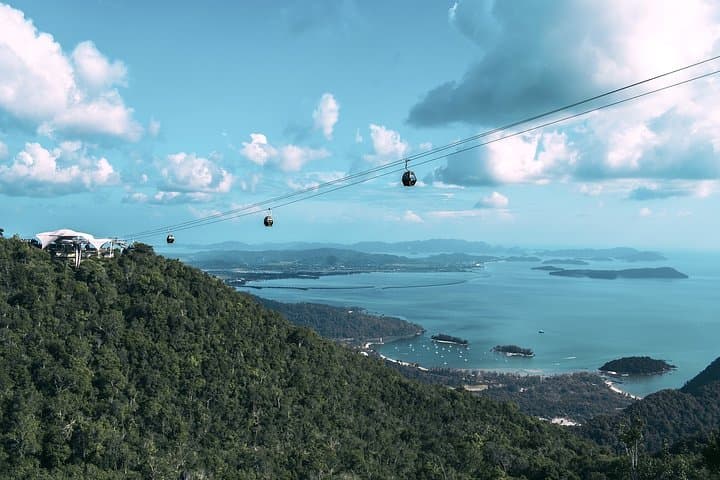
You step out of the humid lowland haze into a pocket of curated calm: Oriental Village’s open-air plaza hums with slow-moving tourists, shophouse vendors and the impatient squeak of cable machinery. Then the line thins, and the world tips. The SkyCab’s glass-sided cabin lifts you away from the island’s duty-free bustle, glass underfoot becoming a moving window into a green you can almost hear: the rainforest breathes, vines coil like rope ladders, and distant beaches recede into turquoise bands. Fifteen minutes later, you find yourself high on the ridgeline of Gunung Mat Cincang, where wind has a different language — sharper, salt-sweet, and clarifying.
This is a day that arranges Langkawi’s geology, culture and moist equatorial choreography into an accessible arc. The cable car is the obvious draw — a short, gravity-defying ascent from Oriental Village to ridge-top viewpoints and the famed SkyBridge — but the full experience folds in the island’s oldest rocks, a walk through surprisingly raw rainforest and a stroll to a waterfall whose stepped pools invite slow wading. On a clear day the panorama reads like a topographical postcard: peppered islets, ribbon beaches, and inland folds of karst-draped jungle. Langkawi itself is part of the Langkawi UNESCO Global Geopark, where the Machinchang Formation records some of Southeast Asia’s oldest bedrock — millennia of movement visible as gullies, cliffs and collapsed sinkholes.
The cultural layer here is practical rather than performative. You’ll notice Malay fishing boats tied up in bays and signboards in both Malay and English; the island’s economy is unmistakably tour-focused, built around duty-free shopping and hospitality. Food is immediate and local: grills and warungs near Pantai Cenang, small stalls selling laksa and fresh ikan bakar (grilled fish), and a chance to linger over kopi before you jump on the cable car. Travelers often pair the aerial thrill with a short trek to Telaga Tujuh (Seven Wells) — a cascade of pools carved into the rock — where the rainforest’s humidity becomes a deliberate part of the plan, not something to escape.
Practical realities matter here. The standard excursion lasts about four hours, which gives you enough time for the cable car round-trip, the SkyBridge and a guided walk to the waterfall and viewpoint. The cable car rise carries you roughly 650–700 meters up the ridge to the upper station on Gunung Mat Cincang; the trip itself takes 10–20 minutes depending on boarding. Terrain varies from paved plaza surfaces and boardwalks at the Oriental Village to steeper, stone staircases and muddy rainforest trails around the waterfall. When wet, the stone around Telaga Tujuh turns slippery — good footwear and a steady pace are non-negotiable.
Why do this rather than just snapping a photo from the base? The cable car converts a passive view into a paced exploration. Up top, the SkyBridge gives a vertigo-tinged, 360-degree frame for photographing limestone cliffs and the mottled sea beyond. Down below, the waterfall and its pools let you touch the rainforest’s hydraulic system: water daring you into cool, shallow hollows, leaves flicking micro-rain onto your shoulders. It’s multi-sensory and modular — you can spend an hour on the ridge, or three, depending on how much you want to hike, wade or simply sit with the wind.
Timing is tactical. The drier months (December–April) offer clearer vistas and safer trails, while the monsoon-prone months bring heavier showers and the rainforest at its most dramatic — but also at its slipperiest. Early morning or late afternoon light is best for photos and fewer crowds; mid-day can be humid and busy. Guided private tours (this product is offered as a private tour) add ease: skip-the-lines, a local driver-guide to point out lesser-known bays and ensure you have the time to savor both SkyCab and waterfall without rushing.
For travel planning: expect about 3–4 hours on-site; budget roughly $93 per person as an entry point for private, guided options; bring cash for small food stalls; and leave time afterward to explore Pantai Cenang or Kuah town. Cell service is generally available in lowland areas and at the base but can be patchy on the ridge. Respect the wildlife — macaques are bold and opportunistic, and feeding them creates problems for both people and primates.
The Langkawi Cable Car and Waterfall Adventure is a tidy package for travelers who want an accessible mix of sky and forest. It’s an easy day that still feels like earned discovery: you climb, you stand above the canopy, you descend into the hush of the falls. It’s an island story, told fast and well — old rock, new perspective, and a few solid pools to cool down in afterward.
Trail wisdom
Small choices, better day.
Start early
Arrive for the first cabins to avoid crowds and harsh midday heat; morning light is best for views and photos.
Grip-friendly footwear
Trail sections and pool edges are slick when wet — sturdy trekking shoes or grippy trail runners make the waterfall approach safer.
Bring cash for local stalls
Small vendors and warungs around Oriental Village and Pantai Cenang may be cash-preferred for snacks and souvenirs.
Don’t feed the macaques
Feeding wildlife creates dependency and increases aggressive encounters; keep food stored and out of sight.
Local knowledge
Read the place, not just the route.
Watch for native species including Long-tailed macaque, Monitor lizard.
Keep an eye out for wildlife during the transition between areas and habitats. Respect distance guidelines.
Stick to designated paths, avoid feeding wildlife, and pack out all non-biodegradable waste; these steps protect fragile karst and rainforest ecosystems.
Follow the guide's instructions on size limits, ethical handling, and leave-no-trace practices.
Walk the less-trafficked paths near the upper station for quiet cliff-side views. Visit the small fishing village at Pantai Kok for late-afternoon seafood stalls
Locally recommended viewpoints and quiet spots known best to local operators.
Langkawi’s ridgelines expose rocks of the Machinchang Formation — some of the oldest sedimentary rocks in Southeast Asia — and the island is part of the Langkawi UNESCO Global Geopark.
Maritime roots and regional tradition shape the waterways and working coasts.
Seasonal guide
Four versions of the same landscape.
Spring
Best forclear views · cooler mornings
Challengesunpredictable showers · occasional haze
Spring (March–May) on Langkawi can be pleasantly clear with cooler mornings, though short tropical showers are possible.
Summer
Best forvivid green rainforest · livelier waterfalls
Challengeshigh humidity · heavier afternoon rains
Summer brings lush vegetation and full cascades; plan around midday storms and wear quick-dry clothing.
Fall
Best forfewer tourists · stable seas for island views
Challengesincreasing rain later in season
Fall offers quieter trails and dramatic skies, but watch for heavier rains toward the end of the season.
Winter
Best forbest visibility · lower rainfall
Challengesslightly busier with travelers
Winter (December–February) is the island’s drier season — ideal for panoramic views and safe trail conditions.
Operator details
What the booking data adds.
Included
- ✓- Cable car ticket.
- ✓Air-conditioned vehicle
- ✓- English-speaking Guide.
Not included
- —- Food and drinks.
- —- Gratuities (optional)
Good to know
- ✓Suitable for all physical fitness levels
Pack with intention
What to bring.
Good to know
Common questions.
The ascent from Oriental Village to the upper station typically takes 10–20 minutes depending on stops and boarding times.
Plan the edges
The details that make the day easier.
Langkawi was designated a UNESCO Global Geopark—one of the first in Southeast Asia—recognizing its ancient rock formations and geological significance.
Finish your day in Pantai Cenang: try grilled fish (ikan bakar) or a laksa bowl at a local warung, then sample duty-free chocolate or a cold beer at a beachfront bar — the island’s casual food scene pairs well with sunset views.
- Closest airport
- Langkawi International Airport (LGK); Nearest trailhead: Oriental Village
- Telaga Harbour (Pantai Kok); Driving time from Kuah
- ~25–30 minutes (~18 km); Cell service: generally good in lowlands, patchy on ridge; Tickets
- permits
- cable car and SkyBridge may require admission — check operator or prebook tours.
This area is part of a geopark and sensitive karst landscape—stay on trails, pack out trash, and never feed wildlife to minimize human impact.
Explore by topic
Follow the threads.
Keep exploring
Make the story part of the trip.
Set out from Bass Harbor for a private, customizable day on Blue Hill Bay — lighthouses, puffins, seals, and the chance to feel Acadia from the water. Small groups, local captains, unforgettable views.
In four hours you can move from shaded canyon ferns to wind-scoured coastal ridgelines, guided by someone who knows where the light—and the hidden views—live. This private half-day hike on the Monterey Peninsula or Big Sur is compact, curated, and perfect for travelers who want depth without a multiday commitment.
 Related story
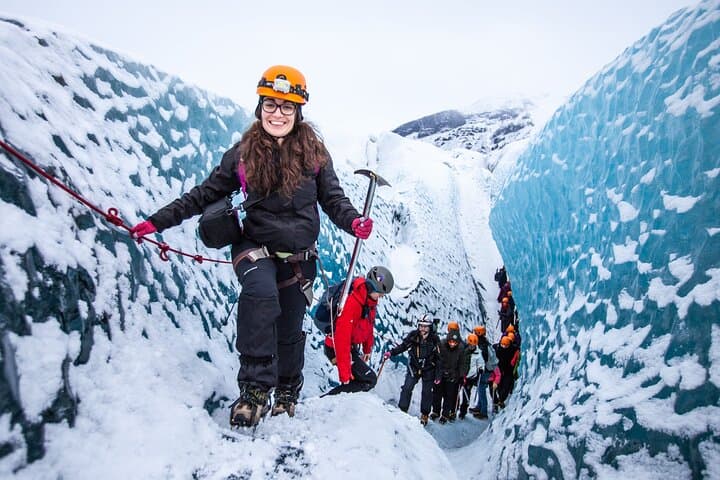
Beneath a sky of shifting light, Skaftafell’s ice reads like a map of time. This three-hour guided glacier hike mixes technical instruction with geology and culture: compact, safe, and unforgettable.