
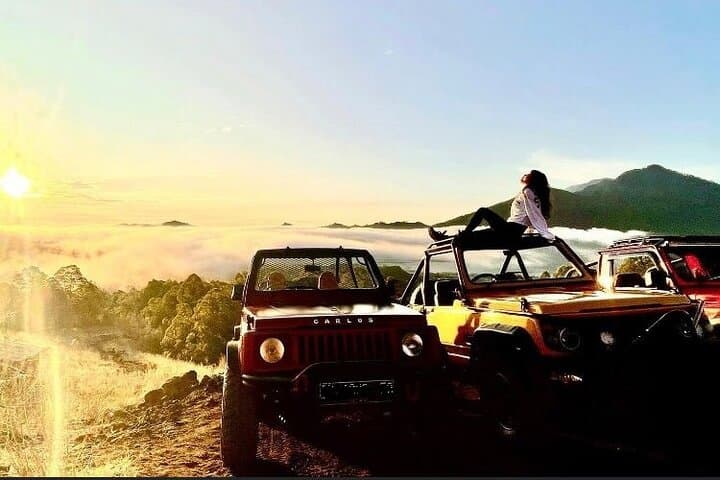
What the day feels like
By 3:15 a.m., the Jeep’s engine mutters awake like a distant animal and the driver’s silhouette is a simple geometry against a sky that’s still mostly night. The road from Ubud unwinds in tight hairpins and coffee-scented darkness, and the Jeep climbs through pockets of villages where lights blink off one by one. When the vehicle pauses at the high edge of Batur’s rim, you step out to a wind that feels deliberately sharp — the volcano’s breath. Mount Batur doesn’t rush you; it stages the sunrise as if testing your patience, then rewards it with a slow column of light that rolls down the caldera and catches on obsidian-slick lava fields like a hand stroking cold glass.
This is not a summit scramble. The point of a sunrise Jeep tour is proximity without the climb: a private vehicle deposits you at carefully chosen vantage points where the caldera, Lake Batur, and the dark skin of black lava are suddenly within arm’s reach. The contrast between the pastel sky and the black basalt is what photographers and day-trippers covet; for others, it’s the rare chance to feel the geology of the island underfoot without a multi-mile ascent.
Geology here speaks in broad strokes: Mount Batur sits inside a 13-by-10-kilometer caldera carved by massive eruptions in Bali’s volcanic past. The active cone that rises in the center is layered with flows of basalt and andesite; when cooled, those flows create the black lava fans you’ll see spreading like ink across the slopes. Locals have farmed the volcanic soils for centuries—terraced plots of vegetables and coffee hug the caldera rim, and early-morning silhouettes of farmers add a human scale to the volcanic landscape.
Culturally, Batur sits at a crossroads of reverence and routine. Balinese Hindu temples dot the rim; offerings appear at shrines, left by people who believe the mountain houses powerful spirits. That sense of respect threads through the tour: guides are typically local and often blend geology, myth, and practical knowledge into the ride. They’ll show you where lava last flowed visibly and point out the thin line where the land drops into Lake Batur—the lake that collects both the rain and the history of eruptions.
Why take a Jeep rather than hike? The practical answer is accessibility. Not everyone has the knees, acclimatization, or time for a 2–3 hour pre-dawn trek up loose volcanic scree. The Jeep option is private, quick, and still delivers the visceral parts of the experience: the cold, the sky, and the lava. For photographers it’s a masterstroke—set-up time is minimal, and the vehicle acts as a mobile blind to block wind when needed.
Practicalities: this private tour runs roughly 6–8 hours door-to-door (expect early pickup from hotels in Ubud, Jimbaran or Kuta), and is priced from about $89.75 per person with instant confirmation and free cancellation options on many bookings. Bring a small daypack, a warm layer (pre-dawn at altitude is crisp), and a headlamp for the walk from vehicle to viewpoint. Footwear should be sturdy — not full mountaineering boots, but shoes with decent tread; some black lava fields are uneven and can be slippery with loose gravel.
Timing matters. The best hour is the 30 minutes just before and after sunrise when light scours the landscape. On clear mornings the sightlines go all the way to the rim of the caldera and across Lake Batur; when clouds sit low they push against you like a cool tide, sometimes blanketing the lake in fog and making the black lava stand out even more dramatically.
Safety and environmental sense go hand-in-hand. Mount Batur is active and monitored; reputable tour operators keep an eye on advisories and will adjust plans if there’s volcanic activity. On the environmental side, stick to paths and avoid touching fragile black glassy rock where lichens are reestablishing life. Support local guides and warungs—these tours provide income for communities around the caldera and for the farmers whose terraces paint the rim.
After-sunrise options make the half-day feel generous: many operators include a stop at local coffee plantations to try kopi luwak or robust Balinese blends, or a visit to hot springs near Lake Batur for a soak that feels earned after an early wake-up. If you’re traveling as a private group, the flexibility is one of the tour’s appeals: linger for another photo stop, visit a temple, or head back to town for breakfast in Ubud.
Who should do this? Travelers who want a high-impact sunrise experience without the physical demands of a pre-dawn hike, photographers hunting clear light and volcanic textures, families or older travelers seeking access, and anyone who values a private, flexible itinerary. It’s not an expedition; it’s an accessible encounter with one of Bali’s primal landscapes.
Final note: a sunrise on a volcano has the peculiar quality of making time feel both very long and very brief. For an hour you watch colors negotiate with shadows, and then the Jeep eases down the rim and you’re back in village light, sipping coffee and reorienting to ordinary time. That aftertaste—the memory of black lava against morning light—stays with you in a way longer routes sometimes don’t. It’s an efficient, memorable slice of Bali: geological theater presented with local context, and a practical choice for travelers who want intensity and ease in the same morning.
Trail wisdom
Small choices, better day.
Dress in Layers
Pre-dawn temperatures at the rim can be cold; pack a warm jacket and a windproof layer you can shed after sunrise.
Bring a Headlamp
You’ll walk from vehicle to viewpoint in low light—headlamps keep your hands free and footing sure.
Small Sturdy Shoes
Choose shoes with good traction—the black lava fields are uneven and sometimes loose underfoot.
Respect Local Shrines
Temples and offerings sit near viewpoints—observe, don’t disturb, and ask your guide if unsure.
Local knowledge
Read the place, not just the route.
Watch for native species including Long-tailed macaque, Various tropical birds (kingfishers, sunbirds).
Keep an eye out for wildlife during the transition between areas and habitats. Respect distance guidelines.
Stay on established routes to protect fragile soils and lichens on lava rock; choose local guides to direct tourism benefits back into the community.
Follow the guide's instructions on size limits, ethical handling, and leave-no-trace practices.
Toya Devasya Hot Springs on the shores of Lake Batur—great for a post-sunrise soak. Small coffee plantations near Kintamani offering guided tastings and farm tours
Locally recommended viewpoints and quiet spots known best to local operators.
Mount Batur sits inside a large volcanic caldera and has supported local agriculture and Balinese temple traditions for centuries, with villages carved into the rim.
Maritime roots and regional tradition shape the waterways and working coasts.
Seasonal guide
Four versions of the same landscape.
Spring
Best forFewer crowds · Transitional clear mornings
ChallengesPossible early wet spells · Variable visibility
Spring (Mar–May) is a transition toward the dry season—mornings can be clear but sudden showers still occur.
Summer
Best forClear panoramic views · Photography · Hot-spring visits afterwards
ChallengesHigher tourist numbers · Early pickups fill quickly
Summer (Jun–Aug) is typically the driest and clearest time—ideal for sunrise visibility and photography.
Fall
Best forLate dry-season clarity · Less humidity
ChallengesStart of wet season late in season · Unpredictable cloud cover
Fall (Sep–Nov) can offer great light early on, but rain becomes more likely toward November.
Winter
Best forLush post-rain landscapes · Lower light glare
ChallengesHigher chance of heavy rain · Roads may be wet and muddy
Winter (Dec–Feb) is wetter; tours run but expect lower visibility and wetter conditions.
Operator details
What the booking data adds.
Included
- ✓Entrance ticket and mineral bottle water
- ✓Sunrise Jeep Tour and driver
- ✓Hotel Pick up and Drop off
- ✓English Speaking driver/guide
Not included
- —Gratuity
Good to know
- ✓Not recommended for travelers with spinal injuries
- ✓Not recommended for pregnant travelers
- ✓Not recommended for travelers with poor cardiovascular health
- ✓Travelers should have at least a moderate level of physical fitness
- ✓Total Duration includes travel time from one place to another
- ✓Not recommend for travelers with epilepsy or heart attack history
Pack with intention
What to bring.
Good to know
Common questions.
No—this tour uses a Jeep to reach viewpoints. You should be able to step in/out of a vehicle and walk short, uneven distances (5–15 minutes) to photo spots.
Plan the edges
The details that make the day easier.
Mount Batur is one of Bali’s two active volcanoes and sits within a large caldera that contains Lake Batur—local agriculture has benefited from the fertile volcanic soils for generations.
After the sunrise, linger for kopi luwak or Balinese coffee at a nearby plantation, or head to a local warung in Kintamani for nasi campur and fresh mountain vegetables; consider a soak at Toya Devasya hot springs to warm up.
- Closest airport
- Ngurah Rai International Airport (DPS); Typical meeting
- pickup
- Ubud
- Jimbaran hotels; Driving
- 1–2 hours from southern Bali; Cell service: Variable on the rim—expect spotty reception; Permits: No special permits required though regional entrance fees or parking charges may apply.
Support local guides and businesses, stick to designated viewpoints to protect fragile volcanic soils, and take out any trash—you’re visiting a culturally sacred landscape.
Explore by topic
Follow the threads.
Keep exploring
Make the story part of the trip.
In four hours you can move from shaded canyon ferns to wind-scoured coastal ridgelines, guided by someone who knows where the light—and the hidden views—live. This private half-day hike on the Monterey Peninsula or Big Sur is compact, curated, and perfect for travelers who want depth without a multiday commitment.
 Related story
Beneath a sky of shifting light, Skaftafell’s ice reads like a map of time. This three-hour guided glacier hike mixes technical instruction with geology and culture: compact, safe, and unforgettable.
 Related story
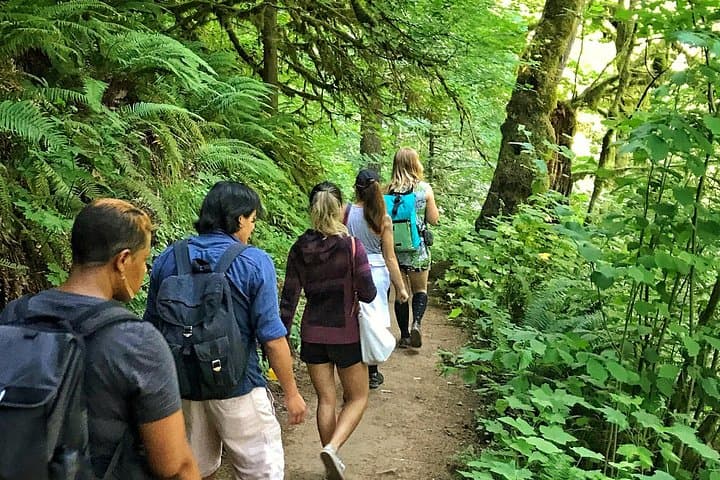
Lose the city for a few hours without leaving it: this 5-mile, 900-foot-gain Forest Park loop threads old-growth pockets, city viewpoints, and cultural landmarks for a compact taste of Portland’s wild side. Expect moss, roots, and stories.