
What the day feels like
It begins with a small, charged hush. You’re bundled into a minibus that hums through Tromsø’s sodium-glow streets, and then the city’s light recedes—paneled houses and neon signs shrinking behind a curtain of pines. The road opens to a ribbed terrain of snow and black spruce. Above, the Arctic sky is an inky canvas that feels almost close enough to touch. When the first shy curl of green unfurls, it’s less an image and more a promise: the aurora is alive, moving with an intentionality that makes you feel watched in the best way.
This is the rhythm of a Tromsø Northern Lights hunt. It’s not a single moment so much as a sequence—travel, stop, listen, wait, photograph, and warm up at a small fire with hot drink in hand. On a well-run small-group tour (max 16 people), that sequence is orchestrated with local expertise: the guide reads cloud cover and solar chatter, finds dark pockets away from light pollution, and picks walkable viewpoints where a short snow hike will lead to private stretches of sky. You don’t simply see the aurora; you move with it.
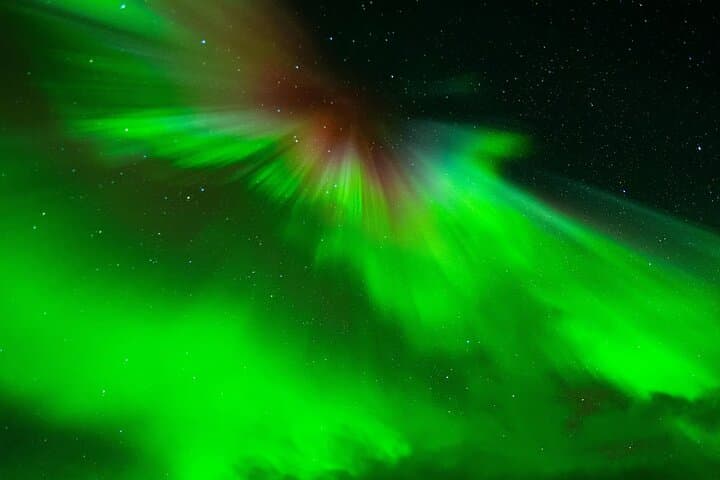
Tromsø sits at the edge of the auroral oval, a belt of activity encircling Earth’s magnetic poles. Geologically, you’re under a sky shaped by charged particles thrown off the sun—plasma streaming along magnetic lines to ignite oxygen and nitrogen in the upper atmosphere. The coastline and fjords below act as a framing device; the reflections in still water can double the light show, making for postcard-perfect shots when conditions align.
The city itself is small but storied. For two centuries Tromsø was a gateway to Arctic hunting, whaling, and polar expeditions—a place where Norwegian and Sámi traditions intersect. That cultural mixture shows up on any winter night: lights guided by centuries of sky watching, locals who can read the weather like a map, and a cuisine that leans on fresh fish, reindeer, and rich broths—comfort food after a long night outside.
What the tour offers is practical magic. Rides last depending on conditions—typically 3 to 6 hours. Guides monitor the weather in real time and relocate to maximize clear skies and minimal light interference. When the sky clears, expect a brief guided snow hike to a secluded viewpoint: think 10–30 minutes of purposeful walking on packed snow to reach a spot where the northern horizon is unobstructed. If the aurora peaks, guides fire up a small campfire—more for comfort than spectacle—hand out warm beverages, and photograph guests or provide tips for getting that one long-exposure image.
Travelers who favor intimate experiences benefit from the small-group cap. There’s enough room for storytelling and photography coaching—the guides often share high-resolution images after the tour so you can relive the show without hauling extra gear home. Safety is prioritized: routes are chosen for accessibility, and stops are short and deliberate to reduce exposure to cold.
Timing matters. Peak aurora season in Tromsø runs from September through April, with the long polar nights of December–February offering extended dark hours. For crisp skies and fewer storms, many choose February–March. But auroras are fickle; the right mix of solar activity and clear weather can happen any night in those months. If your trip is weather-dependent, book multiple nights in Tromsø to improve odds.
Practical preparation separates a memorable night from a miserable one. Layering is essential: base layers that wick, an insulating mid-layer, and a windproof, insulated shell. Traction—spiked microspikes or sturdy winter boots—makes the short hikes easier. Bring a tripod if you want clean long exposures; if not, rely on the guides’ photo services and coaching. Hydration and calories matter: warm drinks and snacks are provided, but you’ll appreciate a hearty meal beforehand.
For the photographer, this trip is a study in patient technique: wide-angle lens, f/2.8 or faster if you have it, ISO settings in the range of 800–3200 depending on aurora intensity, and shutter speeds from 3 to 15 seconds. A firm tripod and a remote shutter keep images sharp. Guides can help dial these settings in real time.
This is not a wilderness survival test; it’s a guided, accessible encounter with an elemental phenomenon. Still, wind can shave body heat, and nights are long—expect to be outside for stretches. Local guides are respectful of Sámi lands and local private properties; stay on designated routes and follow instructions about where to stop.
Why go? Because the aurora is equal parts science and theater: an atmospheric reaction with choreography. In Tromsø you have a high probability of witnessing it, plus the comfort of small-group logistics, the practical thrill of a short snow hike, and a story to tell that hinges on sky and weather rather than technology. It’s an experience that rewards preparation: layer well, go hungry for the spectacle, and be willing to sit quietly when the sky decides to perform.
If you go, linger in Tromsø for a day. Walk the harbor, taste local smoked fish, and talk to people who’ve chased the lights for years. The Northern Lights hunt is a single evening, but it’s best understood as part of a larger Arctic rhythm—one where nights are long, weather is sovereign, and the sky is always capable of surprising you.
Trail wisdom
Small choices, better day.
Dress in Layers
Base layer, insulating mid-layer, and windproof outer shell keep you warm during still waits and windy drives.
Bring a Tripod
A stable tripod and remote shutter are essential for clean long-exposure aurora photos.
Book Multiple Nights
Aurora visibility is weather-dependent—reserve two or three nights in Tromsø to increase your chances.
Use Traction on Boots
Microspikes or winter-traction soles make short snow hikes safer and more comfortable.
Local knowledge
Read the place, not just the route.
Watch for native species including Reindeer, Sea eagles.
Keep an eye out for wildlife during the transition between areas and habitats. Respect distance guidelines.
Minimize light pollution and stay on designated paths; local guides follow landowner rules to protect sensitive habitats and reduce disturbance.
Follow the guide's instructions on size limits, ethical handling, and leave-no-trace practices.
Kvaløya viewpoints outside Tromsø for fjord reflections. Small coastal bays where lights reflect in still water
Locally recommended viewpoints and quiet spots known best to local operators.
Tromsø has long been a hub for Arctic exploration and Sámi culture; its position above the Arctic Circle made it a staging ground for polar expeditions in the 19th and 20th centuries.
Maritime roots and regional tradition shape the waterways and working coasts.
Seasonal guide
Four versions of the same landscape.
Spring
Best forLonger daylight for combined day activities · Late-season aurora in early spring nights
ChallengesVariable weather · Thawing snow can be slushy
Late winter into spring (March–April) often offers clearer skies and milder temperatures, but nights are shorter—plan for late-evening tours.
Summer
Best forMidnight sun experiences · Hiking and fjord exploration
ChallengesNo aurora visibility due to continuous daylight · Limited winter-tour availability
Summer in Tromsø is excellent for daytime adventures, but aurora tours are not possible because of the midnight sun.
Fall
Best forEarly aurora season · Fewer tourists than peak winter months
ChallengesUnpredictable weather · Shorter nights than mid-winter
Autumn (September–October) can offer strong geomagnetic activity with early-season auroras, though cloud cover increases the gamble.
Winter
Best forPeak aurora viewing · Snow hikes and Arctic nights
ChallengesVery cold temperatures and shorter daylight hours · Occasional road closures during storms
Winter (November–March) is the optimal aurora season with long nights—dress appropriately and allow flexibility for weather.
Pack with intention
What to bring.
Good to know
Common questions.
Tours run between 3 and 6 hours depending on weather and aurora activity; guides relocate as needed to optimize viewing.
Plan the edges
The details that make the day easier.
Tromsø lies under the auroral oval, giving it one of the highest probabilities of aurora sightings in mainland Europe—this is a verifiable meteorological advantage used by local tour operators.
After the tour, warm up at a waterfront eatery—sample smoked Arctic char or reindeer stew and try a local craft beer or hot lingonberry juice; Tromsø’s small bars and seafood-centric restaurants capture the flavor of Arctic Norway.
- Closest airport
- Tromsø Airport (TOS); Typical driving distance to viewing spots: 15–60 km from city center; Cell service: intermittent in remote viewing areas; Permits: None required for the commercial tour, but follow guide instructions regarding private land.
Avoid using flash that disturbs wildlife, dress without single-use plastics, and pack out any trash; respect light abatement to protect dark-sky integrity.
Explore by topic
Follow the threads.
Keep exploring
Make the story part of the trip.
Set out from Bass Harbor for a private, customizable day on Blue Hill Bay — lighthouses, puffins, seals, and the chance to feel Acadia from the water. Small groups, local captains, unforgettable views.
In four hours you can move from shaded canyon ferns to wind-scoured coastal ridgelines, guided by someone who knows where the light—and the hidden views—live. This private half-day hike on the Monterey Peninsula or Big Sur is compact, curated, and perfect for travelers who want depth without a multiday commitment.
 Related story
Beneath a sky of shifting light, Skaftafell’s ice reads like a map of time. This three-hour guided glacier hike mixes technical instruction with geology and culture: compact, safe, and unforgettable.