
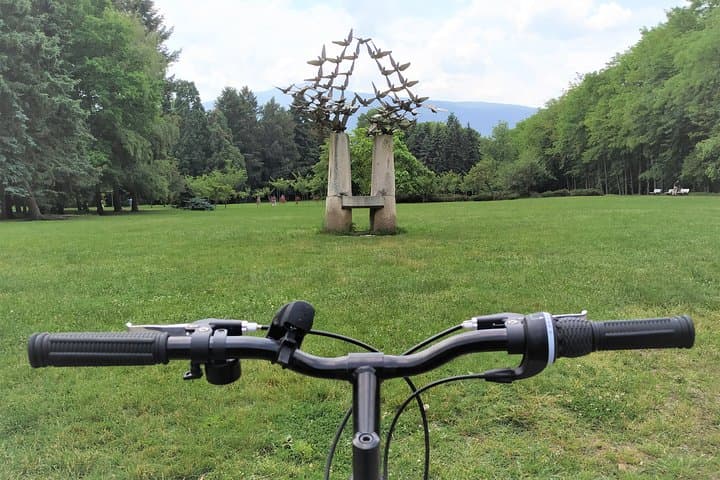
What the day feels like
You push off from the meeting point and the city opens like a pocket map: stately oaks, carved stone façades, and the low, insistent hum of scooters. For two hours the rhythm is simple—pedal, breathe, look—and Sofia’s green lungs take center stage. The ride threads parks, promenades, and quiet boulevard corners where locals walk dogs and older men play chess beneath plane trees. The air smells faintly of coffee and cut grass. The guide nudges the pace when a vista asks for it and slows when a story needs to be told; in a city this layered, both movement and pause are part of the tour’s charm.
This is an urban adventure that feels like an easy escape from guidebook Sofia. Rather than a tour of monuments alone, the route privileges the city’s living spaces: parks with broad paths, shady alleys that reveal modern mosaics, and vantage points that frame Vitosha Mountain as a watchful backdrop. Nature here is not a distant massif but a companion—trees that part to show cathedral domes, a river that dares you to cross it by bridge rather than by memory.
Sofia’s history is embedded in its asphalt and soil. Founded millennia ago at the foot of Vitosha, the city has Roman ruins beneath its boulevards and Ottoman-era baths tucked between socialist-era blocks. The bike ride gives you access to those layers in motion: you coast past neoclassical facades that once housed aristocrats, grind gently up a green incline that earned its name in a different century, and stop at informal food stalls where contemporary Sofia refuels.
Geology plays a quiet role. Vitosha’s granitoid slopes funnel air and weather into the valley; even in the city center you feel that mountain-sourced breeze. Parks are often planted on alluvial terraces and remnants of older river courses—the terrain is forgiving for bikes, with long, smooth paths and a handful of cobbled sections that remind you this is an old place learning to roll with modern wheels.
Culturally, the tour exposes a contemporary Sofia that’s both Bulgarian and cosmopolitan. You’ll pass students with backpacks, artists with paint-smudged fingers, and cafés trading in both strong espresso and local craft beer. Listening is part of the ride: guides often point out how spaces were repurposed after 1989 and how everyday life now folds historic footnotes into streetwear and weekend markets.
Why book this trip? It’s a high-return, low-risk introduction to Sofia: two hours is enough to feel oriented and exhilarated, but short enough to fit before lunch or an afternoon museum visit. For travelers who want activity without committing to a full-day hike, this is a sweet spot—active, social, and easily slotted into a longer Sofia itinerary.
Practicalities that matter: the tour is two hours long, geared toward mixed-ability groups, and runs on city streets and park paths—distance varies by operator route, but expect roughly 8–12 kilometers of riding with modest elevation changes (think rolling rather than steep). Terrain is mostly paved or compacted park paths; a few low-grade slopes and short cobbles keep it interesting. The booking price starts from about USD 69.79, and the operator offers instant confirmation and free cancellation, though tours are often labeled likely to sell out on busy days—reserve early for mornings and late afternoons when light is best.
Safety and comfort are straightforward. A well-fitted helmet, a hybrid or comfort bike with decent tires, and a small pack for water and a wind layer are the essentials. Hydration matters more than you think—Sofia’s continental climate can give sudden sun in the middle of spring or fall. Expect good cellphone coverage throughout the city; if your plan includes a detour toward Vitosha’s lower slopes, signal may thin.
This is not a technical ride—no advanced mountain biking skills required—but you’ll want comfortable shoes, hands that can manage simple gear shifts, and the confidence to ride in slow urban traffic and busier intersections. Guides are usually bilingual and happy to point out shortcuts for those who prefer a gentler pace or to ramp up the tempo for riders who want more mileage.
What you’ll remember: the way the city reveals itself at bike speed—how neighborhoods blur into stages, how a tramline’s clang is a punctuation mark, and how a short climb rewards you with a wide overlook of red roofs and church domes. It’s an accessible adventure that feels intentional: local stories, a little cardio, and the kind of panoramic returns you can’t get from a bus window.
If you’re planning the ride, aim for morning or late afternoon light, bring a camera with a quick-zoom lens, and leave extra time afterward to park your bike at a café and catalog what you’ve just seen. For a short, smart, and scenic way to get under Sofia’s skin, two wheels are hard to beat.
Trail wisdom
Small choices, better day.
Book a morning slot
Morning rides avoid afternoon traffic and provide cooler temperatures and softer light for photos.
Bring a light layer
Temperatures can swing quickly near Vitosha’s foothills—pack a wind shell you can stash in a small daypack.
Check tire pressure
A slightly lower pressure smooths vibrations on cobbles and compacted park paths without risking pinch flats.
Carry local currency
Small vendors and cafés along the route may prefer cash for quick purchases post-ride.
Local knowledge
Read the place, not just the route.
Watch for native species including Urban songbirds (warblers, finches), Squirrels in central parks.
Keep an eye out for wildlife during the transition between areas and habitats. Respect distance guidelines.
Many city parks are actively managed for biodiversity and amenity; stick to marked paths, avoid disturbing planted areas, and pack out all waste to protect urban habitats.
Follow the guide's instructions on size limits, ethical handling, and leave-no-trace practices.
Smaller neighborhood gardens and memorial benches tucked behind main boulevards. Short detour viewpoints that frame Vitosha Mountain against cathedral domes
Locally recommended viewpoints and quiet spots known best to local operators.
Sofia has been inhabited for millennia—archaeological finds indicate settlement continuity dating back more than 7,000 years, making it one of Europe’s oldest cities.
Maritime roots and regional tradition shape the waterways and working coasts.
Seasonal guide
Four versions of the same landscape.
Spring
Best forBlossoming parks · Comfortable temps · Photogenic light
ChallengesOccasional rain showers · Puddles on park trails
Spring is arguably the best time: temperatures are mild, parks bloom, and the route is lush—bring a light rain layer.
Summer
Best forLong daylight hours · Evening rides · Post-ride terrace dining
ChallengesHeat peaks in July and August · Busier tourist crowds
Summer offers long evenings and vibrant street life; plan early starts or sunset slots to avoid the heat.
Fall
Best forCrisp air and colors · Stable weather · Fewer crowds
ChallengesShorter daylight · Cooler mornings
Fall provides crisp, clear days and golden parks—layers are essential for variable mornings and afternoons.
Winter
Best forQuiet city streets · Brisk exercise · Snow-dusted views of Vitosha
ChallengesCold temps, possible snow/ice · Short daylight
Winter rides run on clearer days; expect cold and potential icy patches—confirm availability with the operator.
Operator details
What the booking data adds.
Included
- ✓Bottled water
- ✓Helmet
- ✓Use of bicycle
Good to know
- ✓Public transportation options are available nearby
- ✓Not recommended for pregnant travelers
- ✓Suitable for all physical fitness levels
Pack with intention
What to bring.
Good to know
Common questions.
The standard tour is two hours long and typically covers 8–12 kilometers on mostly paved and compact park paths with modest rolling elevation.
Plan the edges
The details that make the day easier.
Archaeological evidence shows Sofia has been inhabited since at least 7000 BCE, making it one of the oldest continuously occupied cities in Europe.
After the ride, head to Vitosha Boulevard for a café and try local dishes like Shopska salad or banitsa; Sofia’s compact center has lively bakeries and a growing craft beer scene—perfect for post-ride refueling and people-watching.
- Closest airport
- Sofia Airport (SOF) ~10 km from downtown; Meeting point: central Sofia (operator will confirm exact location); Driving distance: short city transfers—most riders reach the meeting point via taxi or public transit; Cell service: reliable in the city, patchy near mountain foothills; Permits: none required for standard urban routes
Respect urban green spaces by staying on paths, disposing of any waste properly, and supporting local businesses; choose operators that maintain bikes regularly to extend gear life and reduce environmental impact.
Explore by topic
Follow the threads.
Keep exploring
Make the story part of the trip.
Set out from Bass Harbor for a private, customizable day on Blue Hill Bay — lighthouses, puffins, seals, and the chance to feel Acadia from the water. Small groups, local captains, unforgettable views.
In four hours you can move from shaded canyon ferns to wind-scoured coastal ridgelines, guided by someone who knows where the light—and the hidden views—live. This private half-day hike on the Monterey Peninsula or Big Sur is compact, curated, and perfect for travelers who want depth without a multiday commitment.
 Related story
Beneath a sky of shifting light, Skaftafell’s ice reads like a map of time. This three-hour guided glacier hike mixes technical instruction with geology and culture: compact, safe, and unforgettable.