
What the day feels like
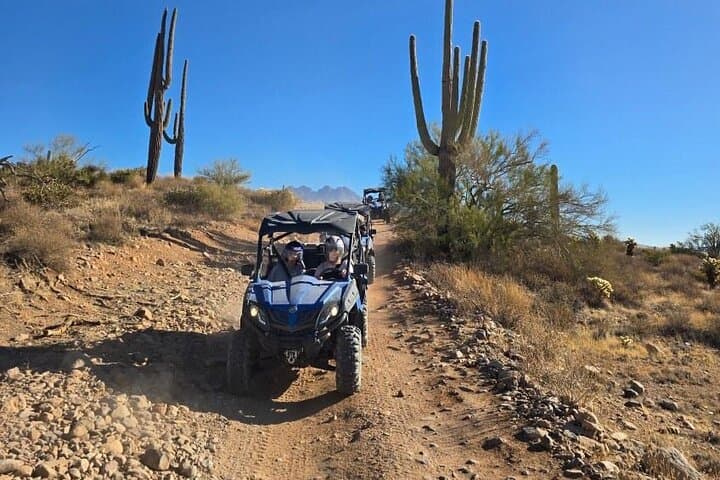
The engine coughs, the guide gives a thumbs-up, and the desert opens like a dry sea. Dust threads the sun into a halo as two of you shoulder into a 2026 Polaris Trail Sport UTV, tires finding purchase on a ridge of volcanic scree before dropping into a wash that dares you to lean in. For 120 minutes you move fast enough to feel the landscape change: from iron-stained rock gardens to pale, sandy bowls dotted with cholla; then the vertical silhouettes of saguaros puncture the sky, guardians of a terrain that only lives this way in the Sonoran.
This isn’t a parade of single-file sightseeing rigs. It’s a grin-a-minute run across technical two-track—twisty canyons, punchy climbs and the occasional gasp-inducing drop—led by guides who know both the machinery and the plants that keep it all in balance. Desert Dog Offroad Adventures supplies helmets, gaiters, water and snacks; you bring the appetite for speed and the curiosity to stop when the guide points out a javelina rooting in a wash or a Gila woodpecker working a saguaro.
The Sonoran Desert’s story is older than the plastic and aluminum beneath you. Geologically, this landscape is the product of basin-and-range faulting—tilted blocks of crust that created long, parallel ranges and broad valley floors where sand accumulates. Over millennia those washes have become the arteries of seasonal life, channeling the brief monsoon storms that feed ephemeral pools and dramatic wildflower blooms. Culturally, these lands were and are home to Indigenous peoples—Hohokam and Tohono O’odham communities who read water and plant cycles and used saguaros for food, tools and ceremony. Even on a motorized tour, you’ll pass places where human and natural histories are tightly braided.
The flora itself is a local star. The saguaro—the iconic columnar cactus—only grows in the Sonoran Desert; its arms take decades to form, and a mature saguaro can live more than a century. Guides pause not just for a photo but to point out nurse plants—creosote and palo verde saplings—beneath which young saguaros find shade and the chance to grow. Fauna is trickier; many animals are crepuscular, so you might only catch a skittering cottontail or the silhouette of a coyote at the edge of light. That scarcity is part of the thrill: the desert rewards attentiveness.
Practically speaking, the trip is beginner-friendly without being tame. Drivers handle a two-seat UTV; passengers swap at the midway stop. That exchange means everyone gets the throttle and the view. Technical sections—rock gardens, narrow ledges—demand respect and a steady hand, but guides tailor the line to skill and comfort. This is not a long-distance endurance push; it’s an intense, contained slice of desert that makes the most of two hours.
Why book it? For starters, proximity: this run is the closest true desert off-road operator to the Phoenix metro area, which means you can leave the city and be in the creosote-scented wind within an hour. It’s a compact, high-reward outdoor workout: you get speed, landscape, sensory variety and desert education in one package. The social element matters, too—tight tandem seating turns the ride into a shared story right away.
How to get the best out of it: go in the shoulder months, when temperatures sit pleasantly for two hours of exposure; hydrate well before you arrive; and wear sturdy, closed-toe shoes—sand and rock will work for your feet more than flip-flops. Sun protection is non-negotiable. Expect to trade yelps of thrill and moments of hush when a landscape detail pulls you up short—an enormous saguaro, the shine of a lizard’s flank, or the thunder of distant monsoon clouds.
Sustainability is woven through the operator’s approach—staying on established tracks, swapping drivers rather than increasing tour numbers, and educating riders about fragile cryptobiotic soils and cactus protection. Your role is simple: stay on the route, don’t disturb plants or animals, and pack out what you bring.
You’ll leave sandy, smiling and maybe a little sunburned, with an appetite that demands a cold beer and a plate of something spicy. That’s part of the arc: city to wild and back, a 120-minute compression of place that makes the Sonoran feel immediate and knowable. If you’re in Phoenix and want to trade pavement for pulse, this is one of the fastest, most efficient ways to collide with the desert and come away with more than a photo—something closer to the feeling of having earned a landscape.
Trail wisdom
Small choices, better day.
Hydrate Before You Arrive
Bring water and sip in the hour before your tour; being well-hydrated reduces heat stress during the ride.
Closed-Toe Shoes Only
Sturdy sneakers or hiking shoes protect toes from sand, rock and the repeated jolt of off-road terrain.
Bring Sunglasses and a Buff
Dust is inevitable—wraparound sunglasses and a face buff cut glare and keep grit out of your mouth.
Swap Drivers Midway
Take advantage of the midway swap to experience both driving and passenger perspectives.
Local knowledge
Read the place, not just the route.
Watch for native species including Coyote, Greater Roadrunner, Javelina.
Keep an eye out for wildlife during the transition between areas and habitats. Respect distance guidelines.
Stay on designated corridors to protect cryptobiotic soils and saguaros; operators emphasize low-impact routes and education about desert fragility.
Follow the guide's instructions on size limits, ethical handling, and leave-no-trace practices.
McDowell Sonoran Preserve ridge viewpoints (Scottsdale). Usery Mountain Regional Park lookouts and quiet washes
Locally recommended viewpoints and quiet spots known best to local operators.
The Sonoran Desert has been inhabited for thousands of years by Hohokam and Tohono O’odham peoples; saguaros feature in cultural stories and traditional uses.
Maritime roots and regional tradition shape the waterways and working coasts.
Seasonal guide
Four versions of the same landscape.
Spring
Best forMild temps · Wildflower displays · Comfortable driving conditions
ChallengesHigher visitor numbers on weekends
Spring (March–May) offers comfortable temperatures and occasional wildflower flushes—ideal for a high-energy two-hour run.
Summer
Best forSparse crowds · Dramatic monsoon skies · Lower booking costs
ChallengesExtreme heat, afternoon storms · Heat-related safety concerns
Summer brings heat and monsoon storms—book early, aim for morning departures, and heed guide warnings about storms.
Fall
Best forCooling temperatures · Golden light for photography · Comfortable evenings
ChallengesVariable temperatures between morning and afternoon
Fall is a comfortable sweet spot: warm days with cooling evenings, making for pleasant driving and post-ride beers.
Winter
Best forCrisp air · Clear skies · Rarely freezing conditions
ChallengesCool mornings may require layers
Winters are mild compared with other regions—expect cool mornings and excellent visibility for long views.
Operator details
What the booking data adds.
Included
- ✓Bottled water
- ✓Photos
- ✓Gators
- ✓Snacks
- ✓Fuel
- ✓Professional Guide
- ✓ATV Sand Buggy
- ✓helmets
Not included
- —Tips are not included. Please tip your guides.
Good to know
- ✓Not recommended for travelers with spinal injuries
- ✓Not recommended for travelers with poor cardiovascular health
- ✓Not recommended for pregnant travelers
- ✓Travelers should have at least a moderate level of physical fitness
- ✓Transportation can be arranged for an additional fee. Uber and Lyft are not recommended. Call for details.
- ✓Must have valid Drivers License to drive.
- ✓Weight restrictions per buggy is 400 pounds
- ✓Tour runs rain or shine
Pack with intention
What to bring.
Good to know
Common questions.
No—basic driving skills are helpful, but guides lead the line and tailor technical sections to driver experience; passengers require no driving skills.
Plan the edges
The details that make the day easier.
The saguaro cactus only grows in the Sonoran Desert and can live 150–200 years, reaching heights of 40–60 feet—its range does not extend into other North American deserts.
Post-ride, head back to Phoenix or nearby Scottsdale for wood-fired pizza at Pizzeria Bianco, craft beer at Four Peaks Brewing or Sonoran-style tacos and a cold drink at Barrio Café—a quick way to swap dust for local flavor.
- Closest airport
- Phoenix Sky Harbor (PHX). Typical drive time from downtown Phoenix: 30–60 minutes depending on staging location. Cell service: spotty in washes and canyons. Permits
- passes
- none required for guests; operator provides helmets and safety briefings.
This area’s vegetation and cryptobiotic soils are fragile—stay on the marked route, pack out trash, and avoid touching or leaning on saguaros.
Explore by topic
Follow the threads.
Keep exploring
Make the story part of the trip.
Set out from Bass Harbor for a private, customizable day on Blue Hill Bay — lighthouses, puffins, seals, and the chance to feel Acadia from the water. Small groups, local captains, unforgettable views.
In four hours you can move from shaded canyon ferns to wind-scoured coastal ridgelines, guided by someone who knows where the light—and the hidden views—live. This private half-day hike on the Monterey Peninsula or Big Sur is compact, curated, and perfect for travelers who want depth without a multiday commitment.
 Related story
Beneath a sky of shifting light, Skaftafell’s ice reads like a map of time. This three-hour guided glacier hike mixes technical instruction with geology and culture: compact, safe, and unforgettable.