
What the day feels like
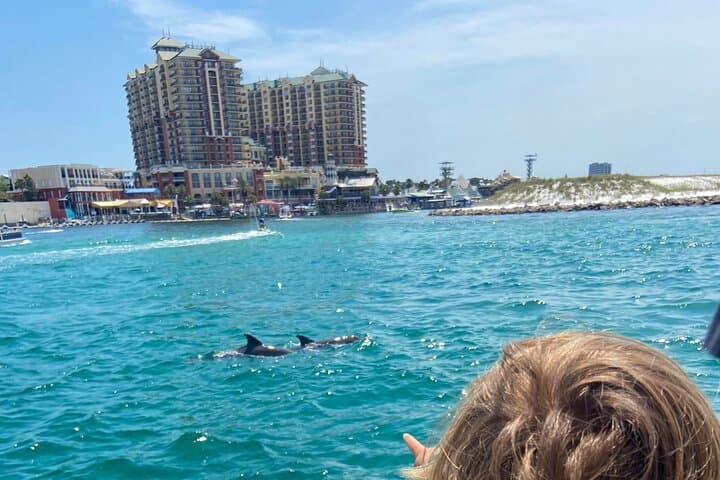
You step onto the 45-foot catamaran and the harbor breathes around you: boats rock in slow rhythm, gulls puncture the air, and the salt-smell sharpens like focus. The captain slips the lines, and the shoreline loosens its hold—Emerald Coast water unfurls in a wide, cool sheet. For two hours the ocean seems to dare you to look away, and if you do, a flat gray fin or a spray of silver will remind you why you came.
This is not a rugged expedition; it’s a concentrated, immensely satisfying encounter with the Gulf’s coastal wildlife. The tour leaves from Destin Harbor aboard a brand-new catamaran with an experienced captain and a deckhand whose job is equal parts hospitality and naturalist. Bottlenose dolphins are the headline act—playful, curious, and often eager to ride the bow wake—but the Gulf stages supporting roles, too: loggerhead sea turtles breaking the surface, manatees in quieter channels, occasional nurse sharks circling like punctuation.
What makes a two-hour cruise feel like a small ritual is its economy: compact logistics, intentional pacing, and plenty of open view. The boat’s low wake and wide deck encourage conversation and quiet observation alike. You’ll learn the captain’s shorthand for reading water: the subtle ripple that hints at a pod, the way seabirds cluster over baitfish. Natural features have agency here—the current nudges, the wind organizes, the dolphins decide when to show off—and you learn to read those cues as part of the trip.
Destin’s maritime identity reaches back to its founding by Leonard Destin in the mid-19th century. A fisherman from Maine, Destin saw opportunity in the deep sandy channels and abundant fish, naming the place and setting a pattern: this coast lives by the sea. Today the harbor is a lively mix of commercial fishing, pleasure craft, and tour operators. Geologically, the Emerald Coast owes its name to the combination of quartz sand and shallow continental shelf that scatters light into those jewel tones—the water’s green you see from the boat is as much an optical phenomenon as it is an invitation.
Culture here is informal and culinary. The boat docks near HarborWalk Village, where wood decks, live music, and seafood smoke cohere into a post-cruise scene. Locals will tell you that the town’s heartbeat is measured in tides and tides in fish counts; tour operators—many family-owned—pride themselves on respectful viewing, safe practices, and telling the stories of the sea.
Practical facts matter on a short marine outing. The tour runs two hours aboard a 45' catamaran. It’s rated highly across Gulf Coast operators and priced from $38, with instant confirmation and free cancellation—handy if the weather shifts. Expect a small group atmosphere; crews typically provide bottled water and an orientation about behavior around wildlife. Once offshore, cell service can dip, so treat the trip as a chance to tune out and let the coast set the pace.
Timing is everything. Early morning often yields softer light and calmer seas, while late afternoon brings long shadows and energetic dolphin activity. The best viewing is as much about patience as it is about speed: dolphins travel, rest, and feed in predictable patterns, and your captain will follow the cues. If you’re prone to motion sickness, pick a seat mid-ship or take preventive measures—two hours can be enough to ruin a day if you’re uncomfortable.
Bring sun protection, a lightweight wind layer, and a camera with a decent zoom. A polarizing filter makes water surfaces pop and cuts glare; keep a medium telephoto ready for close action. Respect the wildlife guidelines: no feeding, no chasing, and no sudden propeller work near animals. The operators I rode with are careful about approach distance and will brief you on local regulations.
This is a family-friendly outing that manages to feel intimate without being claustrophobic. It’s ideal for travelers who want a reliable wildlife encounter without committing a full day to a boat. For photographers and casual naturalists, the trip packs a lot of visual reward into a small slice of time. For the curious, the deckhand’s Q&A and the captain’s navigation stories add context—about fish migrations, local restoration efforts, and the rhythms of coastal life.
How to make the most of it: book a morning or late-afternoon slot to avoid the sun at its peak; bring a small dry bag for valuables; ask your crew about seasonal highlights—spring runs, summer calves, fall feeding corridors. If you plan to pair the cruise with other activities, leave a relaxed hour between the boat and dinner so you can rinse off, check photos, and stroll the HarborWalk.
The tour is accessible, low-effort, and surprisingly resonant. You’ll return to the dock having seen more than you expected: not only animals, but the way people and place shape each other. The boat slips into the harbor like a book closing—small, satisfied conversation blooms, someone points to a distant sandbar, and the water continues its endless negotiation with the shore. Two hours on the Emerald Coast can teach you how to watch and when to wait; it will also make you hungry for locally fried fish and a porch seat, which is precisely the plan.
If you want a brisk, well-run window into Gulf marine life with an easy logistics footprint, this guided dolphin tour gives you that and more—an organized, educational, and genuinely beautiful two-hour conversation with the sea.
Trail wisdom
Small choices, better day.
Book morning or late-afternoon
Dolphins are often more active and light is kinder for photos at these times; midday can be windy and bright.
Bring sun protection
Apply reef-safe sunscreen and bring a wide-brim hat—there's little shade on deck.
Seat mid-ship for stability
If you’re prone to seasickness, choose a central seat and look at the horizon to reduce motion.
Listen to the crew
Captains and deckhands know local animal patterns and safety limits—follow their guidance for better sightings and safer viewing.
Local knowledge
Read the place, not just the route.
Watch for native species including Bottlenose Dolphin, Loggerhead Sea Turtle.
Keep an eye out for wildlife during the transition between areas and habitats. Respect distance guidelines.
The area depends on healthy seagrass and fish populations; responsible operators emphasize no-contact viewing, avoiding feeding wildlife, and using reef-safe sunscreen.
Follow the guide's instructions on size limits, ethical handling, and leave-no-trace practices.
Norriego Point sandbars and small tidal pools for birdwatching. Henderson Beach State Park for a short coastal dune walk and quiet shoreline vistas
Locally recommended viewpoints and quiet spots known best to local operators.
Destin began as a mid-19th-century fishing outpost founded by Leonard Destin and retains a strong commercial fishing heritage alongside tourism.
Maritime roots and regional tradition shape the waterways and working coasts.
Seasonal guide
Four versions of the same landscape.
Spring
Best forCalmer seas · Migratory activity
ChallengesUnpredictable showers · Cooler mornings
Spring brings active feeding patterns and comfortable temperatures, but pack a light jacket for cooler mornings and possible rain.
Summer
Best forWarm water · High visibility · Family trips
ChallengesStrong sun · Crowds · Hurricane season risk
Summer is peak season for warm water and steady dolphin presence; expect higher visitor numbers and intense sun—plan accordingly.
Fall
Best forLower crowds · Good light · Calmer winds
ChallengesTransitional weather · Variable water temps
Fall often yields pleasant light and fewer crowds, with dolphins still active as they follow baitfish.
Winter
Best forQuieter tours · Clear cold light
ChallengesCooler air and water spray · Shorter daylight
Winter trips are quieter and can be crisp; dress warmly and expect cooler winds on the water.
Operator details
What the booking data adds.
Included
- ✓Bottled water
Not included
- —On site parking
Good to know
- ✓Infants and small children can ride in a pram or stroller
- ✓Service animals allowed
- ✓Public transportation options are available nearby
- ✓Suitable for all physical fitness levels
Pack with intention
What to bring.
Good to know
Common questions.
Bottlenose dolphins are common in this area and sightings are frequent, but wildlife is never guaranteed; the crew follows local patterns to maximize chances.
Plan the edges
The details that make the day easier.
Destin was founded by a Maine fisherman, Leonard Destin, in 1845 and later became known as the 'World's Luckiest Fishing Village' due to its abundant fisheries.
After the cruise head to HarborWalk Village for waterfront dining—Boshamps offers gulf-to-table seafood and Harbor Docks serves local catches; for a casual post-trip beer try the local breweries along the harbor boardwalk.
- Closest airport
- Destin-Fort Walton Beach Airport (VPS) ~15 miles; Dock
- Trailhead
- Destin Harbor (short drive from central Destin); Driving distance from nearest town: 5–15 minutes from most Destin lodging; Cell service: reliable nearshore, limited further offshore; Permits: none required for passengers.
This region relies on healthy marine ecosystems—use reef-safe sunscreen, pack out all trash, never feed or disturb wildlife, and choose operators who adhere to NOAA wildlife viewing guidelines.
Explore by topic
Follow the threads.
Keep exploring
Make the story part of the trip.
Set out from Bass Harbor for a private, customizable day on Blue Hill Bay — lighthouses, puffins, seals, and the chance to feel Acadia from the water. Small groups, local captains, unforgettable views.
In four hours you can move from shaded canyon ferns to wind-scoured coastal ridgelines, guided by someone who knows where the light—and the hidden views—live. This private half-day hike on the Monterey Peninsula or Big Sur is compact, curated, and perfect for travelers who want depth without a multiday commitment.
 Related story
Beneath a sky of shifting light, Skaftafell’s ice reads like a map of time. This three-hour guided glacier hike mixes technical instruction with geology and culture: compact, safe, and unforgettable.