
What the day feels like
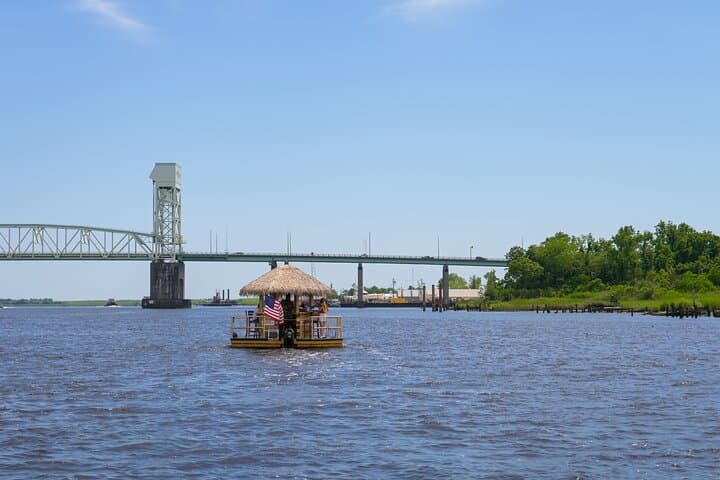
You step onto the Cruisin’ Tiki as the light softens over the Cape Fear—string lights wink on, a Bluetooth playlist hums through the speakers, and the scent of fried seafood and salt air rides the wake. The boat eases away from the cobbled wharves of downtown Wilmington, and the city’s brick facades slide into a ribbon of gold and shadow along the riverbanks. The Cape Fear doesn’t rush; it lounges, occasionally daring you to lean over the rail and see what’s below. For 90 minutes the river becomes a frame: a place that shows you Wilmington at its most sociable—with a tiki bar, party lights, and a steady procession of pelicans and pleasure boats.
This is not a high-adrenaline expedition. It’s a guided, convivial escape—one that balances local history with the simple pleasure of being on water. The Cape Fear River carved a city into being: a trading port for rice and timber, a Civil War artery, and later a shipbuilding hub. The river’s broad estuary collects stories as easily as it collects runoff—ghosts of schooners, wharves turned into galleries and cafes, and the flat, pragmatic architecture of a working port. Gliding past the Battleship North Carolina—a hulking, wind-braced reminder of World War II—you feel the layers of place stacked like sediment.
Geologically, the Cape Fear is a coastal plain river: slow, wide, and shaped by tides. It flows from the piedmont down through the coastal plain to the Atlantic, with sandbars and shifting channels that change with storms and seasons. That slow movement makes for easy cruising: you’re close enough to the shore to see egrets preening on pilings and far enough to get a skyline that includes cranes, church steeples, and the arched sweep of the Cape Fear Memorial Bridge.
Local culture rides this river like a commuter. The Riverwalk—built on reclaimed warehouse wharves—stretches along downtown with restaurants, small galleries, and live music spilling onto the dock on summer evenings. The cruise fits into that rhythm: tourists and locals mingle, beers pass back and forth, and someone inevitably points out a historic building they remember from childhood. The cruise’s tiki-styled vessel and party lighting give it a playful edge: it’s part sightseeing, part floating social hour.
Practicalities matter, even on a laid-back river experience. The Public Downtown Wilmington River Cruise is a 90-minute, public charter aboard the Cruisin’ Tiki, priced from $65 per person with instant confirmation. Boarding happens in central downtown Wilmington—an easy walk from Front Street’s restaurants and most downtown hotels. The route follows a scenic stretch of the Cape Fear that’s good for sunset viewing and for spotting wildlife like bottlenose dolphins and great blue herons.
Timing makes a big difference. Aim for late afternoon or early evening for low, dramatic light; summer evenings bring warm air and longer daylight, while spring evenings are crisp and fragrant with new growth. Bring sun protection for daytime departures and a light layer for the breeze once the boat is moving. If you’re prone to motion sensitivity, note that the river’s motion is usually gentle, but seats near the stern feel it more than those amidships.
The onboard vibe is casual but practical. There’s a tiki bar for drinks and a crew that knows the river. Life jackets are stored on board; follow crew instructions for safety and boarding. The cruise is family-friendly, but keep an eye on children near railings. Photography is straightforward: a wide-angle captures the skyline and river in one frame, and golden-hour light flatters the river’s warm tones.
Why bother with a river cruise when you can walk the Riverwalk? Because the river is a different kind of public space: a moving stage that rearranges the city. From the water, hidden boathouses, working marinas, and the scale of Wilmington’s port register differently. The cruise is also a low-effort way to connect history and coastal nature—no hiking boots required, just a good playlist and a willingness to watch towns pass by.
If you’re planning it: arrive early to snag a good seat, bring a light jacket, and consider pairing the cruise with a meal on Front Street after—fresh shrimp, blue crab, and local oysters are the season’s best. For photographers, the bridge and the Battleship North Carolina make compelling focal points; plan compositions that include reflections of the city for depth.
On a practical note: the cruise runs year-round with variable schedules; check for sunset runs in spring and fall. The river knows weather—if a storm blows in or the river is running high from upstream rains, operators will reschedule for safety. Leave no trace: this isn’t wilderness, but the river’s ecology is fragile—avoid bringing single-use plastics and follow instructions to keep the boat tidy.
A ninety-minute ride on the Cruisin’ Tiki is short enough to be casual and long enough to feel like you’ve taken a proper break from the rhythm of daily life. It’s an accessible reminder that coastal cities are best seen from their waterways—where history, commerce, and wildlife overlap—and that sometimes the best way to understand a place is to let it carry you along for a little while.
Trail wisdom
Small choices, better day.
Pick your seat
Midship seats are the most stable for photos and motion-sensitive riders; stern seats feel the wake more.
Time it for sunset
Late-afternoon departures give the best light and cooler temperatures—check local sunset times.
Bring a light layer
Even warm evenings get breezy on the water—pack a windbreaker or light fleece.
Cash or card for the bar
There’s a tiki bar onboard—bring payment and ID if you plan to drink.
Local knowledge
Read the place, not just the route.
Watch for native species including Bottlenose dolphins, Great blue herons.
Keep an eye out for wildlife during the transition between areas and habitats. Respect distance guidelines.
The Cape Fear supports estuarine habitats—avoid single-use plastics, keep the deck clean, and follow operator guidance to minimize disturbance to wildlife.
Follow the guide's instructions on size limits, ethical handling, and leave-no-trace practices.
Views of the Battleship North Carolina from the river—less crowded than the dockside museum. The converted warehouse galleries and quiet alleys off Front Street—best explored on foot before or after your cruise
Locally recommended viewpoints and quiet spots known best to local operators.
Wilmington grew around the Cape Fear as a major port for rice, timber, and later shipbuilding; the Battleship North Carolina is a nearby WWII landmark.
Maritime roots and regional tradition shape the waterways and working coasts.
Seasonal guide
Four versions of the same landscape.
Spring
Best formild weather · wildlife watching · fewer crowds
Challengesoccasional chilly evenings · early spring rain
Cool, fragrant evenings and good wildlife viewing make spring a pleasant time for cruises—bring a warm layer.
Summer
Best forlong daylight · warm evenings · party atmosphere
Challengesheat and humidity · possible afternoon storms
Summer nights are lively and warm; pick an evening run and expect later sunsets and heavier crowds.
Fall
Best forsunset cruises · comfortable temperatures · clear skies
Challengesshorter days · sporadic storms
Early fall combines crisp air and dramatic light—ideal for photography and comfortable cruising.
Winter
Best forcalmer waterways · off-season rates · clear visibility
Challengeschilly temperatures · fewer daily departures
Winter cruises are quieter with crisp air—bundle up and check the schedule for limited runs.
Operator details
What the booking data adds.
Included
- ✓Cooler and Ice Onboard
- ✓Lifejackets Available on Board
- ✓Bluetooth Speaker
- ✓Free Hawaian Lei
- ✓Captain Onboard
Not included
- —Any Foods
- —Tips and Gratuities
- —Drinks Excluded (BYOB)
Good to know
- ✓Service animals allowed
- ✓Public transportation options are available nearby
- ✓Infants are required to sit on an adult’s lap
- ✓Suitable for all physical fitness levels
Pack with intention
What to bring.
Good to know
Common questions.
Boarding is in downtown Wilmington along the Riverwalk—exact boarding point is provided on your reservation confirmation.
Plan the edges
The details that make the day easier.
The USS North Carolina (BB-55), berthed in Wilmington, is a World War II battleship and a National Historic Landmark open to visitors.
After the cruise, head to Front Street for fresh shrimp and oysters at local seafood spots, grab a pint at a nearby brewery, and linger on the Riverwalk for live music and sunset views—Wilmington’s dining scene pairs well with coastal walks.
- Closest airport
- Wilmington International Airport (ILM); Boarding: Downtown Wilmington Riverwalk; Driving distance from downtown: 0–5 minutes depending on parking; Cell service: Good in downtown; Permits: None required for public cruises.
The Cape Fear estuary supports delicate habitats—pack out trash, avoid single-use plastics, and follow crew guidance to minimize disturbance to wildlife and shoreline vegetation.
Explore by topic
Follow the threads.
Keep exploring
Make the story part of the trip.
 Related story
Less than two hours from Nairobi, Kereita Forest pairs hands-on canopy adventure with quiet montane trails and a sobering colonial history—perfect for families, teams, and curious travelers seeking a full-day pulse of nature.
Set out from Bass Harbor for a private, customizable day on Blue Hill Bay — lighthouses, puffins, seals, and the chance to feel Acadia from the water. Small groups, local captains, unforgettable views.
In four hours you can move from shaded canyon ferns to wind-scoured coastal ridgelines, guided by someone who knows where the light—and the hidden views—live. This private half-day hike on the Monterey Peninsula or Big Sur is compact, curated, and perfect for travelers who want depth without a multiday commitment.