
What the day feels like
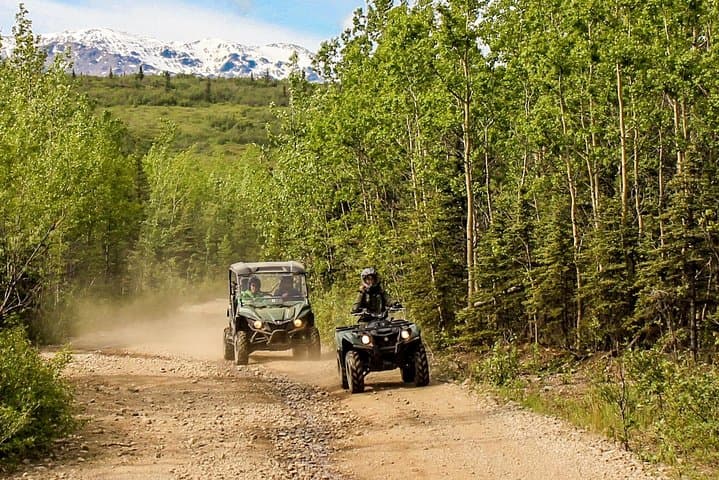
The engine growls, the handlebars vibrate under your palms, and the trail ahead narrows into a ribbon of dust and lodgepole pines. You ease the throttle and the machine answers, sending you into a landscape that behaves like a living thing: the valley exhales a cool sweep of air, the creek dares you to cross, and the distant Alaska Range holds its silent, snow-glazed counsel. This is an Alaska that moves—fast enough to get your pulse up, slow enough to notice the lichen patterns on boulders and the steam of a distant marsh.
The Denali Wilderness ATV Adventure compresses a lot of Alaska into 150 minutes. On automatic single or two-person side-by-side ATVs you follow a guide across trails that thread into the Healy Valley and the margins of Denali National Park. The route is a mix of rocky creek beds, tundra-hard pack, and occasional splash-throughs when weather allows. There are stops for photos at broad overlooks that take in Otto Lake, braided streams, and 360-degree views of the Alaska Range. Guides point out tracks—moose sign is common—and offer a quick primer on reading the landscape, which is a useful shorthand for understanding how glaciers, rivers, and time sculpt these places.
Geology here is plainspoken and dramatic. The Alaska Range is the result of tectonic forces compressing and lifting crust for millions of years, and the valleys below are carved from glacial advance and retreat. You ride across alluvial fans and moraine remnants, places where boulders the size of small cars were once dragged and left by melting ice. That geological undercurrent is one reason the terrain feels so varied: it can go from soft meadow to broken rock in a few minutes, asking the rider to stay alert and to respect the machine.
Culturally, the Healy and Denali region sits at the intersection of Native Alaskan history and modern outdoor tourism. Indigenous people have traveled these lands for millennia, following caribou and seasonal resources, and their knowledge of animal behavior and land stewardship echoes in local parks policy and the ethics guides emphasize—keep distance from wildlife, do not feed animals, and leave no trace. Today the region supports a community built around guiding, lodges, and small hospitality businesses that cater to visitors who come to see Denali’s silhouette or to chase a weather window for wildlife and light.
The experience is immediate and sensory. The scent of spruce, the slap of muddy water under skid plates, a sudden glimpse of a bull moose across a bog—nature moves with agency here. The machines are your translator; they let you go places foot traffic cannot, but that capability comes with responsibility. Guides teach throttle control, line choice, and safe buddy riding. They also manage expectations: you might not get close to large mammals—often you get the better gift of seeing them behave undisturbed at a distance, which is how you should.
Practicality is baked into the trip. The tour runs approximately 2.5 hours, is offered in multiple departure times, and lets participants choose single or two-passenger side-by-side ATVs. Speeds up to 30 mph are possible on straight stretches, though the trail profile and guide discretion will keep velocities reasonable. There’s no extreme climbing, but sections of broken rock, creek crossings, and mud require nimble hands and steady feet for mounting and dismounting. Helmets and basic protective gear are provided by operators; you bring the layers, boots, and curiosity.
For travelers planning this kind of outing, timing matters. Summer days are long and trail conditions are often best, but spring can be marshy and fall brings earlier storms. Wildlife viewing peaks with the season, and if you want clear mountain views, aim for July when chances of clear skies are higher. Physically the tour favors anyone comfortable with moderate outdoor exertion; you do not need technical rock-climbing skills, but you should be able to mount and stand briefly on an ATV, follow instructions, and tolerate jostling over uneven ground.
Safety and conservation are explicit. Guides brief riders on wildlife protocols—how to respond to a moose on the trail, how to avoid startling a bear, and why you should never attempt to approach animals. They also emphasize staying on designated tracks to protect sensitive tundra and riparian zones, where vegetation recovers slowly from disturbance. That balance—access with respect—is the backbone of sustainable motorsport in Alaska.
Why do this trip instead of a walking hike or a bus ride? Because it compresses distance and layers of landscape into a single, visceral experience. You cover more ground than a hike, go places a car can’t, and still move slowly enough to notice light changing on a distant peak or the way a river channels into braided fingers. For photographers it’s a way to reach framing opportunities; for families it’s an accessible thrill; for seasoned outdoorspeople it’s a reminder that mechanized travel and wild places can coexist if one brings restraint and respect.
If you go, plan simply: bring sturdy, closed-toe footwear, a windproof layer, sunglasses or goggles for dust, and your camera with a secure strap. Hydrate before you arrive—the short nature of the tour means you’ll want energy and focus for the whole loop. Expect variable cell service; most of the route is in remote terrain where reception is intermittent. Bookings are instant and flexible, but consider morning or late-day slots for softer light and cooler air.
At the end of the ride you’ll have a new sense of scale—how Denali’s foothills move from tundra to alpine, how water shapes a valley, and how a simple machine can open a big landscape. The adrenaline eases, leaving a clear, practical satisfaction: you saw more of Alaska in less time, and you did it with hands-on learning and a guide who knows how to read both machine and mountain.
Trail wisdom
Small choices, better day.
Bring layered clothing
Alaskan weather changes quickly—windproof outer layers and a warm midlayer will keep you comfortable during stops and wind exposure.
Secure your camera
Use a wrist or chest strap; loose gear can be lost when splashing creek crossings.
Wear closed-toe, waterproof boots
Trails include rocky creek beds and mud; boots with ankle support protect during mounts and dismounts.
Listen to your guide
Follow line-choice, spacing, and wildlife guidance for a safer, more respectful ride.
Local knowledge
Read the place, not just the route.
Watch for native species including Moose, Dall sheep (in higher ridges).
Keep an eye out for wildlife during the transition between areas and habitats. Respect distance guidelines.
Operators emphasize staying on designated routes to protect fragile tundra; regional policies balance recreation and habitat protection with speed and noise restrictions in sensitive zones.
Follow the guide's instructions on size limits, ethical handling, and leave-no-trace practices.
Otto Lake overlook for quiet reflection away from the main road. Short side trails into alder thickets where birdwatching is good in early summer
Locally recommended viewpoints and quiet spots known best to local operators.
The Healy area and Denali environs have been home to Athabaskan peoples for centuries and later became a hub for mining and railroad activity that shaped early settlement patterns.
Maritime roots and regional tradition shape the waterways and working coasts.
Seasonal guide
Four versions of the same landscape.
Spring
Best forFewer crowds · Watching thaw and bird migration
ChallengesMud and wet trails · Variable weather
Spring opens the valley and migratory birds return, but trails can be wet and some crossings deeper than in summer.
Summer
Best forClear mountain views · Best trail conditions · Wildlife viewing
ChallengesBugs in low areas · Higher visitor numbers
Summer offers the most reliable access and long daylight hours—ideal for photography and wildlife sightings.
Fall
Best forAutumn color · Crisp air and quieter trails
ChallengesShorter daylight · Early storms
Fall brings golden tundra and fewer visitors but watch for cooler temperatures and shifting weather.
Winter
Best forSnowmobiling alternatives only · Scenic snow-covered vistas (not part of this ATV tour)
ChallengesATV tour usually not available · Road closures and extreme cold
This ATV experience is a summer-focused activity; winter conditions limit access and require specialized equipment.
Operator details
What the booking data adds.
Included
- ✓Professional guide
- ✓All necessary equipment
- ✓Brand news ATVs each summer
- ✓Hotel pickup and drop-off (select hotels only)
Not included
- —Gratuities
Good to know
- ✓Not recommended for travelers with spinal injuries
- ✓Not recommended for pregnant travelers
- ✓Not recommended for travelers with poor cardiovascular health
- ✓Service animals allowed
- ✓Public transportation options are available nearby
- ✓Suitable for all physical fitness levels
- ✓Must be 16 years of age or older to drive an ATV
- ✓Children must be accompanied by an adult
- ✓You will get muddy and be exposed to the elements, so please dress accordingly
- ✓No ATV experience is necessary
- ✓Operates in all weather conditions; please dress appropriately
- ✓Side by Side ATVs pricing requires double occupancy
Pack with intention
What to bring.
Good to know
Common questions.
No prior ATV experience is required; operators provide a safety briefing and hands-on instruction for first-time riders.
Plan the edges
The details that make the day easier.
Denali, formerly called Mount McKinley, is the highest peak in North America at 20,310 feet (6,190 meters), dominating the Alaska Range and shaping regional weather patterns.
After the ride, head into Healy for hearty Alaskan fare—look for cafés and lodges serving fresh salmon, reindeer or caribou specialties, and local microbrews; it’s a good spot to swap photos and trail stories with guides and fellow travelers.
- Closest major airport
- Fairbanks International Airport (FAI) ~2 hours drive; Closest town: Healy (minutes to 30 minutes depending on meeting point); Cell service: patchy outside town; Permits: commercial access handled by operator, check National Park Service site for any entrance fees; Dress and travel: bring layers and arrive 30 minutes early for briefing.
Stay on designated trails to avoid damaging fragile tundra; do not feed or approach wildlife and pack out all trash to preserve habitat and viewing opportunities.
Explore by topic
Follow the threads.
Keep exploring
Make the story part of the trip.
 Related story
Less than two hours from Nairobi, Kereita Forest pairs hands-on canopy adventure with quiet montane trails and a sobering colonial history—perfect for families, teams, and curious travelers seeking a full-day pulse of nature.
Set out from Bass Harbor for a private, customizable day on Blue Hill Bay — lighthouses, puffins, seals, and the chance to feel Acadia from the water. Small groups, local captains, unforgettable views.
In four hours you can move from shaded canyon ferns to wind-scoured coastal ridgelines, guided by someone who knows where the light—and the hidden views—live. This private half-day hike on the Monterey Peninsula or Big Sur is compact, curated, and perfect for travelers who want depth without a multiday commitment.